Introduction
Diano d'Alba occupies a distinctive position within the Barolo denomination. Although only part of this commune falls within the Barolo DOCG boundaries, it remains somewhat peripheral to the appellation's most celebrated core villages of La Morra, Barolo, Castiglione Falletto, Monforte d'Alba, and Serralunga d'Alba. The areas of Diano d'Alba excluded from Barolo status may produce Nebbiolo d'Alba DOC, a designation that typically yields wines that are "softer, less intense, and faster maturing than a Barolo or a Barbaresco," particularly when sourced from the sandier soils of the Roero hills across the Tanaro River. However, the Barolo-designated portions of Diano d'Alba) maintain the requisite terroir characteristics for producing wines of the structure, complexity, and aging potential that define the denomination.
The MGA System and Barolo's Viticultural Landscape
The introduction of the Menzione Geografica Aggiuntiva system addressed a long-standing paradox in Barolo. The proliferation of single-vineyard bottlings from the 1980s onward occurred in the absence of any official classification, which had the effect of "focusing attention on and reinforcing confidence in single producers" rather than on vineyard sites themselves. While certain privileged positions have long enjoyed prestige in both written and oral traditions (commanding higher prices from négociants for their distinctive wines) there was no formal recognition of these hierarchies.
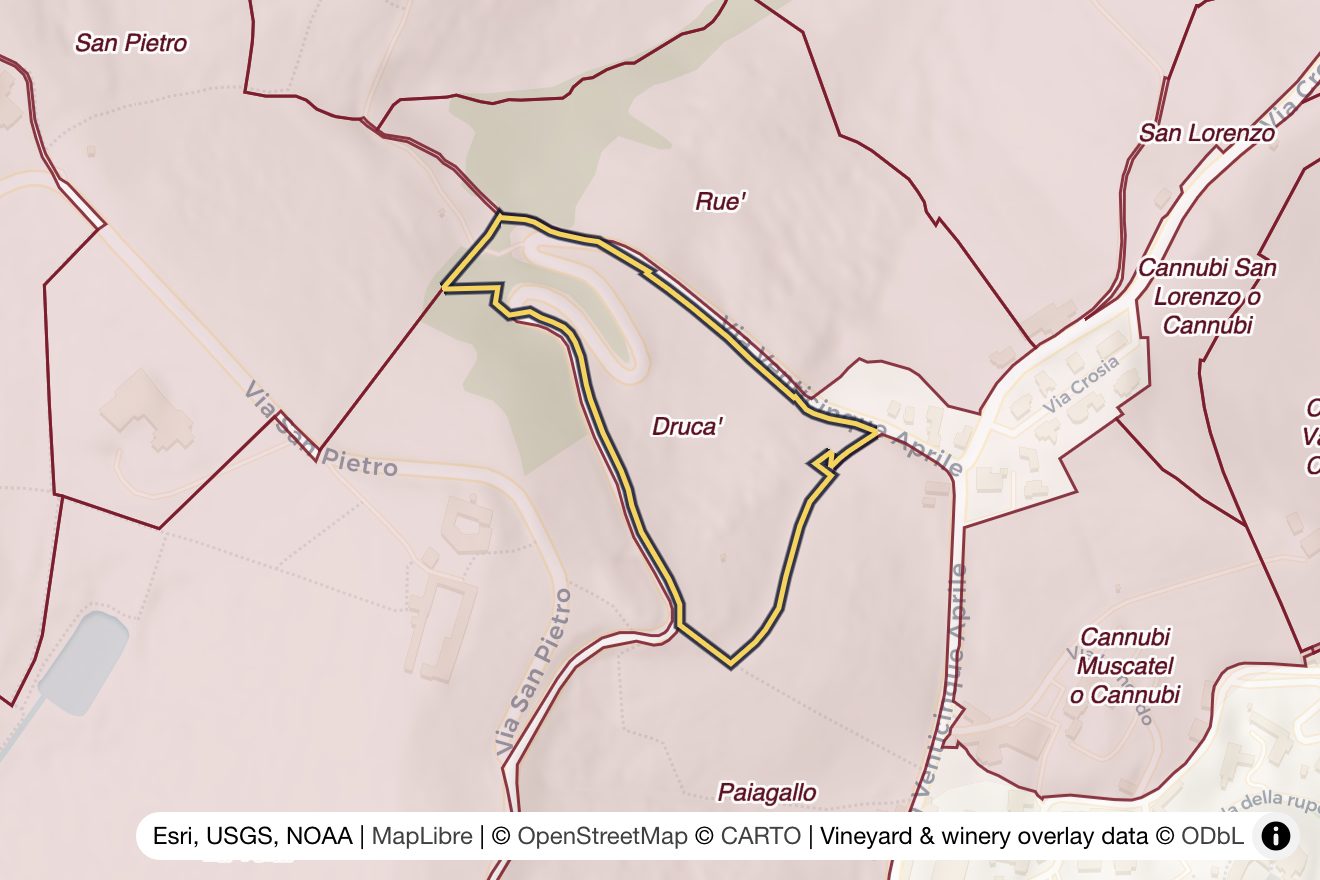
The MGA system now provides official designation without imposing a rigid classification structure. This allows sites like Drucà to be formally recognized as distinct vineyard origins while avoiding the potentially contentious debates that accompany classified growth systems. The most celebrated crus of Barolo (including Rocche dell'Annunziata, Brunate, and Cerequio in La Morra; Cannubi and Sarmazza in Barolo village; Rocche di Castiglione, Villero, and Monprivato in Castiglione Falletto; Bussia and Ginestra in Monforte d'Alba; and Francia, Lazzarito, and Ceretta in Serralunga d'Alba) continue to command attention through market recognition and critical reputation, while sites throughout the denomination gain formal acknowledgment through MGA designation.
Barolo Character and Regional Expression
All Barolo, regardless of specific MGA, shares certain fundamental characteristics derived from the Nebbiolo grape and the appellation's terroir. The wines display color that is "never deep (for Nebbiolo, like Pinot Noir, never produces opaque wines), ruby tending relatively rapidly to garnet or brick." The aromatic profile encompasses "complex and expansive aromas of cherries and plums, evolving with time into dried cherries, rose petals, tar, liquorice," with the most fortunate connoisseurs detecting notes of the local white truffle.
The fundamental character of Barolo can be described as full-bodied with high acidity and tannins, showing aromatics of sour cherries, herbs, and sometimes dried flowers. In the best years, these wines demonstrate remarkable ability to develop in bottle over extended periods. However, the appellation's diverse geology creates significant variation in style across different villages and sites.
Barolo's viticultural landscape is primarily divided between two geological epochs. Soils from the Tortonian epoch, characterized by Sant'Agata Fossil Marl, produce wines that tend toward softer, fruitier, more aromatic expressions (a profile more associated with villages like La Morra and Barolo. The second major soil type, from the Helvetian epoch with a higher proportion of compressed sandstone, is less compact and less fertile, yielding the more intense, structured wines that mature more slowly, characteristic of Monforte d'Alba and Serralunga d'Alba. Castiglione Falletto, positioned on a spur dividing these two geological valleys, produces wines that bridge these stylistic expressions, combining elegance and approachability with structure and backbone.
The position of the commune of Barolo within this geological framework would influence the character of wines from Drucà, though the specific soil composition and mesoclimate of this particular site determine its precise expression within the broader Barolo typology.
Viticultural Context and Modern Production
Modern Barolo production has evolved significantly from traditional methods. Where wines were once aged for several years in large oak barrels to soften harsh tannins, improvements in vineyard management and gentler extraction methods now result in wines with smoother, riper tannins. Many producers consequently choose shorter maturation periods, though the DOCG regulations still mandate 38 months of aging before release, with 18 months minimum in wood.
The regulatory framework also allows for village-level designation: when grapes are sourced purely from one commune, that village name may appear on the label (such as Barolo Serralunga d'Alba DOCG). The finest wines come from named vineyards or crus, which may appear on the label under the MGA system. This creates a hierarchy of specificity) from generic Barolo, to village-designated Barolo, to MGA-designated Barolo from specific vineyard sites like Drucà.
Diano d'Alba, like other communes within the Barolo zone, also produces Langhe Nebbiolo, Dolcetto (notably the Dolcetto di Diano d'Alba DOCG), and Barbera (Barbera d'Alba DOC). Langhe Nebbiolo in particular has achieved significant commercial success as "a kind of economy Barolo," with production often prioritized over Barolo itself due to lower production costs and earlier release dates. This commercial reality shapes the viticultural landscape, with prime sites like recognized MGAs typically reserved for Barolo production while other parcels may be designated for more accessible wines.
Conclusion
Drucà stands as one of the commune of Barolo's formally recognized vineyard sites within the Barolo denomination, part of a system that acknowledges the significance of specific terroirs while allowing market forces and critical opinion to determine relative prestige over time. As with all Barolo MGAs, the wines from Drucà must meet the appellation's standards for Nebbiolo expression while offering the particular character imparted by this site's specific combination of soil, elevation, exposure, and mesoclimate. For consumers and professionals seeking to understand Barolo's complexity, exploration of lesser-known MGAs like Drucà provides insight into the denomination's full breadth beyond its most celebrated sites.