History
MacGregor's 1976 planting stands today among the oldest Chardonnay plantings still producing in the valley. Mount Eden began buying fruit in 1985 and labeled its designate MacGregor Vineyard until Jean-Pierre and Elke Wolff bought and renamed the property in 1999. The Wolffs expanded the plantings to roughly 110 of 125 acres, added Pinot Noir, Syrah, Petite Sirah, Teroldego and Riesling around MacGregor's Chardonnay, and built a small winery of their own. Jean-Pierre holds a degree in electrical power engineering, an MBA and a PhD in science and technology management, and farms the way that resume suggests: his vineyard was among the pilot vineyards for the SIP sustainability certification, was named chair of the Central Coast Regional Water Quality Control Board, and took the state's 2015 CoolCalifornia Business of the Year award.
The Site
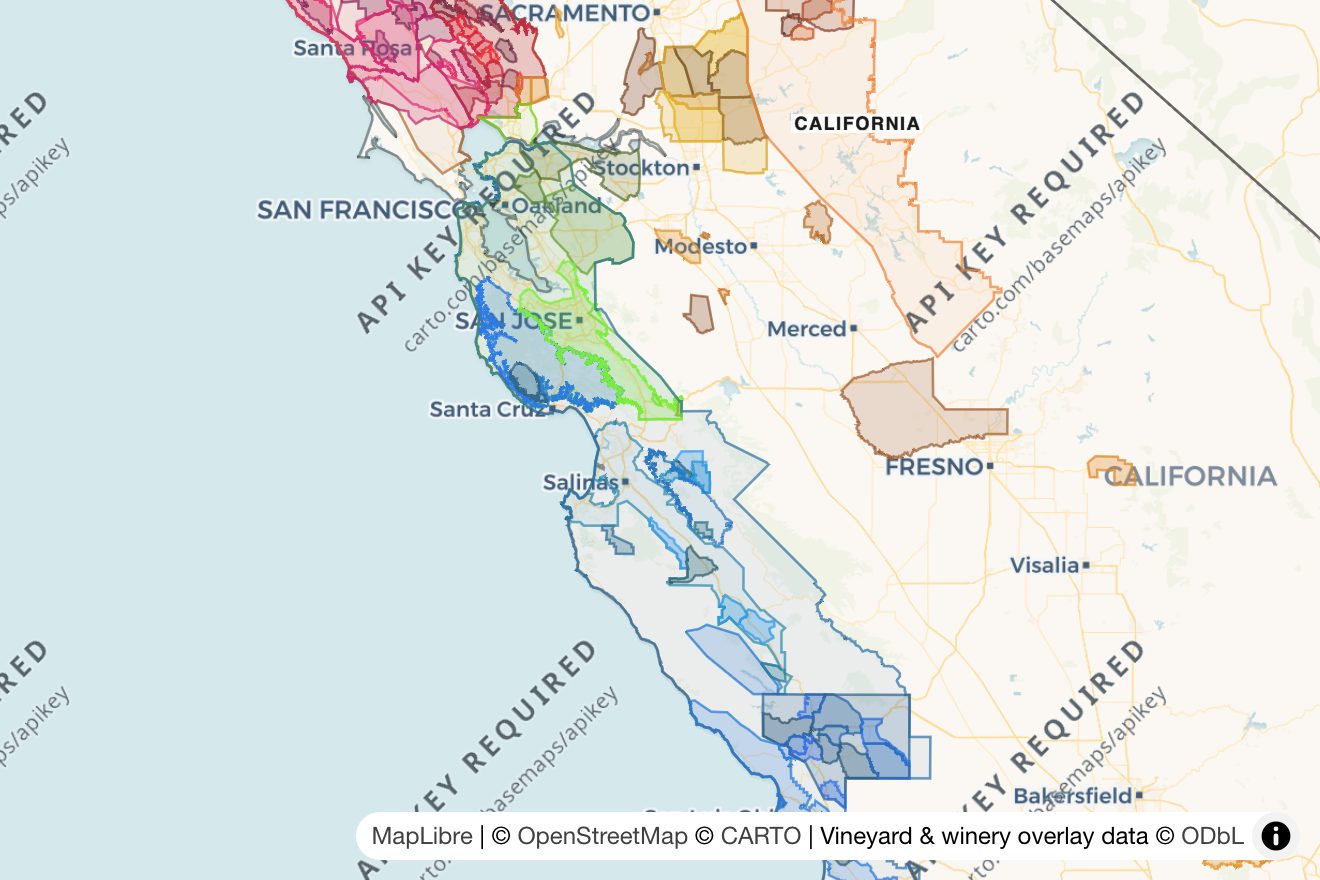
The vineyard sits at 6238 Orcutt Road, four and a half miles from the Pacific. The hills here run perpendicular to the coast and funnel marine air straight up the valley: budbreak arrives as early as late February, and the Chardonnay hangs into mid-October, among the last major Chardonnay harvests in California. The soils are ancient sea floor, clay loam and sandy loam with high carbon content. About 22 inches of average rainfall convinced Wolff the old vines could stand alone; roughly 50 of the 125 acres are dry farmed, and in drought 2021, on 9.8 inches of rain, the old Chardonnay still ripened a ton per acre. West Corral de Piedra Creek, a designated steelhead migratory stream, borders the property; Wolff spent years restoring it with state and federal agencies. The 2022 San Luis Obispo Coast AVA overlaps the site; Edna Valley stays on the label.
Vines and Blocks
Chardonnay leads at 53 acres, own-rooted 1976 Wente material trained to double cordons with kicker canes at 12 by 8 and 12 by 4 spacing, dry farmed, yielding two to four tons per acre in most vintages. Thirty-four acres of Pinot Noir occupy steep south-facing slopes in Dijon 115, 667 and 777 with Pommard selections on two rootstocks. The remaining acres carry Syrah in two northern Rhone clones on the windiest slopes, the first Petite Sirah planted in the Edna Valley, the rare Trentino grape Teroldego, and Riesling from a Rhine clone imported through a New York nursery. Replants go onto drought-resistant rootstock over subsurface drip buried three feet down.
The Wines
Mount Eden's Wolff Vineyard Chardonnay is the reference: whole-cluster pressed, fermented on native yeast in French oak through full malolactic, aged eight to ten months in barrel, about 3,500 cases in 2021, vinified like the Saratoga estate wine. Four decades of the same buyer on the same block is a run few California designates can match. The estate label bottles all six varieties in small lots, with native-yeast fermentations, open-top vats, hand punch-downs and a vertical basket press; the rest of the crop sells to premium wineries, some buyers of more than 30 years' standing.