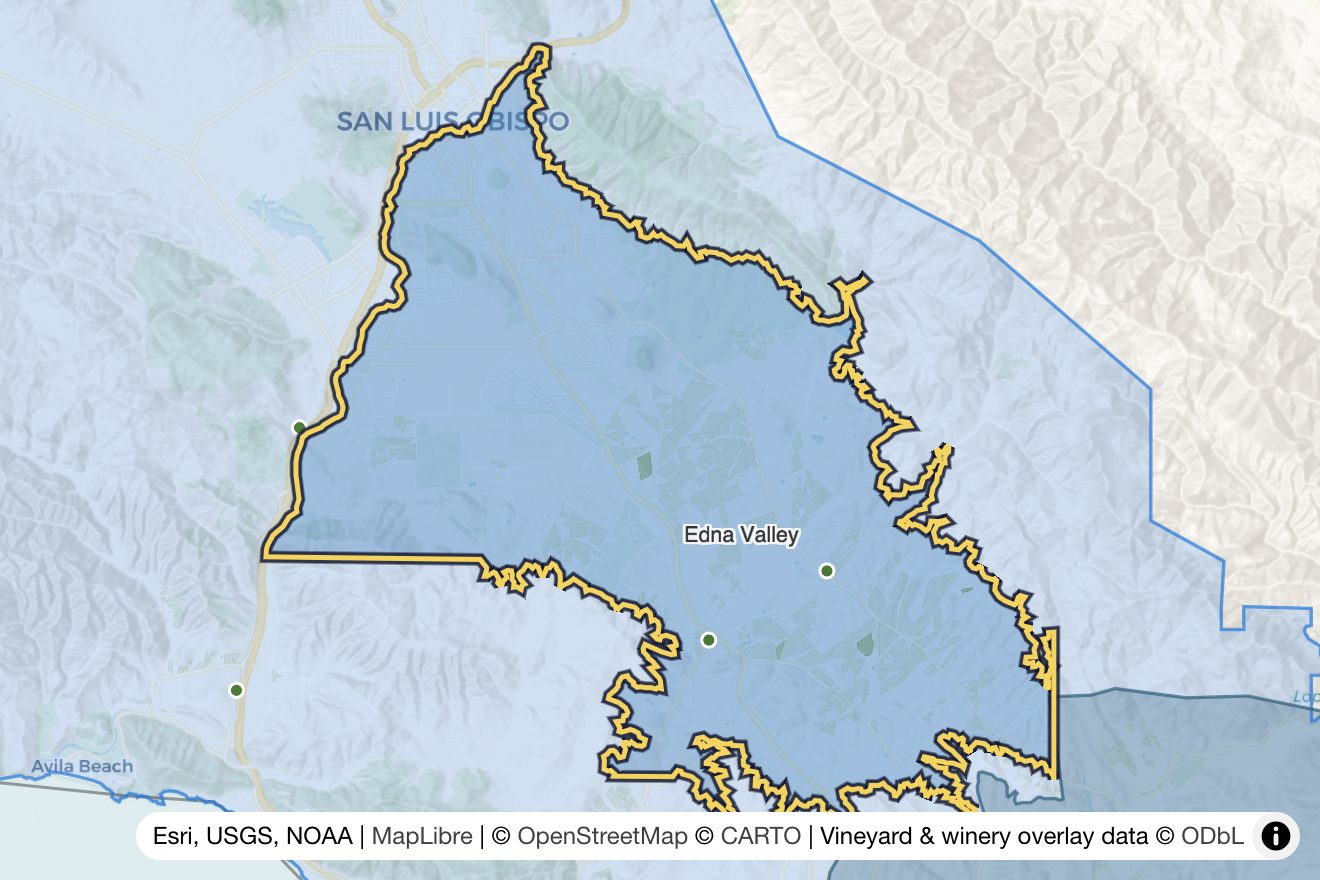
Overview
Chardonnay is the dominant planting, and the valley's long, cool season has also built a reputation for Pinot Noir, Albariño and other aromatic whites.
History
Mission-era viticulture touched the county in the eighteenth century, but the modern valley dates from the early 1970s, when the Niven family planted the large Paragon Vineyard and Chamisal Vineyard went into the ground nearby, the area's pioneering plantings. The AVA was recognized in 1982, among California's early designations. The Niven family's ventures, including Edna Valley Vineyard, founded in partnership arrangements that later passed through corporate ownership, and the family's own Baileyana and successor labels, shaped the valley's growth, with Chamisal, Claiborne & Churchill and Tolosa among the estates that followed.
Terroir & Climate
The valley's geology mixes marine sediment, ancient dune sand and volcanic influence from the chain of morros, volcanic plugs, that runs from San Luis Obispo to Morro Bay along the valley's northern flank. Soils are predominantly clay and sandy loams over marine deposits.
Climate is the defining feature. With no mountain barrier between the valley and the ocean, fog and wind arrive daily through the Los Osos gap; summer days are mild, nights cold, and the growing season among the state's longest, with harvest routinely running into late October and November. The extended hang time develops flavor at modest sugar levels and preserves acidity.
Grape Varieties & Wine Styles
Chardonnay leads plantings by a wide margin and defines the valley's style: full-flavored but bright, with citrus, white peach and mineral notes over firm acidity, taking oak and lees work well. Pinot Noir gives red-fruited, spice-inflected wines of moderate weight. The valley has proven notably suited to Iberian and Alsatian whites, with Albariño a particular success, and cool-climate Syrah, Grüner Veltliner, Riesling and Gewürztraminer all planted at small scale.
Notable Producers
Estates rooted in the valley include Chamisal Vineyards, Tolosa, Claiborne & Churchill, Baileyana and the Niven family labels, Center of Effort, and Edna Valley Vineyard, the valley's largest brand. Wolff Vineyards farms one of the area's older Chardonnay plantings, and fruit from vineyards such as Paragon and Chamisal appears in bottlings from producers across the Central Coast.
What to Know
Edna Valley's combination of early budbreak and very late harvest gives it one of the longest growing seasons of any California AVA, and its wines read cooler than its latitude suggests. The valley is compact and largely contiguous, without formal subzones; vineyard designation carries the site information. Neighboring Arroyo Grande Valley shares the marine influence and is treated as a separate AVA.