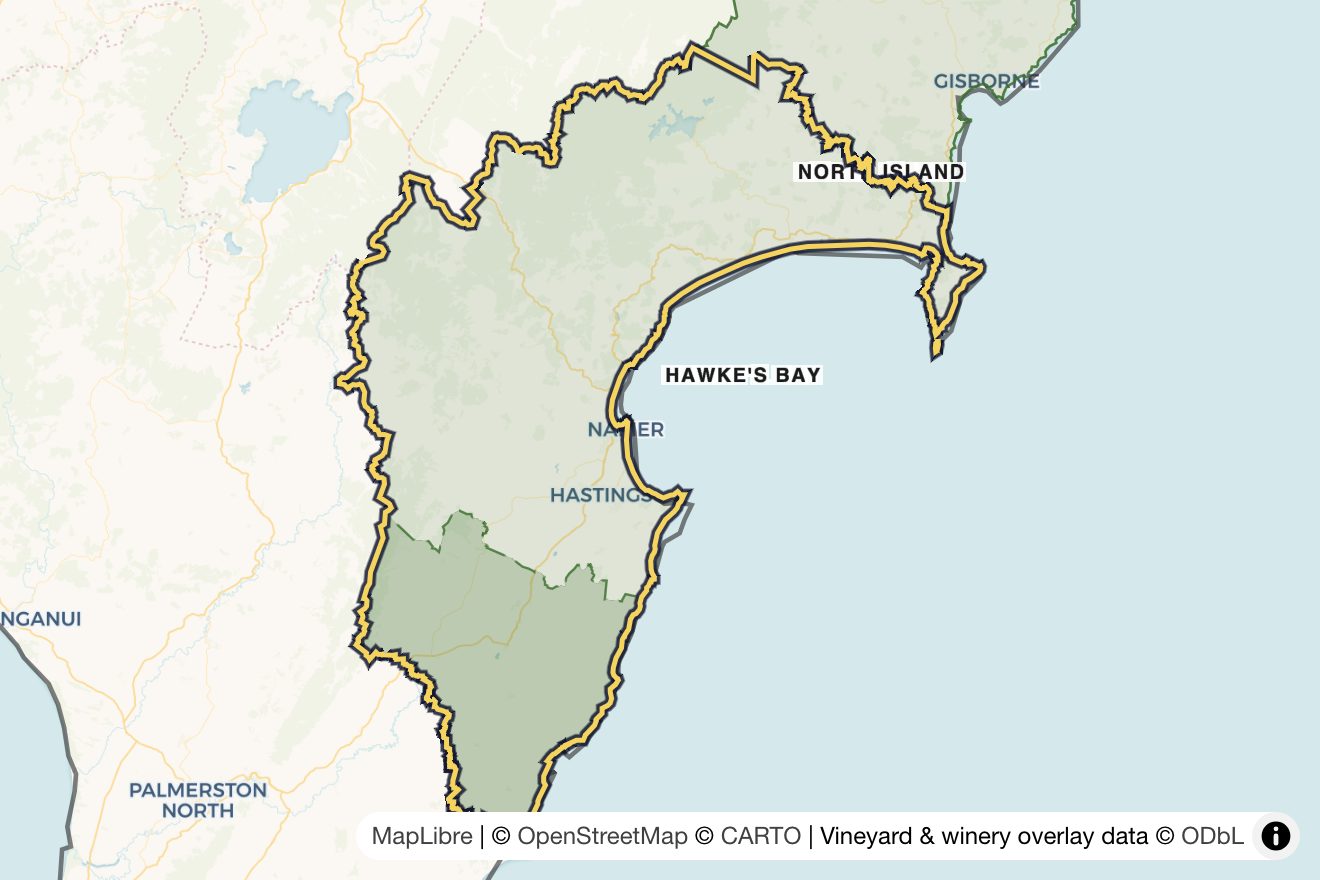
The numbers tell part of the story: 4,900 hectares under vine, producing roughly a tenth of New Zealand's wine. But statistics miss the essential character. This is the only New Zealand region where Merlot (981 ha) rivals Sauvignon Blanc (886 ha) in importance, where Chardonnay (1,049 ha) leads plantings, and where Syrah has evolved from experimental curiosity to world-class contender in barely two decades.
What makes Hawke's Bay distinct isn't a single soil type or climate pattern, it's geological and mesoclimatic diversity compressed into a relatively compact area. Ancient riverbeds, marine terraces, limestone hills, and coastal plains create a patchwork of terroirs that would take Bordeaux's Left and Right Banks, add a slice of the Northern Rhône, and squeeze them into an area smaller than the Médoc.
This is not hyperbole. This is geology and climate working in concert.
GEOLOGY: Four Rivers and an Ancient Sea
The Marine Foundation
Between 25 and 2 million years ago, during the Neogene period, the Hawke's Bay region existed as a shallow marine environment. Sediments accumulated on the seafloor, sands, silts, and gravels washed down from the emerging axial ranges to the west. These marine deposits, primarily mudstones and sandstones of the Petane Group, form the bedrock across much of the region. Limestone formations from this era appear in scattered outcrops, particularly in the southern hills of Central Hawke's Bay.
The Heretaunga Plains (the broad, flat expanse where most vineyards cluster) emerged through tectonic uplift beginning roughly 2 million years ago. This uplift, driven by the collision of the Pacific and Australian plates along the Hikurangi Subduction Zone, continues today at approximately 2-3 millimeters per year. The region experiences regular seismic activity; the devastating 1931 Napier earthquake (magnitude 7.8) raised parts of the coastline by up to 2.7 meters, fundamentally reshaping the landscape and exposing what is now prime agricultural land.
The River Systems
Four major rivers (the Ngaruroro, Tukituki, Tutaekuri, and Esk) carved the modern viticultural landscape. These rivers, fed by rainfall in the Kaweka and Ruahine Ranges, transported vast quantities of greywacke rock (a hard, grey sandstone-mudstone composite) eastward toward the coast. Over hundreds of thousands of years, particularly during glacial periods when rivers ran with greater volume and velocity, this material was deposited in successive terraces.
The result: a complex stratigraphy of alluvial gravels, sands, and silts laid down in distinct episodes. The oldest terraces sit highest in the landscape, their stones rounded and weathered. Younger terraces lie closer to current river channels, with sharper, less-weathered stones. Soil depth varies dramatically, from less than 30 centimeters over gravel in places like Gimblett Gravels to several meters of silt loam in lower-lying areas.
The Gimblett Gravels: A Viticultural Accident
The Gimblett Gravels Wine Growing District represents the region's most distinctive terroir. This 800-hectare area, located on the inland Heretaunga Plains roughly 10 kilometers from the coast, occupies an ancient Ngaruroro River channel. Until 1867, the river flowed through this corridor before shifting to its present course.
The soils here are exceptional: free-draining gravels and stones (primarily greywacke) up to 10 meters deep in places, with minimal topsoil. The composition is roughly 60-70% stones and gravels, 20-30% sand, and less than 10% silt and clay. Water-holding capacity is extremely low, vines must root deeply or rely on irrigation. In dry years, even irrigated vines experience significant water stress.
The story of Gimblett Gravels' viticultural development is instructive. Until the 1980s, this area was considered marginal, too stony for productive agriculture, relegated to sheep grazing. When Chris Pask planted vines here in 1981, locals thought him mad. The land was cheap because it seemed worthless. Within a decade, the quality of the wines (particularly reds) became undeniable. By 2001, growers formed an association and trademarked the name, establishing New Zealand's first and still only trademarked wine subregion.
Today, approximately 90% of Gimblett Gravels plantings are red varieties: Merlot, Syrah, and Cabernet Sauvignon dominate, with smaller amounts of Cabernet Franc, Malbec, and Petit Verdot. The gravels store heat during the day and release it at night, creating a mesoclimate several degrees warmer than surrounding areas. Growing degree days (GDD) here reach 1,350-1,450 (Celsius base 10), comparable to Pomerol or the northern Rhône.
Bridge Pa Triangle: The Neighbor
Adjacent to Gimblett Gravels lies the Bridge Pa Triangle, another inland gravel terrace with similar but not identical characteristics. The stones here tend to be slightly smaller, with marginally higher clay content in the subsoil. Some producers argue this creates wines with more elegance and structure; others see the differences as minimal. The debate continues, but both areas produce outstanding reds.
The Limestone Country
While gravels grab headlines, limestone soils in Central Hawke's Bay and scattered northern sites add another dimension. These soils, derived from marine limestone outcrops, contain high calcium carbonate content (often 20-40%) and tend toward higher pH (7.5-8.5 versus 5.5-6.5 for gravels).
The cooler hills around Te Awanga, Havelock North, and parts of Central Hawke's Bay show particular promise for Chardonnay, Pinot Noir, and aromatic whites. The limestone moderates vine vigor, promotes good natural acidity in grapes, and creates wines with distinct mineral tension. This is relatively recent discovery, serious limestone-focused viticulture only emerged in the past 15-20 years as producers explored cooler sites.
Coastal Terraces and Alluvial Plains
The older marine terraces closer to the coast (areas like Bay View in the north and Te Awanga in the south) consist of weathered gravels mixed with sandy loams and clay subsoils. These sites benefit from maritime influence: cooler temperatures, higher humidity, and more consistent conditions. Chardonnay and Pinot Noir thrive here, achieving ripeness while retaining acidity.
The lower-lying alluvial plains around Meeanee and Taradale, where Hawke's Bay viticulture began in the 1850s, have deeper, more fertile soils, silt loams over clay. These areas produce higher yields and require more canopy management, but can deliver excellent fruit when yields are controlled. Much of this land now produces Chardonnay and Sauvignon Blanc for volume-focused brands.
Comparative Context
Compared to Marlborough's Wairau Valley, where glacial outwash created relatively uniform stony soils. Hawke's Bay presents far greater pedological complexity. Compared to Central Otago's schist-based soils, Hawke's Bay's greywacke gravels are harder and less prone to breaking down into fine particles. The closest international analogue is indeed Bordeaux, where the Garonne and Dordogne rivers created similar gravel terraces (though Bordeaux's Günz-era gravels are significantly older, dating to 1.2 million years ago versus Hawke's Bay's Holocene deposits of less than 10,000 years).
CLIMATE: Maritime Warmth with Continental Edges
The Fundamental Pattern
Hawke's Bay occupies a climatic sweet spot for New Zealand: warm enough to ripen Bordeaux varieties and Syrah reliably, yet cool enough to maintain acidity and aromatic complexity. The region's position on the east coast, sheltered by the axial ranges to the west, creates a modified maritime climate with continental tendencies.
Annual rainfall averages 800-1,000mm, with significant variation by location. Coastal areas receive more precipitation (up to 1,200mm), while inland sites like Gimblett Gravels can drop below 700mm. Crucially, most rain falls during winter and spring; summers are relatively dry, with January-March often receiving less than 150mm combined. This pattern reduces disease pressure during ripening and allows for predictable harvest timing.
Growing season temperatures (October-April) average 16-18°C, with January and February peaks of 22-25°C. However, these averages obscure important diurnal variation. Inland sites experience swings of 15-20°C between day and night temperatures, while coastal areas see more modest 10-12°C ranges. This diurnal shift preserves acidity and aromatic compounds while still achieving phenolic ripeness.
The Heat Accumulation Advantage
Growing degree days across Hawke's Bay range from approximately 1,200 GDD in cooler coastal and southern sites to 1,450+ GDD in Gimblett Gravels and Bridge Pa. For context:
- Marlborough (Wairau Valley): 1,050-1,150 GDD
- Central Otago (Bannockburn): 1,000-1,100 GDD
- Bordeaux (Pauillac): 1,400-1,500 GDD
- Northern Rhône (Hermitage): 1,400-1,550 GDD
This places prime Hawke's Bay sites in the same thermal range as classic Old World regions for Cabernet Sauvignon and Syrah. The difference: Hawke's Bay achieves this heat accumulation with longer days (up to 15 hours of daylight in December) and more intense UV radiation due to New Zealand's position relative to the ozone hole and clear atmospheric conditions. The result is faster anthocyanin development and different flavor profiles, riper, more exuberant fruit character compared to European counterparts at similar GDD levels.
Sunshine Hours and UV Intensity
Hawke's Bay receives 2,200-2,350 sunshine hours annually, concentrated heavily in the growing season. December through February average 250-280 hours per month, roughly 8-9 hours per day. Combined with UV levels 40% higher than comparable European latitudes, this creates intense photosynthetic activity and rapid flavor development.
This intensity cuts both ways. In hot vintages (2013, 2014, 2019, 2020), grapes can accumulate sugar faster than flavor compounds fully develop, leading to high-alcohol wines with less complexity. Skilled viticulturists manage this through canopy positioning, crop load adjustment, and irrigation timing, slowing ripening to allow flavor catch-up.
Wind: The Persistent Factor
Prevailing westerlies blow across Hawke's Bay throughout the growing season, particularly in spring and early summer. These winds, often channeling through river valleys, can be vigorous, sustained speeds of 20-30 km/h are common, with gusts reaching 60+ km/h.
Wind effects are complex. Moderate wind reduces humidity around grape clusters, lowering botrytis and mildew pressure. It also thickens grape skins (a stress response), potentially improving tannin quality. However, strong winds can damage shoots, reduce photosynthesis (as stomata close to prevent moisture loss), and delay ripening. Windbreaks (shelter belts of poplar, pine, or macrocarpa) surround many vineyards, though their effectiveness diminishes beyond 50-100 meters.
Frost Risk and Spring Variability
Spring frost poses the primary climatic threat. Budbreak typically occurs in late September to early October, when overnight temperatures can still drop below zero. Severe frost events, such as the three widespread frosts of spring 2002, have sharply reduced regional crops. Inland sites on gravel terraces are most vulnerable due to cold air drainage and lack of maritime moderation.
Frost protection methods include wind machines (large fans that mix warmer upper air with cold surface air), sprinklers (ice formation releases latent heat, protecting buds), and helicopters (hired to hover over vineyards during critical nights, mixing air layers). These measures are expensive but essential; a single severe frost can eliminate an entire vintage.
Spring weather variability also affects flowering and fruit set. Cool, wet conditions during flowering (typically mid-November to early December) can cause poor fruit set (coulure and millerandage in French terms) reducing yields. The 2024 vintage suffered significantly from this phenomenon.
Harvest Season: The Dry Advantage
Harvest runs from late February through May, depending on variety and desired style. Early-ripening varieties like Pinot Gris and Chardonnay (for sparkling) come off in late February to early March. Sauvignon Blanc and Chardonnay (for still wines) follow in mid-to-late March. Merlot and Syrah typically harvest in April, with Cabernet Sauvignon potentially extending into early May in cooler years.
The critical advantage: autumn rainfall is typically low and irregular. While Bordeaux often faces September rains that threaten harvest, Hawke's Bay enjoys settled, dry conditions more often than not. This allows extended hang time for reds, building flavor complexity and tannin ripeness without rot pressure. When rain does arrive, it's usually brief and followed by wind that dries grapes quickly.
Climate Change Impacts
Warming trends are measurable and significant. Average growing season temperatures have increased approximately 0.8-1.0°C over the past 40 years. Harvest dates have shifted earlier by 10-15 days for most varieties. Heat spikes (days exceeding 30°C) occur more frequently, with potential for sunburn damage and accelerated ripening.
Paradoxically, this warming may benefit Hawke's Bay relative to other New Zealand regions. Varieties that struggled to ripen consistently in the past (Cabernet Sauvignon, Petit Verdot, Tempranillo) now achieve full maturity more reliably. The region's existing warmth means it's not crossing into excessive heat territory that plagues Australian regions, yet.
The greater concern is extreme weather variability: more intense rainfall events when they do occur, stronger winds, and unpredictable spring conditions. The 2023 vintage saw Cyclone Gabrielle strike in mid-February, weeks before harvest, flooding some vineyards and burying them in silt. Such events may become more common.
GRAPES: The Established and the Emerging
Chardonnay: The Quiet Leader
With 1,049 hectares planted, Chardonnay is Hawke's Bay's most extensive variety: a fact that surprises many who associate the region primarily with reds. This reflects both historical momentum (Chardonnay was widely planted in the 1980s-90s expansion) and the variety's remarkable adaptability to Hawke's Bay's diverse terroirs.
Viticultural Characteristics: Chardonnay buds relatively early, making it frost-susceptible. It's moderately vigorous and responds well to yield management, quality improves significantly when crops are limited to 6-8 tonnes per hectare versus 10-12 tonnes. The variety is prone to millerandage in poor flowering conditions but otherwise sets fruit reliably.
Site Expression: Hawke's Bay Chardonnay divides into distinct style camps based on origin. Coastal sites (Bay View, Te Awanga) produce wines with citrus and white stone fruit, bright acidity, and mineral tension, closer to Chablis in structure if not flavor. Inland gravel sites yield riper, more tropical expressions with fuller body and softer acidity. Limestone sites, particularly in Central Hawke's Bay, deliver wines balancing ripeness with pronounced chalky minerality and vibrant acidity.
Winemaking Approaches: Top producers employ Burgundian techniques: whole-bunch pressing, wild fermentation, extended lees aging (12-18 months), and judicious oak use (typically 20-40% new French oak). Malolactic fermentation is standard. The best wines show impressive ageability (10-15 years for premium examples) developing toast, hazelnut, and honey notes while retaining fruit core.
Clone selection matters significantly. Mendoza clone (originally from Argentina) is widely planted and produces generous, peachy wines. Clone 15 (UC Davis) yields more restrained, mineral-driven results. Many top producers work with field selections from old California clones, which deliver complexity and age-worthiness.
Merlot: The Historical Backbone
Merlot's 981 hectares represent Hawke's Bay's red wine heritage. Plantings expanded dramatically in the 1990s as producers pursued Bordeaux-style blends, reaching over 1,200 hectares by the early 2000s before declining slightly as some sites converted to Syrah or were abandoned.
Viticultural Characteristics: Merlot buds early (frost risk) and ripens mid-season, typically 2-3 weeks before Cabernet Sauvignon. It's moderately vigorous and performs best on free-draining soils that impose some water stress. On fertile, deep soils, Merlot produces excessive vegetation and dilute fruit. The variety is susceptible to botrytis bunch rot in humid conditions but Hawke's Bay's dry autumns usually prevent this.
Site Preferences: Gimblett Gravels and Bridge Pa produce the region's finest Merlot, concentrated, structured wines with dark fruit, herb notes, and firm but ripe tannins. The gravels' heat accumulation and water stress promote small berries with thick skins, ideal for extraction. Yields typically run 4-6 tonnes per hectare on these sites versus 8-10 tonnes on deeper soils.
Blending Traditions: While varietal Merlot exists, the variety most often appears in Bordeaux-style blends, typically comprising 40-70% of the mix. Cabernet Sauvignon, Cabernet Franc, and Malbec provide structure and aromatic complexity. Some producers add Petit Verdot (2-5%) for color and tannin. These blends, often labeled simply as "red blend" or with proprietary names, represent Hawke's Bay's flagship wines.
Aging Protocols: Top Merlot-based wines see 16-24 months in French oak barriques, typically 30-50% new. Extended bottle aging before release (2-4 years post-vintage) is common among premium producers. The wines age gracefully for 10-20 years, developing leather, tobacco, and dried herb complexity.
Syrah: The Game-Changer
Syrah's rise defines modern Hawke's Bay. Plantings increased from virtually nothing in 1995 to more than 300 hectares today. The variety has proven so successful that many consider Hawke's Bay New Zealand's premier Syrah region, rivaling even international benchmarks.
Viticultural Characteristics: Syrah buds later than Merlot (less frost risk) and ripens late, typically mid-to-late April. It's moderately vigorous and adapts to various soil types, though it excels on well-drained sites. The variety is relatively disease-resistant but can suffer from poor fruit set in cool, wet springs. Yields of 4-6 tonnes per hectare are optimal for quality.
The Style Debate: Hawke's Bay Syrah exists on a stylistic spectrum. Some producers pursue northern Rhône-inspired wines, peppery, floral, savory, with moderate alcohol (13-14%) and minimal oak influence. Others craft riper, more powerful examples closer to Barossa Shiraz, dense, dark-fruited, higher alcohol (14.5-15%), with noticeable oak. Many stake out middle ground, balancing fruit ripeness with savory complexity.
This stylistic diversity reflects both viticultural choices (site selection, crop load, harvest timing) and winemaking philosophy (whole-bunch inclusion, fermentation temperature, extraction intensity, oak regime). There is no consensus on the "correct" Hawke's Bay Syrah style, arguably a strength, as it demonstrates the variety's versatility.
Clone and Rootstock: Most plantings derive from French clones (Penfolds 1654, ENTAV-INRA 174, 300, 470, 877). These clones show distinct characteristics: 174 and 470 tend toward floral, peppery aromatics; 877 delivers more power and structure. Rootstock selection (typically 101-14, 3309, or Schwarzmann) influences vigor and water uptake, indirectly affecting style.
Whole-Bunch Fermentation: The use of whole bunches (entire clusters, stems included) during fermentation has become a defining technique for many top Syrah producers. Proportions range from 10% to 100%, with 20-40% being common. Whole bunches contribute aromatic complexity (floral, spice notes), textural silkiness, and structural complexity. However, the technique requires fully lignified (ripe) stems; green stems contribute harsh, vegetal characters.
Sauvignon Blanc: The Commercial Reality
Sauvignon Blanc's 886 hectares reflect commercial pragmatism more than regional aptitude. The variety grows successfully and finds ready markets, but Hawke's Bay Sauvignon rarely achieves the distinctiveness of Marlborough examples or the tension of Central Hawke's Bay limestone-site wines.
Characteristics: Hawke's Bay Sauvignon tends toward riper, softer styles, tropical fruit (passionfruit, guava), melon, and less pronounced herbaceous character. Acidity is moderate rather than piercing. Some producers embrace this riper profile, crafting rounded, accessible wines. Others seek cooler sites or earlier harvesting to maintain freshness.
The Central Hawke's Bay Exception: The cooler, limestone-influenced sites of Central Hawke's Bay produce distinctly different Sauvignon, more citrus-driven, with pronounced minerality and vibrant acidity. These wines show more in common with Sancerre or Pouilly-Fumé than typical New Zealand Sauvignon. Several producers now specifically label Central Hawke's Bay Sauvignon separately, recognizing its distinct character.
Cabernet Sauvignon: The Challenged Noble
Cabernet Sauvignon plantings have declined from over 500 hectares two decades ago to under 200 hectares today. This contraction reflects viticultural reality: Cabernet is difficult to ripen consistently in Hawke's Bay, achieving full phenolic maturity only in warmer vintages.
The Ripening Challenge: Cabernet ripens 3-4 weeks after Merlot, pushing harvest into late April or early May. In cooler years, the variety struggles to shed green, herbaceous characters (methoxypyrazines) that mark underripeness. Tannins can remain harsh and astringent. The risk of harvest rain increases significantly by early May.
When It Works: In warm vintages (2013, 2014, 2019, 2020), Hawke's Bay Cabernet achieves full ripeness, producing wines of considerable power and structure, cassis, cedar, graphite notes, firm but ripe tannins, and excellent aging potential. These vintages remind producers why Cabernet was originally championed. The problem: such vintages occur only 50-60% of the time, making Cabernet a risky proposition.
Current Role: Most remaining Cabernet plantings contribute to blends rather than varietal wines. In blends, even partially ripe Cabernet adds structure, aromatics, and ageability. Producers have largely accepted this supporting role, focusing varietal ambitions on more reliably ripening varieties.
Pinot Noir: The Coastal Specialist
Pinot Noir occupies just over 200 hectares, concentrated in cooler coastal sites and Central Hawke's Bay. The variety struggles in Hawke's Bay's warmer inland areas, where it produces heavy, jammy wines lacking varietal character.
Site Requirements: Successful Hawke's Bay Pinot comes from coastal terraces (Bay View, Te Awanga) with maritime cooling and clay-influenced soils that retain moisture. These sites provide the temperature moderation and slower ripening Pinot requires. Central Hawke's Bay's cooler climate also suits the variety.
Style Profile: Hawke's Bay Pinot typically shows more weight and structure than Martinborough examples, less elegance than Central Otago's best. Red fruit (cherry, raspberry) dominates, with earthy, savory notes emerging with age. Tannins are present but not aggressive. Quality ranges widely; the variety remains somewhat marginal in the region.
Emerging Varieties
Small plantings of Tempranillo, Montepulciano, Albariño, Grüner Veltliner, and Viognier exist, totaling perhaps 100 hectares combined. Tempranillo shows particular promise: the variety's late budbreak (frost avoidance) and ability to ripen fully while maintaining acidity suit Hawke's Bay conditions. Several producers now bottle serious Tempranillo, either varietal or blended with Syrah.
WINES: Styles, Methods, and Evolution
Bordeaux Blends: The Traditional Flagship
Hawke's Bay built its fine wine reputation on Bordeaux-style red blends. These wines, typically Merlot-dominant with Cabernet Sauvignon, Cabernet Franc, and Malbec, represented New Zealand's answer to classified growth Bordeaux, or so the ambition went.
The Classic Formula: A typical premium Hawke's Bay red blend might comprise 50-60% Merlot, 20-30% Cabernet Sauvignon, 10-15% Cabernet Franc, 5-10% Malbec, and perhaps 2-5% Petit Verdot. Proportions shift by vintage depending on ripeness and quality. In cooler years, Merlot percentages increase; in warmer years, more Cabernet Sauvignon enters the blend.
Production Methods: Top examples undergo careful site selection, hand harvesting, optical sorting, and parcel-by-parcel vinification. Fermentation occurs in small lots (1-5 tonnes) using indigenous or selected yeasts. Maceration extends 20-30 days for reds, with gentle extraction via pump-overs and délestage. Pressing occurs at dryness or slightly before.
Aging happens in French oak barriques (225L), typically 30-60% new, for 16-24 months. Some producers use larger formats (300-500L) to moderate oak influence. Blending trials occur 12-18 months post-harvest; final blends rest in barrel before bottling. Extended bottle aging (2-4 years) before release is common among premium producers.
Aging Potential: The best Bordeaux-style blends age gracefully for 15-25 years, developing tertiary complexity (leather, tobacco, cedar, dried herbs) while retaining fruit core. Tannins soften and integrate; the wines become more harmonious and complex. However, this aging potential depends critically on vintage quality and ripeness levels.
Syrah: The New Contender
Hawke's Bay Syrah has evolved from experimental curiosity in the late 1990s to legitimate flagship status. The variety's success reflects both viticultural suitability and market timing. Syrah emerged as international interest in Rhône varieties surged.
Stylistic Diversity: As noted earlier, Hawke's Bay Syrah spans a stylistic range. The more restrained, northern Rhône-inspired examples typically involve:
- Whole-bunch fermentation (20-60% of the blend)
- Indigenous yeast fermentation
- Moderate extraction and lower fermentation temperatures
- Aging in older oak or concrete/amphora
- Moderate alcohol (13-14%)
- Earlier drinking windows (5-10 years)
The riper, more powerful style employs:
- Destemmed fruit with limited or no whole bunches
- Selected yeasts and warmer fermentations
- More intensive extraction
- Higher new oak percentages (40-60%)
- Higher alcohol (14-15%+)
- Extended aging potential (10-20 years)
Both approaches produce compelling wines; neither is inherently superior. The choice reflects producer philosophy and target market.
The Whole-Bunch Question: Whole-bunch fermentation deserves particular attention as it fundamentally shapes Hawke's Bay Syrah. When stems are fully ripe (lignified), they contribute:
- Aromatic complexity: floral notes (violets), spice (white pepper), and lifted aromatics
- Textural refinement: silkier, more integrated tannins
- Structural backbone: stems contain tannins that add framework without harshness
- Freshness: stems seem to preserve primary fruit character
However, unripe stems contribute green, vegetal, bitter characters. Determining stem ripeness requires experience and careful assessment, tasting stems, checking lignification levels, evaluating vintage conditions. In cooler years, many producers reduce or eliminate whole bunches.
Chardonnay: Burgundian Aspirations
Premium Hawke's Bay Chardonnay pursues Burgundian benchmarks through technique and terroir selection. The best examples rival quality levels of Meursault or Puligny-Montrachet, though flavor profiles differ.
Production Techniques:
- Whole-bunch pressing to minimize phenolic extraction
- Settling without enzymes or fining
- Wild fermentation in barrel (20-100% new French oak)
- Full malolactic fermentation
- Extended lees aging (12-18 months) with regular bâtonnage
- Minimal sulfur additions
- Minimal or no fining/filtration
This approach yields complex, textured wines with layered flavors (stone fruit, citrus, hazelnut, toast, butter) and creamy, expansive palate weight. Acidity provides structure and drive; the best wines balance richness with freshness.
The Terroir Factor: Site selection increasingly drives quality. Producers recognize that limestone-influenced sites deliver more tension and minerality, while gravel sites produce riper, more tropical expressions. Some producers now bottle site-specific Chardonnays, highlighting terroir distinctions.
Sparkling Wine: The Quiet Achiever
Hawke's Bay produces significant quantities of traditional method sparkling wine, though this category receives less attention than still wines. The cooler coastal sites provide ideal conditions, moderate ripeness, high natural acidity, and delicate fruit flavors.
Production: Fruit is harvested early (typically late February to early March) at lower sugar levels (18-20 Brix) to maintain acidity. Base wines undergo primary fermentation in stainless steel or neutral oak, then are blended and undergo secondary fermentation in bottle. Lees aging extends 18-36 months for non-vintage styles, 36-60+ months for vintage or prestige cuvées.
Styles range from Blanc de Blancs (100% Chardonnay) to Blanc de Noirs (Pinot Noir-based) to classic blends. Quality can be exceptional, fine mousse, brioche and toast complexity, vibrant acidity, and elegant fruit expression.
SUBREGIONS AND DISTRICTS: The Mesoclimatic Mosaic
Hawke's Bay's subregional geography reflects geological and climatic variation compressed into a relatively small area. Understanding these distinctions aids both producers (site selection) and consumers (style expectations).
Gimblett Gravels Wine Growing District
Location: Inland Heretaunga Plains, 10km from coast
Area: 800 hectares (trademarked in 2001)
Soils: Deep, free-draining greywacke gravels (60-70% stones)
Climate: Warmest district; 1,350-1,450 GDD; low rainfall (650-750mm)
Varieties: 90% red. Merlot, Syrah, Cabernet Sauvignon, Cabernet Franc, Malbec
Character: Powerful, concentrated reds; ripe tannins; dark fruit; structured
The Gimblett Gravels association maintains strict quality standards and promotes collective marketing. Membership requires vineyard ownership within the defined boundary and adherence to quality protocols.
Bridge Pa Triangle
Location: Adjacent to Gimblett Gravels, slightly inland
Area: Approximately 2,000 hectares
Soils: Gravelly loams, slightly smaller stones than Gimblett, more clay in subsoil
Climate: Similar to Gimblett Gravels; marginally cooler
Varieties: Red-dominant. Merlot, Syrah, Cabernet Sauvignon
Character: Similar to Gimblett but some argue more elegance; ongoing debate
Bay View
Location: Northern coastal area, Esk Valley
Area: Approximately 200 hectares
Soils: Weathered gravels over clay; marine terrace
Climate: Cool maritime; 1,200-1,300 GDD; higher rainfall
Varieties: Chardonnay, Pinot Noir, Syrah
Character: Elegant, restrained wines; high acidity; mineral notes
Te Awanga
Location: Southern coastal area, near Cape Kidnappers
Area: Approximately 150 hectares
Soils: Limestone-influenced; weathered gravels; marine terrace
Climate: Cool maritime; 1,200-1,300 GDD
Varieties: Chardonnay, Pinot Noir, Sauvignon Blanc
Character: Mineral-driven whites; elegant reds; pronounced acidity
Central Hawke's Bay
Location: Southern district, inland hills and valleys
Area: Approximately 800 hectares (growing rapidly)
Soils: Limestone outcrops; clay loams; some gravels
Climate: Cooler than northern Hawke's Bay; 1,150-1,300 GDD; higher rainfall
Varieties: Pinot Noir, Sauvignon Blanc, Chardonnay, Pinot Gris
Character: Aromatic complexity; vibrant acidity; mineral tension; elegant structure
Central Hawke's Bay has emerged as a distinct subregion in the past 15 years. Its cooler climate and limestone soils create wines with more in common with Martinborough or Burgundy than classic Hawke's Bay. Several producers now label Central Hawke's Bay separately, recognizing its distinct identity.
Meeanee and Taradale
Location: Inland plains near Napier
Area: Approximately 400 hectares (declining)
Soils: Deep silt loams over clay; alluvial
Climate: Moderate warmth; 1,250-1,350 GDD
Varieties: Chardonnay, Sauvignon Blanc, Merlot
Character: Historic area; now more volume-focused; less distinctive
These areas represent Hawke's Bay's viticultural origins (1850s-1860s) but have lost prestige as gravel sites and limestone areas proved superior for premium wines. Much production now goes to larger brands for volume-focused wines.
Esk Valley
Location: Northern district, inland along Esk River
Area: Approximately 300 hectares
Soils: Variable, gravels, loams, some limestone
Climate: Moderate; 1,250-1,350 GDD
Varieties: Merlot, Cabernet Sauvignon, Syrah, Chardonnay
Character: Diverse; quality varies by specific site
PRACTICAL MATTERS: Drinking, Keeping, and Pairing
Serving Temperatures
Hawke's Bay wines benefit from thoughtful serving temperatures:
- Chardonnay: 11-13°C. Too cold mutes complexity; too warm loses freshness.
- Sauvignon Blanc: 8-10°C. Serve cooler than Chardonnay to emphasize freshness.
- Pinot Noir: 14-16°C. Slightly cool to preserve aromatics and freshness.
- Merlot/Bordeaux blends: 16-18°C. Room temperature in New Zealand, not Europe.
- Syrah: 15-17°C. Slightly cooler than Bordeaux blends to showcase aromatics.
- Sparkling: 6-8°C. Well-chilled to emphasize freshness and mousse.
Decanting and Aeration
Young Hawke's Bay reds (under 5 years) benefit significantly from aeration. Decant 1-2 hours before serving, or use aggressive aeration devices. The wines often show reductive notes initially (struck match, rubber) that blow off with air exposure, revealing fruit and complexity.
Older wines (10+ years) require gentler handling. Decant to remove sediment but serve shortly after to preserve delicate aromatics.
Aging Potential
Chardonnay: Premium examples age 10-15 years; exceptional bottles reach 20 years. Drink volume-focused examples within 3-5 years.
Sauvignon Blanc: Drink within 2-3 years for most examples. Central Hawke's Bay limestone-site wines can age 5-7 years.
Merlot/Bordeaux blends: Top wines age 15-25 years; very best reach 30+ years. Mid-tier examples peak at 8-12 years.
Syrah: Depends on style. Restrained, whole-bunch examples drink well at 5-10 years. Riper, powerful styles age 10-20 years.
Pinot Noir: Drink within 5-10 years for most examples. Exceptional bottles age 12-15 years.
Food Pairing Suggestions
Chardonnay: Roasted chicken, grilled fish, scallops, creamy pasta, mushroom risotto, soft cheeses (Brie, Camembert). The wine's texture and weight handle rich preparations.
Sauvignon Blanc: Oysters, green salads, goat cheese, asparagus, fresh herbs, lighter fish preparations. Central Hawke's Bay examples pair well with richer fish (salmon, tuna).
Merlot/Bordeaux blends: Lamb (especially rack or leg), beef (grilled or roasted), duck, game birds, aged hard cheeses, mushroom-based dishes. The wines' structure and tannins need protein and fat.
Syrah: Grilled meats (especially lamb and beef), venison, wild boar, duck, barbecue, black pepper-crusted dishes, charcuterie. The wine's savory complexity matches umami-rich foods.
Pinot Noir: Duck, salmon, tuna, pork, mushrooms, earthy dishes, soft cheeses. The wine's elegance suits refined preparations.
Vintage Chart (2010-2023)
| Vintage | Quality | Character | Drink/Keep | |---------|---------|-----------|------------| | 2023 | 88 | Wet season; Cyclone Gabrielle struck in mid-February. Low yields; later-ripening reds fared best. | Drink 2025-2035 | | 2022 | 85 | Challenging, rain at harvest. Variable quality. | Drink 2024-2030 | | 2021 | 87 | Cool vintage. Aromatic, fresh wines; lower alcohol. | Drink 2024-2033 | | 2020 | 94 | Exceptional. Warm, dry. Powerful, concentrated. | Drink 2025-2045 | | 2019 | 92 | Very good. Warm, even ripening. Balanced, age-worthy. | Drink 2024-2040 | | 2018 | 86 | Good. Some rain; variable quality. | Drink 2023-2032 | | 2017 | 83 | Difficult. Heavy rain around harvest; variable. | Drink 2022-2030 | | 2016 | 88 | Good. Cooler; elegant, structured wines. | Drink 2023-2033 | | 2015 | 89 | Very good. Balanced; classic profiles. | Drink 2023-2035 | | 2014 | 93 | Excellent. Warm; concentrated, powerful wines. | Drink 2024-2040 | | 2013 | 95 | Outstanding. Ideal conditions; balanced, complex, age-worthy. | Drink 2023-2045 | | 2012 | 84 | Challenging. Cool, late season; low yields; variable. | Drink 2020-2028 | | 2011 | 87 | Good. Cooler; elegant, fresh wines. | Drink 2020-2030 | | 2010 | 90 | Very good. Balanced; classic vintage. | Drink 2020-2032 |
Rating Scale: 95-100 = Outstanding; 90-94 = Excellent; 85-89 = Very Good to Good; 80-84 = Acceptable; Below 80 = Poor
Collecting Recommendations
For those building a Hawke's Bay cellar, focus on:
- Bordeaux blends from top vintages (2013, 2014, 2019, 2020) from established producers
- Single-vineyard Syrah from Gimblett Gravels or Bridge Pa
- Reserve Chardonnay from coastal or limestone sites
- Central Hawke's Bay Pinot Noir from quality-focused producers
- Vintage sparkling wine with extended lees aging
Buy young and cellar, or purchase older vintages at auction. Hawke's Bay wines often show better with 5-10 years of bottle age than on release.
THE PRODUCERS: Who's Making the Wines
Hawke's Bay hosts more than 200 vineyards and roughly 100 wine producers, ranging from multinational-owned brands producing millions of cases to tiny artisan operations making a few hundred cases. The region's producer landscape divides roughly into three tiers:
Large Commercial Producers (100,000+ cases): These operations, often owned by international beverage conglomerates, focus on volume wines for domestic and export markets. Brands like Villa Maria, Sileni, and Matua produce reliable, well-made wines at accessible price points. Quality is generally good; distinctiveness is less emphasized.
Mid-Sized Quality Producers (10,000-100,000 cases): This category includes many of Hawke's Bay's most respected names, estates with established reputations, significant vineyard holdings, and consistent quality. These producers balance commercial viability with quality ambitions, producing both volume-focused and premium wines.
Small Artisan Producers (under 10,000 cases): Small estates and boutique wineries focusing on premium, often single-vineyard wines. Production is limited, prices are higher, and quality is variable but can be exceptional. These producers often drive stylistic innovation and terroir exploration.
Ownership structures vary widely. Some wineries remain family-owned across generations. Others have been acquired by larger entities but maintain operational independence. A few operate as cooperatives or grower-owned ventures.
THE TRAJECTORY: Where Hawke's Bay Is Heading
Several trends shape Hawke's Bay's evolution:
Terroir Refinement: Producers increasingly focus on site-specific wines, recognizing and labeling distinct subregions and vineyard sites. Single-vineyard bottlings proliferate. This shift from regional blending toward terroir expression mirrors developments in Burgundy, Barolo, and other quality-focused regions.
Organic and Biodynamic Viticulture: Sustainable, organic, and biodynamic practices expand steadily. Several prominent estates have converted entirely to organic or biodynamic farming. This reflects both environmental consciousness and quality ambitions, many producers believe these practices yield more expressive wines.
Climate Adaptation: Warming trends prompt viticultural adjustments, exploring warmer-climate varieties (Tempranillo, Grenache), adjusting canopy management, reconsidering irrigation strategies, and selecting rootstocks for drought tolerance. Some producers plant at higher elevations or in cooler pockets to maintain freshness.
Market Positioning: Hawke's Bay grapples with positioning relative to Marlborough's global dominance and Central Otago's prestige. The region's diversity (both blessing and curse) makes simple messaging difficult. Recent efforts emphasize Hawke's Bay as New Zealand's fine wine region for reds and complex, age-worthy whites: a counterpoint to Marlborough's aromatic white focus.
Export Focus: Approximately 60% of Hawke's Bay wine is exported, primarily to Australia, United Kingdom, United States, and Asia. Export markets increasingly drive production decisions and quality standards. The region's reputation abroad, while growing, lags behind Marlborough and Central Otago.
CONCLUSION: A Region Finding Its Voice
Hawke's Bay stands at an interesting juncture. It possesses geological and climatic diversity that should, theoretically, produce New Zealand's most complex and varied wines. It has producers with ambition, skill, and resources. It has a 150-year viticultural history, longer than most New Zealand regions.
Yet it lacks the clear identity that defines Marlborough (Sauvignon Blanc) or Central Otago (Pinot Noir). This reflects both challenge and opportunity. The challenge: communicating complexity to consumers who prefer simplicity. The opportunity: appealing to sophisticated wine drinkers seeking diversity, terroir expression, and age-worthy wines.
The region's future likely involves continued refinement, better matching of variety to site, more precise viticulture, clearer articulation of subregional identities. The best Hawke's Bay wines, whether Syrah from Gimblett Gravels, Chardonnay from Te Awanga, or Pinot Noir from Central Hawke's Bay, compete qualitatively with international benchmarks. The task is producing these wines consistently and communicating their distinctiveness effectively.
Hawke's Bay won't be New Zealand's Bordeaux, despite early ambitions. It will be Hawke's Bay: a warm, diverse, complex region producing powerful reds, textured whites, and increasingly, wines that express specific places rather than generic regional character. That's a worthy identity.