Introduction
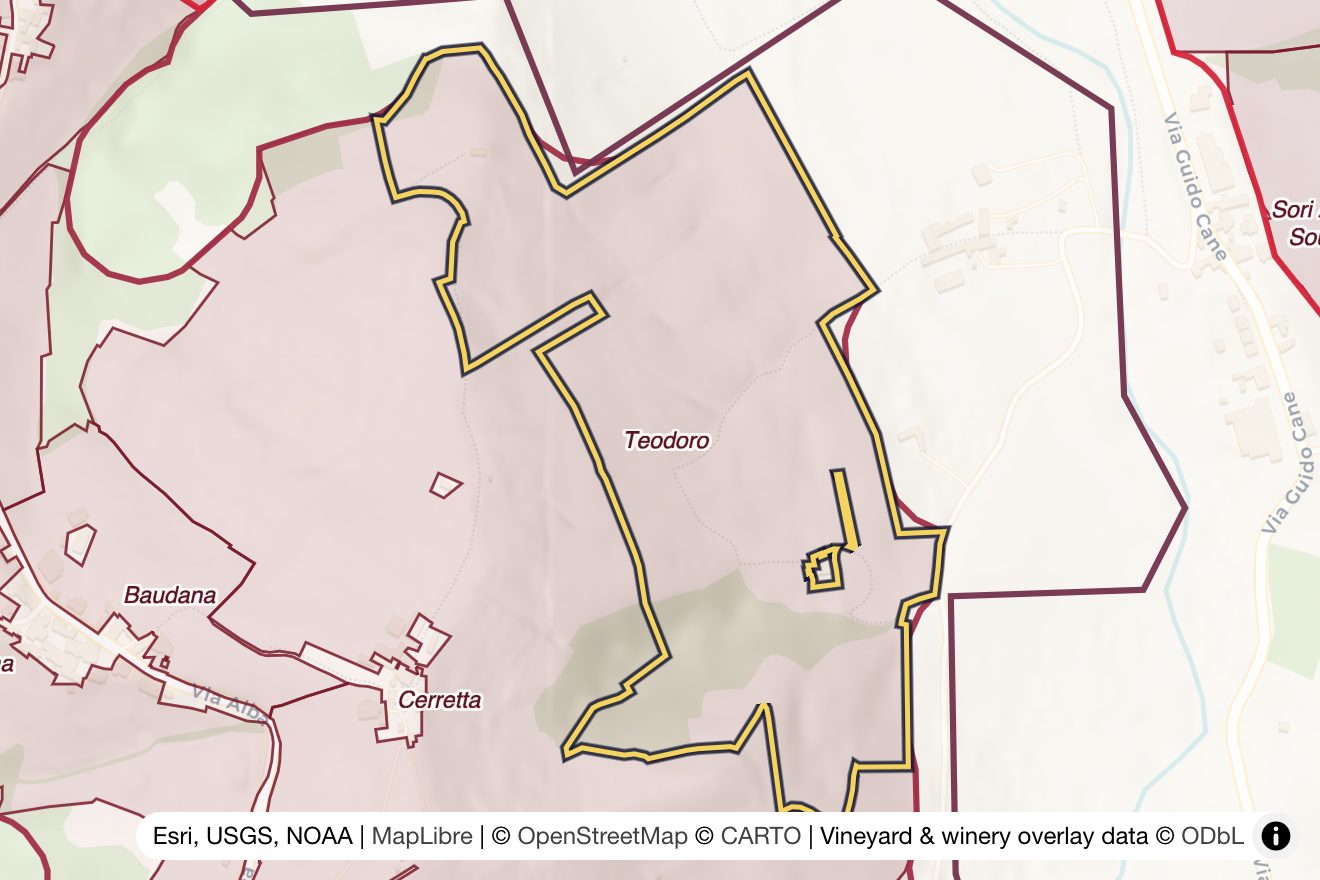
The introduction of the MGA system formalized the identification of individual vineyard sites throughout the Barolo zone, though notably these designations represent identification rather than classification. This distinction is crucial: an MGA designation confirms a vineyard's boundaries and historical recognition but does not rank its quality against other sites. The system emerged in response to the proliferation of single-vineyard bottlings from the 1980s onward, which paradoxically reinforced attention on individual producers rather than vineyard sites themselves, given the absence of an official classification system comparable to Burgundy's.
The Serralunga Context
Understanding Teodoro requires situating it within the broader framework of Serralunga d'Alba, a commune that produces some of Barolo's most powerful and structured wines. Serralunga's viticultural history connects to the royal lineage that gave Barolo its epithet as "the wine of kings, the king of wines." Emanuele, Count of Mirafiori and son of King Vittorio Emanuele II, developed the vineyards around the hunting lodge of Fontanafredda in Serralunga d'Alba, establishing a tradition of excellence that continues to define the area.
The commune's reputation rests on its ability to produce Barolo of exceptional longevity and structural intensity. Where La Morra might offer more immediate aromatics and Barolo village more elegance, Serralunga typically delivers wines of considerable tannin, deep color, and aging potential that can extend decades. This character reflects both the specific geological composition of Serralunga's soils and its particular mesoclimate.
Terroir Characteristics
While specific documentation of Teodoro's precise soil composition and microclimate remains limited in contemporary wine literature, the site shares the broader terroir characteristics that define Serralunga d'Alba. The commune sits within the eastern portion of the Barolo zone, where Helvetian (Serravallian) soils (older, harder and less fertile than the Tortonian marls found to the west) create the foundation for Nebbiolo cultivation.
The physical attributes of soil predominate over chemical composition in determining vine behavior and wine quality, as established by pioneering research from Professor Gérard Seguin and subsequently confirmed by viticulturists worldwide. In Serralunga, these physical characteristics (soil structure, drainage, and the layering of soil strata) dictate how vine roots navigate the substrate and access water and nutrients throughout the growing season. The manner in which roots penetrate these complex layers fundamentally shapes vine physiology and, consequently, grape quality.
Elevation and aspect play crucial roles in any Barolo MGA's character. Serralunga's vineyards generally occupy elevated positions that benefit from extended sun exposure and air circulation, factors that prove particularly important in marginal climates where terroir influence expresses itself most distinctly. The commune's topography creates variation even within small vineyard parcels, as differences in slope, orientation, and soil depth can lead to significant variation in vine vigor and fruit ripening patterns.
Wine Profile
Barolo from Serralunga d'Alba, including wines that may be produced from Teodoro, typically exhibits the structural hallmarks of the commune: substantial tannin, pronounced acidity, deep color, and a flavor profile that tends toward darker fruits, earth, tar, and mineral notes. These wines demand patience, often requiring a decade or more of cellaring to fully integrate their components and reveal their complexity.
The tannin structure in Serralunga Barolo distinguishes it from wines produced in the western communes. Where Barolo from La Morra or Barolo village might show more supple, perfumed qualities earlier in their evolution, Serralunga wines build their reputation on power and persistence. This characteristic reflects the influence of terroir (the interaction of soil type, mesoclimate, and topography with Nebbiolo's particular physiological responses to its growing environment.
Young Barolo from Serralunga sites rarely offers immediate pleasure; the Nebbiolo grape's inherent tannin and acidity require time for polymerization and softening. With age, however, these wines develop extraordinary complexity: the primary fruit evolves toward tertiary notes of leather, tobacco, truffle, and dried flowers, while the initially astringent tannins integrate into a complex, long finish.
Historical and Contemporary Context
The relatively limited contemporary documentation of Teodoro as an individual site reflects broader patterns in Barolo's evolution. While certain privileged positions have enjoyed prestige in both written tradition) from Lorenzo Fantini in the late 19th century through Luigi Veronelli, Renato Ratti, and Alessandro Masnaghetti, and in the oral tradition of the zone, not all historically cultivated sites received equal attention from writers and critics. The prices paid by négociants for grapes and wines from particular vineyards historically signaled quality distinctions, though documentation of these transactions remains incomplete.
The MGA system's implementation attempted to address the paradox created by proliferating single-vineyard bottlings: while these wines focused attention on individual producers' skills, they did less to establish clear hierarchies among vineyard sites themselves. Alessandro Masnaghetti has attempted an unofficial classification to fill this gap, though his work, like any classification system, reflects subjective judgments informed by tasting experience, historical reputation, and producer consensus rather than absolute, measurable criteria.
Conclusion
Teodoro represents one thread in Serralunga d'Alba's complex viticultural tapestry. While it may not command the immediate name recognition of Francia or Lazzarito, its status as an officially registered MGA confirms its historical identity as a distinct vineyard site. For wine enthusiasts seeking to understand Barolo's diversity, exploring lesser-documented sites like Teodoro offers insight into the denomination's breadth beyond its most celebrated names. The wines from such sites, produced by skilled viticulturists who understand their particular terroir, can offer exceptional quality and authentic expression of place, even without the premium pricing that accompanies more famous crus.