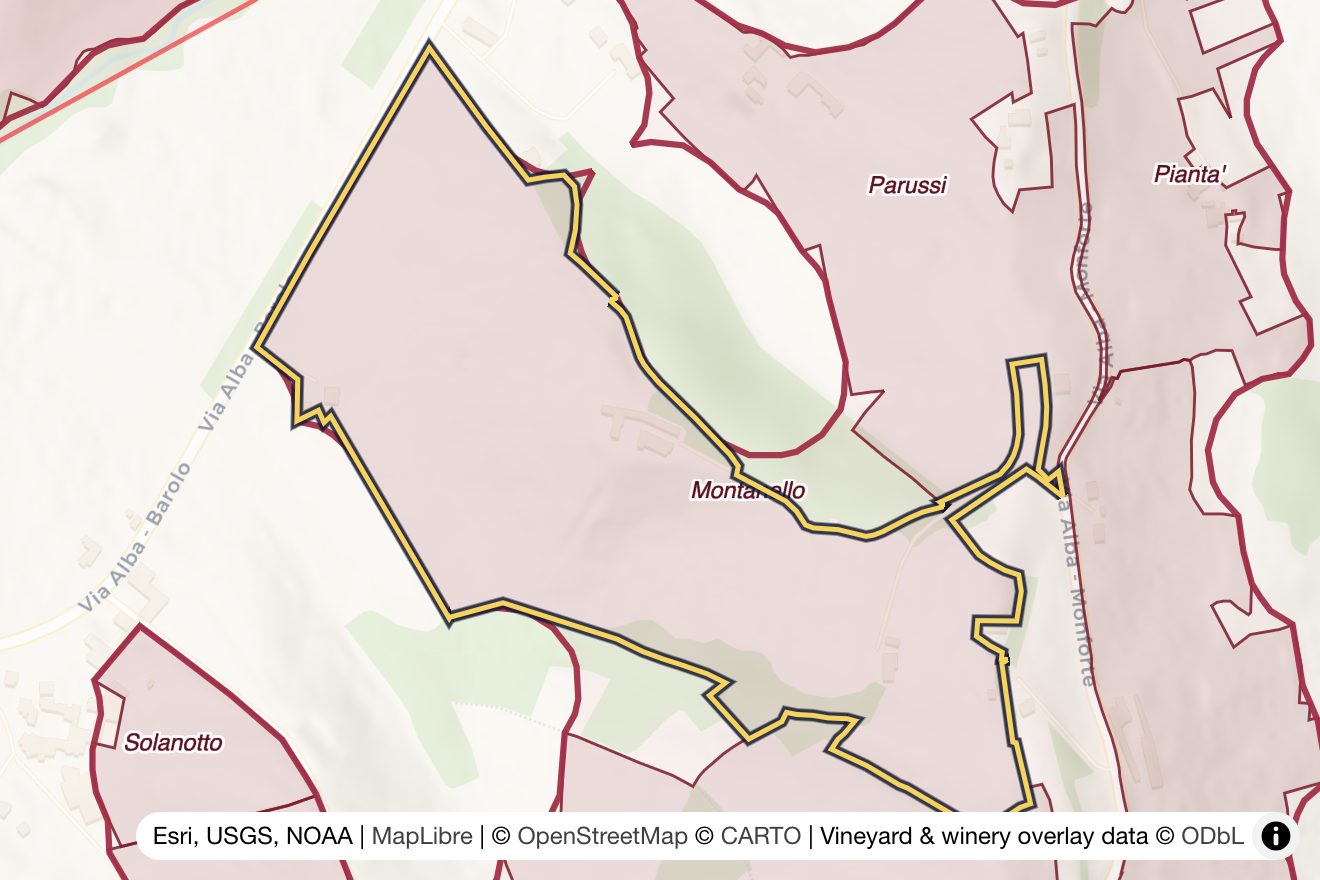
Introduction
The MGA system, established to address the "multiplicity of single-vineyard bottlings from the 1980s" and provide an official framework in the absence of a formal classification, has granted Montanello recognition as an identified cru within the Barolo zone. While these MGAs are not hierarchically classified, their designation represents an important step in codifying the region's traditional vineyard nomenclature and protecting genuine single-vineyard identities.
Serralunga d'Alba Context
To understand Montanello's place in Barolo, one must first appreciate Serralunga d'Alba's distinctive character within the appellation. Serralunga occupies the eastern portion of the Barolo production zone and has historically been associated with wines of considerable power, structure, and longevity. The commune's viticultural heritage is deeply intertwined with Barolo's royal past) it was in Serralunga d'Alba that the hunting lodge of Fontanafredda was developed into vineyards by Emanuele, Count of Mirafiori, son of King Vittorio Emanuele II, further cementing Barolo's reputation as "the wine of kings, the king of wines."
Serralunga's geological foundation differs notably from the Tortonian formations that predominate in La Morra and Barolo to the west. The commune's vineyards are characterized by their particular soil compositions and exposures, which contribute to the distinctive aromatic and structural profiles that distinguish Serralunga Barolos from their neighbors. These wines traditionally exhibit firmer tannins, more pronounced structure, and darker fruit characteristics compared to the more immediately fragrant and supple wines from Tortonian soils.
Terroir Considerations
While specific documentation of Montanello's particular terroir characteristics remains limited in the available literature, the site exists within the broader terroir framework of Serralunga d'Alba. Understanding terroir requires examining the interaction between soil, topography, climate, and viticulture (what contemporary research describes as "managing terroir." Modern viticultural science, building on the foundational work of researchers like Dr. Gérard Seguin of the University of Bordeaux, has demonstrated that "soil's physical characteristics" play a crucial role in vine behavior and wine quality, often superseding purely chemical considerations.
In Barolo's marginal climate, where the influence of terroir is particularly marked, these physical soil attributes) including drainage, water retention capacity, and the depth and layering of soil strata, significantly impact vine physiology and grape ripening. The manner in which roots navigate soil layers "dictates the amount of water and nutrients the plant can access all year long," creating distinctive expressions even within relatively small geographic areas.
The attributes of soil can "change rapidly within a vineyard, both vertically and horizontally," meaning that even within Castiglione Falletto, individual MGAs like Montanello possess unique characteristics that differentiate them from neighboring sites. However, without detailed site-specific studies published in the primary literature on Barolo's crus, definitive statements about Montanello's particular soil profile, elevation, aspect, and microclimate would be speculative.
Wine Character and Evolution
Wines from Serralunga d'Alba MGAs generally reflect the commune's characteristic power and structure, though individual sites express these qualities with varying intensity and nuance. The growing conditions in Serralunga tend to produce Nebbiolo with pronounced tannin profiles and the potential for extended aging, often requiring more cellar time than wines from the western communes before achieving optimal balance and complexity.
The current landscape of Barolo production has evolved significantly since the 1980s proliferation of single-vineyard bottlings. Today, some producers focus on blending multiple sites to create harmonious commune-level wines, while others emphasize single-MGA expressions. This diversity of approach, combined with varying producer philosophies regarding viticulture and winemaking, means that MGA designation alone does not determine wine style or quality. Producer skill, vineyard management, and winemaking choices interact with site characteristics to shape the final wine.
Contemporary Position
Montanello's position as a lesser-documented MGA within Castiglione Falletto reflects the reality that not all officially recognized vineyard sites enjoy equal historical prestige or contemporary acclaim. The traditional hierarchy of Barolo's vineyards, passed down through "both the written tradition (from Lorenzo Fantini in the late 19th century to modern writers such as Luigi Veronelli, Renato Ratti and, more recently, Alessandro Masnaghetti) and in the oral tradition of the zone," has historically concentrated attention and commanded higher prices for certain privileged positions.
While Montanello may not appear on "most shortlists of the finest crus," this reflects relative standing rather than absolute quality potential. The MGA system encompasses a broad range of sites, from historically celebrated premier vineyards to smaller, less renowned parcels that nonetheless produce legitimate Barolo from registered vineyard land. For collectors and enthusiasts, lesser-known MGAs can offer interesting opportunities to explore Serralunga's terroir diversity, often at more accessible price points than the commune's most celebrated sites.
The relative scarcity of published information about Montanello also reflects broader patterns in wine literature, which naturally gravitates toward the most prestigious and commercially significant sites. This does not negate Montanello's validity as a recognized cru or its potential to produce quality Barolo that expresses Serralunga's characteristic strengths.