Introduction
Serralunga d'Alba itself stands as one of the most important wine-producing communes in the Barolo zone, forming part of the denomination's historic core alongside La Morra, Barolo, Castiglione Falletto, and Monforte d'Alba. The zone was demarcated by the Ministry of Agriculture in 1896 and extended by the Agricultural Commission of Alba in 1909. The commune's position within the eastern section of the Barolo zone gives it a distinct terroir profile compared to the more western communes, contributing to the stylistic diversity that characterizes the denomination as a whole.
The Serralunga Context
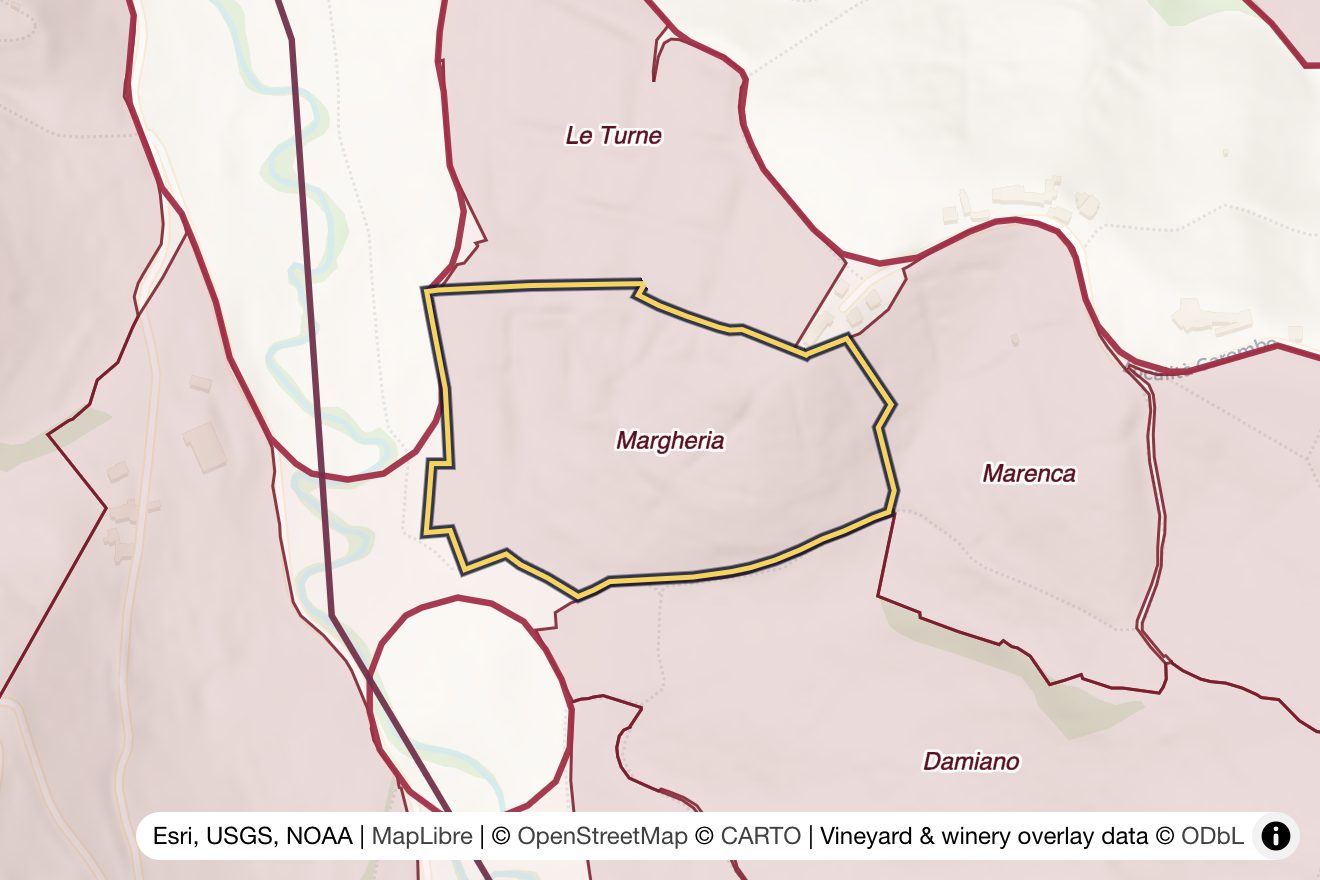
Understanding Margheria requires understanding Serralunga d'Alba's broader terroir characteristics. The commune occupies a distinctive position within the Barolo landscape, and while specific details about Margheria's individual characteristics remain limited in the available documentation, the site necessarily shares certain fundamental attributes with the commune's general terroir profile.
The concept of terroir in Barolo has long been recognized in both written and oral traditions, from Lorenzo Fantini's late 19th-century observations through modern writers such as Luigi Veronelli, Renato Ratti, and Alessandro Masnaghetti. The introduction of the MGA system has brought official recognition to this traditional understanding of site-specific quality, though the MGAs themselves are not hierarchically classified. Masnaghetti has attempted his own unofficial classification, but the official system simply identifies recognized crus without ranking them.
The multiplicity of single-vineyard bottlings that emerged from the 1980s onward, in the absence of official classification, had the paradoxical effect of focusing attention on individual producers rather than sites alone. A producer's skill in "managing terroir", selecting appropriate plant material and adapting management choices to optimize wine quality in each particular environment (became increasingly recognized as crucial to a vineyard's expression. This includes decisions about rootstock selection, vine variety clones, vineyard floor management, training systems, and canopy management, all adapted to the specific characteristics of each site.
Terroir Factors and Wine Quality
The scientific understanding of terroir has evolved considerably, moving beyond purely descriptive approaches focused on individual factors such as geology, geomorphology, soil microbiology, or climate. Dr. Gérard Seguin of the University of Bordeaux pioneered multidisciplinary terroir studies that examined soil, climate, and their combined impact on vine physiology and grape ripening. His research demonstrated that a wide range of soil types can produce high-quality wines, provided they share certain characteristics: moderate fertility and well-regulated, moderately sufficient water supply.
Contemporary scientific opinion largely agrees with Seguin's conclusion that soil's physical characteristics predominate over chemical attributes in determining wine quality. Physical soil properties influence water availability and root development, which in turn affect vine vigor, yield, and ultimately grape composition. This understanding applies across wine regions, though the influence of terroir proves more pronounced in marginal climates) such as those found in Piedmont's Langhe hills (than in warmer viticultural regions.
For any Serralunga vineyard, these soil physical characteristics interact with elevation, aspect, and microclimate to create the conditions for Nebbiolo cultivation. The variety's demanding nature and long growing season make it particularly sensitive to site-specific variations, which explains why vineyard designation has historically carried such significance in Barolo, even before official recognition through the MGA system.
The Serralunga Style
Serralunga d'Alba has traditionally been associated with a particular style within Barolo, though individual vineyard sites express their own variations within this general framework. The commune's most celebrated sites have historically commanded higher prices from négociants for their grapes and wines, reflecting both traditional recognition and market validation of their quality. While Margheria does not appear in the shortlist of Serralunga's most renowned crus alongside Francia, Lazzarito, Ceretta, Arione, and Vignarionda, its official MGA recognition indicates that it produces wines of sufficient distinctiveness and quality to merit individual designation.
The general characteristics of Serralunga wines within the Barolo denomination reflect the commune's specific position and terroir conditions. Individual sites within the commune, including Margheria, contribute to this broader identity while expressing their particular characteristics through the lens of Nebbiolo's site sensitivity.
The MGA System and Wine Labeling
The introduction of the Menzione Geografica Aggiuntiva system brought important changes to Barolo labeling. The regulations now recognize specified single vineyards that may consist of historically individual sites (such as Bussia or Cannubi) or amalgamate several previously separate vineyards into a single MGA designation. The term "vigna" (vineyard) can now only appear on labels if the MGA name is also stated, providing greater clarity and official recognition to the site hierarchy within Barolo.
This formalization of vineyard designations has helped address the confusion that arose from the proliferation of single-vineyard bottlings in the 1980s and beyond. While the MGA system does not classify sites hierarchically) unlike Burgundy's grand cru and premier cru system (it provides official recognition of distinct vineyard identities throughout the Barolo zone. For sites like Margheria, this recognition validates their individual character within the commune of Serralunga d'Alba.
Market Context and Contemporary Challenges
The contemporary Barolo landscape faces various pressures that affect all MGAs, regardless of their individual prestige. The denomination's regulations require wines to be made from 100% Nebbiolo, with minimum aging requirements that distinguish Barolo from its neighboring denomination, Barbaresco. However, the market success of Langhe Nebbiolo) positioned as an accessible, earlier-drinking alternative to Barolo, has created competition within the region itself. This "economy Barolo" has achieved such commercial success that other denominations have recently changed their regulations to allow Nebbiolo on their labels, despite fierce protests from Barolo producers.
For any Barolo MGA, including Margheria, these market dynamics influence production decisions and the economic viability of maintaining lower yields and longer aging periods required for DOCG wines. The higher returns guaranteed by Barolo production compared to alternatives like Dolcetto or Barbera help maintain the focus on Nebbiolo in recognized sites, though the broader market pressures affect the entire denomination.
Conclusion
Margheria represents one of the officially recognized vineyard sites within Serralunga d'Alba, part of the broader constellation of MGAs that compose the Barolo denomination. While it does not appear among the most historically celebrated crus of its commune, its official recognition indicates sufficient distinctiveness to merit individual designation within the MGA system. The limited available documentation about the site's specific characteristics reflects its position as a lesser-known rather than premier cru within Serralunga, though the site undoubtedly contributes to the commune's diverse terroir expression.
Understanding any individual MGA requires recognizing both the broader communal context and the site-specific factors that create distinctive wines. For Margheria, as for all Serralunga sites, these factors interact through the demanding medium of Nebbiolo, a variety whose sensitivity to terroir variation has long justified Barolo's tradition of vineyard-designated wines. The MGA system has formalized this tradition, providing official recognition while leaving questions of hierarchical quality to the market, critics, and the evolving understanding of producers and consumers.