Introduction
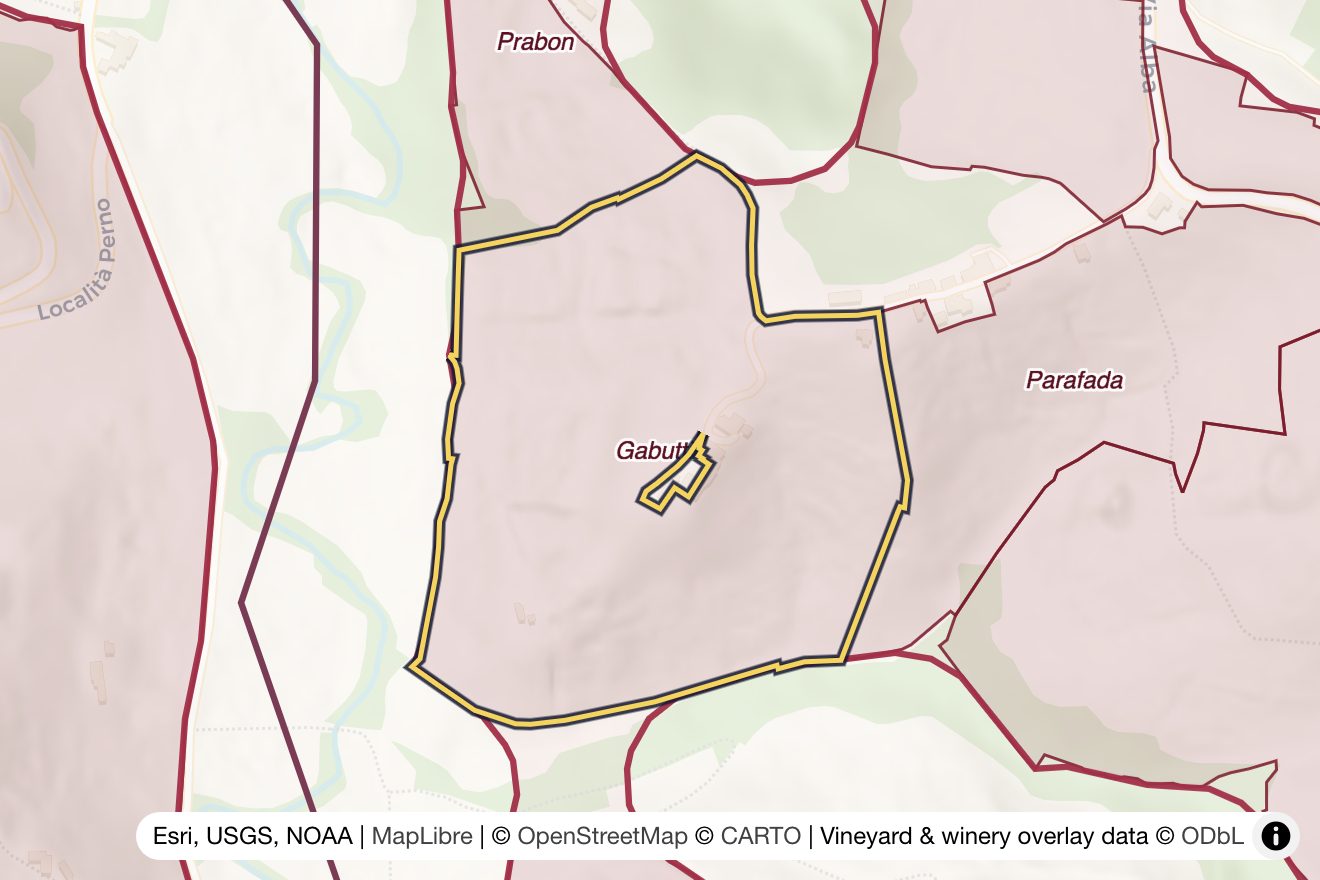
The introduction of the MGA system represented a significant development in Barolo's evolution, providing an official registry of single vineyards throughout the denomination. While these sites are identified as 'crus,' they remain unclassified in any hierarchical sense, leaving the wine trade and critics to determine relative prestige through market recognition and critical assessment. Gabutti's inclusion in this official framework confirms its status as a historically recognized vineyard site, and one whose reputation long predates the MGA system.
Serralunga d'Alba: Context and Character
Understanding Gabutti requires first understanding Serralunga d'Alba's distinctive position within Barolo. The commune has historically contributed to Barolo's prestige and royal associations. The development of vineyards around the hunting lodge of Fontanafredda in Serralunga by Emanuele, Count of Mirafiori) son of King Vittorio Emanuele II and his mistress Rosa Vercellana (connected the area directly to the Italian royal family. This association helped establish Barolo's enduring reputation as "the wine of kings, the king of wines."
Serralunga d'Alba's viticultural identity has been shaped by centuries of refinement. The zone was included in early delimitation work by the Ministry of Agriculture in 1896, and the Barolo zone was extended by the Agricultural Commission of Alba in 1909, an early step toward the boundaries in force today. This long tradition of recognition speaks to the consistent quality and distinctive character that Serralunga vineyards have delivered across generations.
The commune's wines are generally characterized by their structural power, firm tannins, and exceptional longevity. These qualities reflect the interaction of multiple terroir factors) soil composition, topography, elevation, and microclimate (that distinguish Serralunga from its neighboring communes. While La Morra tends toward elegance and perfume, and Barolo itself offers complexity and balance, Serralunga has built its reputation on wines that demand patience and reward extended cellaring.
Terroir and the Serralunga Expression
The attributes of soil can change rapidly within a vineyard, both vertically and horizontally, creating significant variation even within a single site. In Serralunga, as throughout Barolo, the manner in which roots navigate complex layering of soil strata dictates the amount of water and nutrients the plant can access throughout the growing season. This vertical complexity interacts with topographical variation) differences in slope, aspect, and elevation (to create the distinctive mesoclimates that define individual MGAs.
Research on terroir factors has demonstrated that a wide range of soil types can produce high-quality wines when certain fundamental conditions are met. Studies by Dr. Gérard Seguin of the University of Bordeaux showed that diverse soils share common characteristics in top sites: moderate fertility and well-regulated, moderately sufficient water supply. These conditions encourage balanced vine growth and optimal grape ripening, allowing the plant to achieve physiological maturity without excessive vigor or water stress.
In Serralunga specifically, the geological substrate and soil composition contribute to wines of particular structure and concentration. The interaction between training systems, soil characteristics, and rootstock selection creates the foundation for vine ecophysiology, influencing vigor, yield, and ultimately wine quality. Skilled viticulturists understand these relationships, selecting appropriate plant material and adapting management choices) vineyard floor maintenance, training systems, canopy management (to optimize wine quality in each particular environment. This approach might be described as "managing terroir," recognizing that human intervention can enhance or diminish the potential expressed by natural conditions.
Despite receiving the same amount of rainfall, different parts of a vineyard may have vastly different water access due to variations in topography and the depth and composition of soil layers. These distinctions manifest as variation in vine vigor and, ultimately, in the character of the fruit. Block divisions and management strategies prove most effective when they contemplate and respond to these differences.
Wine Characteristics and the Serralunga Style
Wines from Serralunga d'Alba, including those from Gabutti, typically express the commune's characteristic power and structure. The Nebbiolo grown here develops firm tannic frameworks and concentrated fruit that require extended aging to reveal their full complexity. These are not wines for early consumption; rather, they represent Barolo's most age-worthy expressions, often requiring a decade or more to begin showing their full potential.
The contemporary market has complicated this traditional understanding somewhat. The success of Langhe Nebbiolo) sometimes described as "economy Barolo", has taken the market by storm, offering more approachable expressions of Nebbiolo that can be enjoyed without extended cellaring. This commercial success has influenced vineyard management and production throughout the zone, with some vineyards that might historically have contributed to Barolo now directed toward Langhe Nebbiolo production. This shift reflects changing consumer preferences and economic realities, though the finest sites in Serralunga continue to be dedicated to producing traditional Barolo that expresses the full potential of the vineyard.
Historical Practice and Modern Understanding
The historical development of Barolo involved considerable blending by négociant houses, who combined wines from different provenances into house bottlings that exemplified the general characteristics of the denomination. When skillfully executed, this practice created balanced and harmonious wines, much as their counterparts in Burgundy achieved through similar methods. However, certain privileged positions have always commanded greater prestige and higher prices, their distinctive qualities recognized both in written tradition (from Lorenzo Fantini in the late 19th century through modern writers such as Luigi Veronelli, Renato Ratti, and Alessandro Masnaghetti) and in the oral tradition of the zone.
The proliferation of single-vineyard bottlings from the 1980s onward paradoxically focused attention on individual producers rather than creating a clear hierarchy of sites. In the absence of an official classification, reputation became tied as much to the producer as to the vineyard, a situation that the MGA system has only partially addressed. The system identifies and registers sites without ranking them, leaving the market to determine relative prestige through prices, critical scores, and collector demand.
Conclusion
Gabutti MGA represents a historic position within Serralunga d'Alba's viticultural landscape. Its official recognition as an MGA confirms its historical significance and continued relevance in Barolo production. The wines from this site would be expected to express Serralunga's characteristic structure and aging potential, offering powerful, tannic expressions of Nebbiolo that reveal their complexity with time.
The site's ultimate reputation depends on the skill of the producers working it and the market's ongoing assessment of the wines' quality and distinctiveness. In Barolo's complex hierarchy of sites and reputations, positions can shift over time as new producers bring fresh perspectives and as changing climate conditions alter traditional expressions. Gabutti's place in this landscape continues to evolve, its wines contributing to the broader tapestry of Serralunga's distinctive contribution to the Barolo denomination.