Introduction
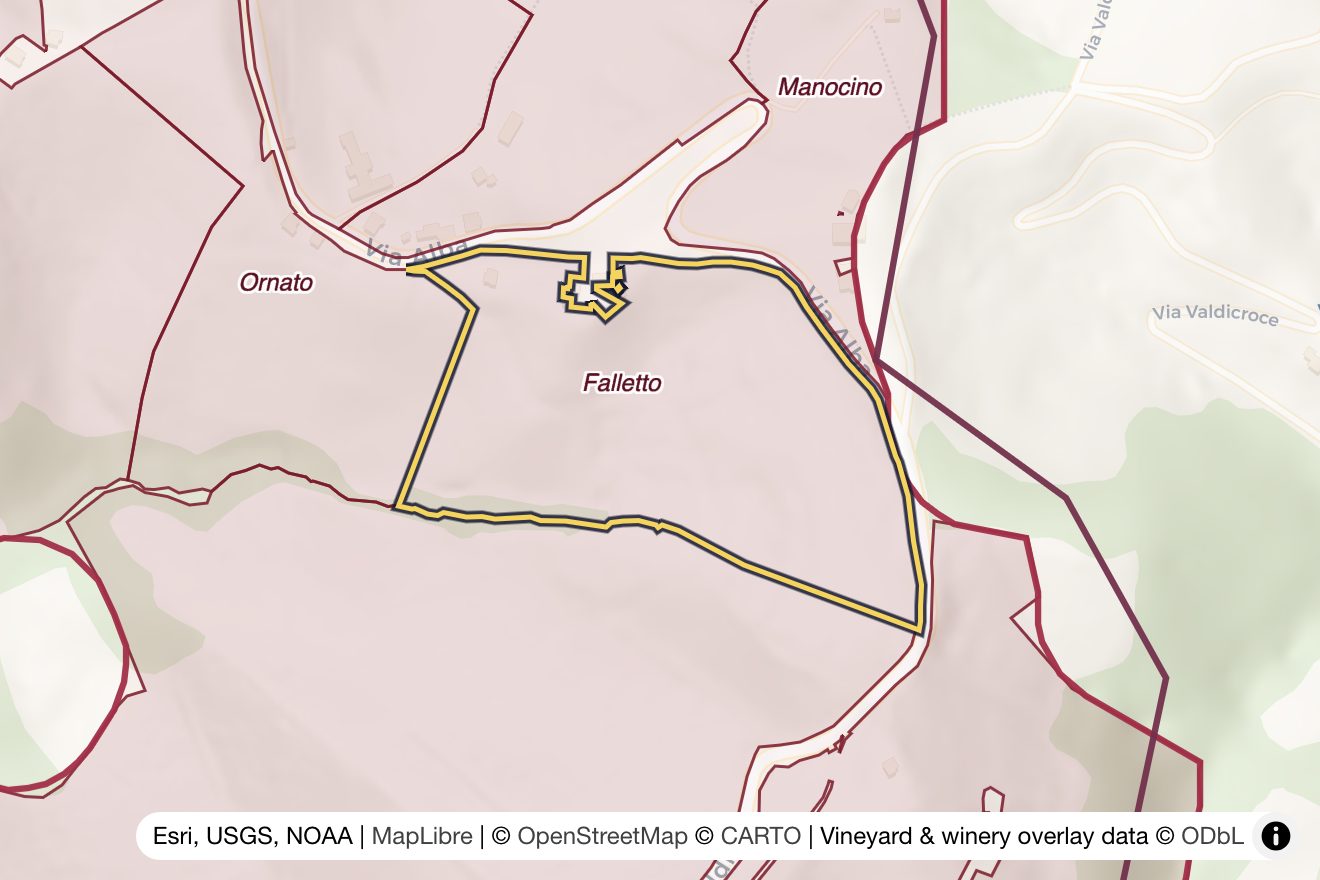
While Serralunga's most celebrated MGAs (Francia, Lazzarito, Ceretta, Arione, and Vignarionda) typically dominate discussions of the commune's finest sites, Falletto occupies a unique position in the hierarchy. Its monopole status means that the site's reputation is inextricably linked to a single producer's vision, similar to how Francia belongs exclusively to Giacomo Conterno. This has both advantages and limitations: the wine's character remains remarkably consistent and pure in expression, but our understanding of the site's potential is viewed through a single lens rather than the diverse interpretations multiple producers might offer.
Terroir and Viticultural Context
Serralunga d'Alba, the easternmost of Barolo's five core communes, possesses some of the denomination's most distinctive terroir. The commune's geology is dominated by the Lequio Formation, older Serravallian (Helvetian) soils that differ markedly from the younger Tortonian marls found in La Morra and much of Barolo village. These Serralunga soils are sandier and poorer than the Sant'Agata Fossil Marls of the western communes, with a higher proportion of sandstone. The result is a heavier, more mineral-dense soil structure that influences vine behavior and grape development.
The physical characteristics of Serralunga soils (their compactness, drainage patterns, and mineral composition) contribute to wines of remarkable structure and longevity. As research from Bordeaux scholar Gérard Seguin demonstrated, soil's physical attributes often predominate over chemical composition in determining wine quality. The moderate fertility and well-regulated water supply that characterize quality sites prove particularly relevant in Serralunga, where the soil's density naturally limits water availability and restricts vigor, encouraging the vine to develop deep root systems that explore various soil strata throughout the growing season.
Serralunga's vineyards generally occupy elevations between the denomination's minimum of 170 meters and maximum of 540 meters, positioning vines on hillsides with favorable southern and southwestern exposures. These regulations, implemented alongside the MGA system, prohibit plantings on valley floors and northern exposures, ensuring Nebbiolo receives adequate sunlight and warmth in this marginal climate. The commune's topography and its position farther from the Tanaro River create a slightly warmer, drier mesoclimate compared to the western communes, though the differences are subtle in this cool-climate region where terroir expression remains paramount.
Wine Characteristics
Falletto, like Serralunga wines generally, produces Barolo of profound structure and extraordinary aging potential. The wines typically display the commune's signature architecture: formidable tannins, pronounced acidity, and a masculine, austere profile in youth that can seem forbidding without adequate cellaring. This structural intensity stems directly from the terroir (the compact, mineral-rich soils slow ripening and concentrate the grapes' phenolic compounds, while the slightly warmer mesoclimate allows for full physiological ripeness despite Nebbiolo's late-ripening nature.
The aromatic profile of Serralunga Barolos, including Falletto, tends toward darker fruit expressions) black cherry, plum, blackberry (rather than the red fruit delicacy often found in La Morra or Barolo village wines. These wines reveal complex secondary and tertiary characteristics: tar, leather, tobacco, dried roses, iron, underbrush, and truffle. The mineral tension remains a defining characteristic, providing a backbone that carries the wine through decades of evolution.
Bruno Giacosa's approach to Falletto has consistently emphasized traditional winemaking while respecting the site's inherent power. Long maceration periods extract the full phenolic potential, while extended aging in large Slavonian oak casks (botti) allows the wine to integrate its formidable structure without adding extraneous oak flavor. The result showcases terroir rather than technique) a wine that speaks clearly of its origin while bearing Giacosa's signature refinement and balance.
The aging potential of Falletto deserves particular emphasis. While Barolo's DOCG regulations mandate 38 months of aging before release (with at least 18 months in oak), wines of this caliber demand significantly longer cellaring. A decade in bottle represents a minimum for approaching maturity; two to three decades allow the wine to reveal its full complexity. In exceptional vintages, Falletto can evolve gracefully for forty years or more, gradually transforming its youthful power into haunting elegance.
Historical Significance and Recognition
The introduction of the MGA system represented a partial solution to Barolo's long-standing absence of official classification. While the proliferation of single-vineyard bottlings from the 1980s onward paradoxically focused attention on individual producers rather than sites, the MGA system created an official registry of recognized crus throughout the Barolo zone. These designations, while not classified hierarchically, represent formal acknowledgment of historically significant vineyard sites and provide crucial geographic specificity for consumers and collectors.
Falletto's monopole status places it in rare company within the Barolo denomination. Few sites remain under single ownership, and those that do (Francia being the most famous example) often represent a family's most prized holdings, carefully farmed and jealously guarded across generations. This exclusivity has preserved Falletto's character and maintained consistent quality standards, though it has also meant that knowledge of the site's potential remains filtered through Bruno Giacosa's particular viticultural and enological approach.
The Bruno Giacosa estate's reputation (built over decades through wines of extraordinary quality and longevity) has elevated Falletto's status within the denomination. While it may not appear on every shortlist of Barolo's most celebrated sites, serious collectors recognize wines from this MGA as benchmarks of Serralunga character and traditional Barolo craftsmanship. The monopole's singularity makes direct comparison difficult, but the wines' consistent excellence over numerous vintages has established Falletto as one of Serralunga's reference points.
Conclusion
Falletto represents a fascinating case study in Barolo's complex terroir mosaic. Its monopole status distinguishes it from most MGAs, where multiple producers offer varying interpretations of a shared site. Instead, Falletto's identity has been shaped exclusively by Bruno Giacosa's vision: a vision that emphasizes tradition, terroir transparency, and uncompromising quality standards. For enthusiasts seeking to understand Serralunga d'Alba's distinctive character, wines from Falletto provide an essential reference point, demonstrating how the commune's unique geology and mesoclimate translate into wines of remarkable structure, complexity, and aging potential. The site may not command the same universal recognition as some of its neighbors, but its wines speak eloquently of place, rewarding patient collectors with decades of evolution and pleasure.