Introduction
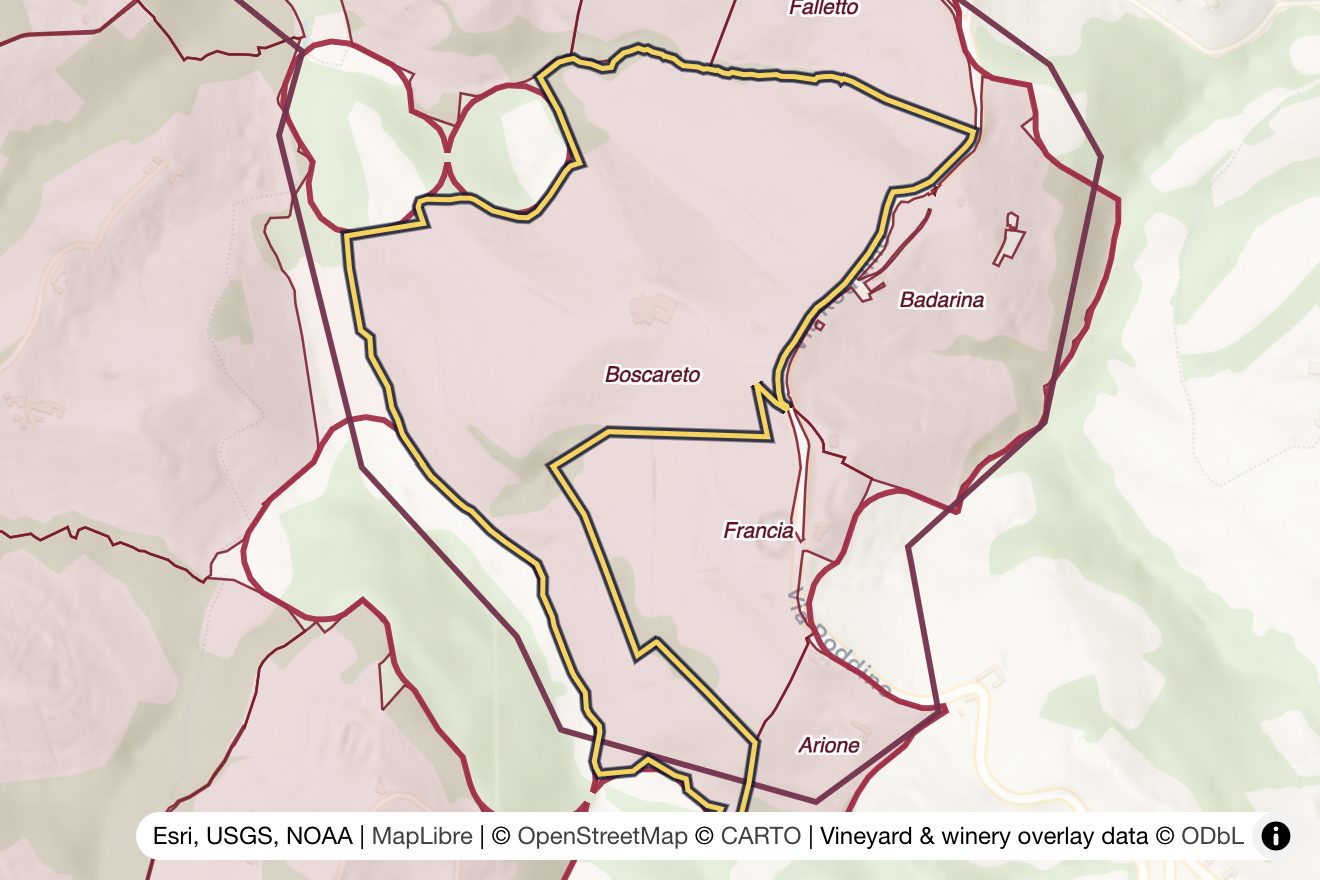
The introduction of the MGA system provided official recognition to Barolo's single vineyards, identifying them as 'crus' within an official registry, though notably without hierarchical classification. This formalization addressed the paradoxical situation that emerged from the proliferation of single-vineyard bottlings beginning in the 1980s, which, in the absence of official classifications, had reinforced confidence in individual producers rather than specific sites. While Alessandro Masnaghetti has attempted his own unofficial classification of these MGAs, Boscareto does not feature prominently in the shortlists of Barolo's most distinguished crus that appear consistently across both historical written traditions and the oral knowledge of the zone.
Serralunga d'Alba: Commune Context
To understand Boscareto, one must first understand its position within Serralunga d'Alba, a commune that produces some of Barolo's most structured and age-worthy expressions of Nebbiolo. Serralunga gained particular historical prominence through its association with Italy's reigning Savoy dynasty in the 19th century. Emanuele, Count of Mirafiori and son of King Vittorio Emanuele II by his mistress Rosa Vercellana, developed the extensive vineyards around the royal hunting lodge of Fontanafredda in Serralunga d'Alba. This aristocratic connection contributed to Barolo's enduring moniker as "the wine of kings, the king of wines."
Serralunga's viticultural reputation rests on distinctive characteristics that differentiate its wines from those of neighboring communes. The structural power, pronounced tannins, and exceptional longevity of Serralunga Barolos stand in contrast to the more perfumed, earlier-maturing wines from La Morra or the elegant balance typical of Castiglione Falletto. This commune-level identity provides the broader context within which Boscareto must be understood.
Terroir Considerations
While specific soil analysis and microclimate data for Boscareto itself remain limited in the available literature, the site's location in Serralunga positions it within the commune's general terroir framework. Contemporary viticultural science, building on the foundational work of Dr. Gérard Seguin at the University of Bordeaux, emphasizes that physical soil characteristics (particularly drainage, water-holding capacity, and soil structure) predominate over chemical composition in determining wine quality potential.
The most successful viticultural sites share certain physical attributes: moderate fertility and well-regulated water supply that creates measured vine stress without deficiency. In marginal climates such as Piedmont's, where the continental climate brings warm summers, cold winters and autumn fog, the influence of terroir expresses itself with particular clarity. The interplay between soil depth, composition, and topography creates variation even within individual vineyards, with different sections potentially offering distinct water access despite receiving identical rainfall.
For Serralunga sites generally, the capacity of soils to regulate water availability throughout the growing season proves crucial for achieving optimal phenolic ripeness in Nebbiolo while maintaining the variety's characteristic acidity and aromatic complexity. The manner in which vine roots navigate the complex layering of soil strata dictates the plant's access to water and nutrients throughout the year, ultimately influencing grape composition and wine character.
Wine Characteristics
Boscareto wines, by virtue of their Serralunga provenance, typically exhibit the structural signature of the commune: firm tannic frameworks, deep color extraction, and concentration that rewards extended cellaring. However, as a secondary site within Serralunga's hierarchy, Boscareto may not achieve the extraordinary depth, complexity, or aging trajectory of the commune's premier crus.
The challenge and opportunity for producers working Boscareto lies in what contemporary viticultural science describes as "managing terroir", selecting appropriate plant material (rootstock and vine variety combinations) and adapting management choices including vineyard floor maintenance, training systems, and canopy management to optimize wine quality within this particular environment. These human decisions, made in response to site-specific conditions, ultimately determine whether a secondary site can produce wines that transcend its classification and compete with more celebrated neighbors.
The typical aromatic profile of Serralunga Nebbiolo (darker fruit character, pronounced minerality, and substantial structure) provides the template for Boscareto expressions, though individual producer philosophy and winemaking approach introduce significant variation. The extended maceration periods and judicious oak aging commonly employed for Serralunga fruit aim to integrate the naturally robust tannins while preserving the variety's essential elegance and perfume.
Contemporary Context
The modern Barolo landscape presents particular challenges and opportunities for sites like Boscareto. The explosive success of Langhe Nebbiolo as "economy Barolo" has created market dynamics that affect how producers approach their MGA bottlings. This designation, which has "taken the market by storm," offers consumers more accessible expressions of Nebbiolo while allowing producers to reserve their most distinguished fruit for single-vineyard Barolo bottlings.
For Boscareto, this market structure means that the MGA designation serves to differentiate the site from generic Barolo or communal Serralunga d'Alba bottlings, even as it acknowledges position below the commune's most celebrated crus. The lack of official hierarchical classification within the MGA system means that ultimate quality distinctions remain determined by producer reputation, critical reception, and market prices rather than regulatory decree (a continuation of the tradition that has long characterized Barolo's viticultural landscape.
Conclusion
Boscareto represents a category of Barolo MGA that merits attention not as a grand cru competitor but as an example of how Serralunga's distinctive terroir expresses itself across sites of varying prestige. In the absence of extensive documentation or widespread critical acclaim, these secondary sites offer opportunities for value-conscious consumers seeking authentic Serralunga character and for ambitious producers aiming to elevate lesser-known vineyards through meticulous viticulture and thoughtful winemaking.
The site's ultimate significance will be determined not by historical reputation but by the ongoing work of producers committed to expressing its particular character with clarity and conviction. In this respect, Boscareto participates in the broader evolution of Barolo, where the focus has partially shifted from purely site-based prestige to the intersection of terroir and human expertise) a dynamic that continues to shape this historic wine region's contemporary identity.