Introduction
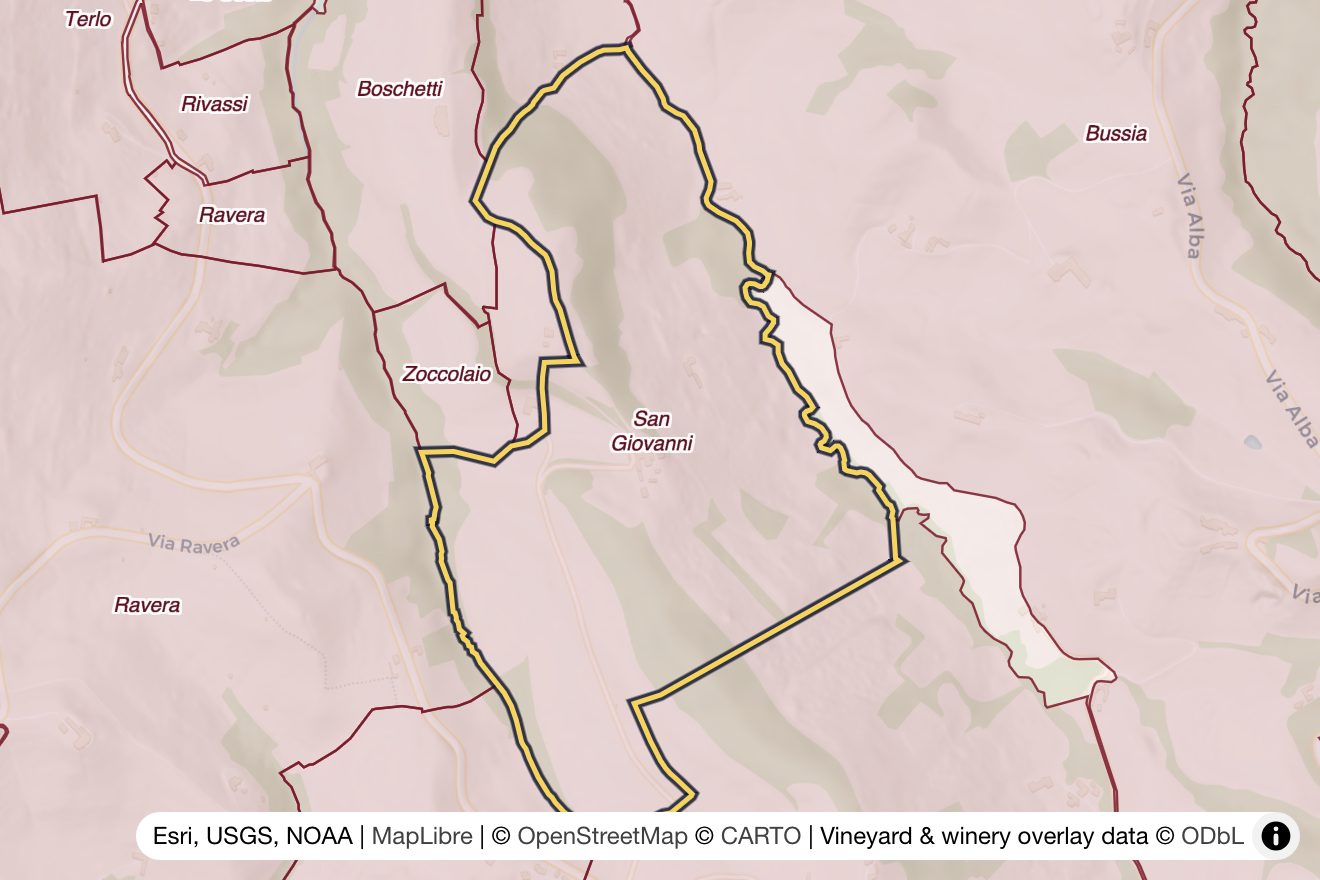
The introduction of the Menzione Geografica Aggiuntiva system created an official registry of single vineyards throughout the Barolo zone, identifying them as recognized crus without imposing a hierarchical classification. This formalization has brought attention to numerous sites beyond the already-famous names, allowing lesser-known but potentially high-quality vineyards like San Giovanni to establish their own identity in the market.
Monforte d'Alba: The Eastern Terroir
To understand San Giovanni, one must first understand its position within Monforte d'Alba, which sits in the eastern section of the Barolo production zone. The commune of Monforte d'Alba lies east of the Alba-Barolo road that runs through the valley floor) a geographic division that roughly corresponds to a fundamental geological distinction in Barolo's terroir.
The vineyards of Monforte d'Alba, along with those of Castiglione Falletto and Serralunga d'Alba in the eastern sector, are characterized by soils from the Helvetian epoch (also known as Serravallian), which contain a higher proportion of compressed sandstone compared to the calcareous marls found in the western communes of La Morra and Barolo. This soil type, known locally as Lequio formation, is less fertile and more compact than the Tortonian marls, creating a distinctly different viticultural environment.
The Helvetian soils of Monforte typically produce Barolo with more structure, firmer tannins, and greater aging potential compared to the often softer, more immediately aromatic wines from the Tortonian marls of the western communes. These are wines that demand patience, revealing their complexity only after years in bottle.
Terroir Characteristics
While specific microclimate and soil data for San Giovanni itself remains sparsely documented in wine literature, the vineyard shares the general terroir characteristics of Monforte d'Alba. The commune's vineyards typically occupy elevations ranging from 300 to 500 meters, with the most prized sites generally on south to southwest-facing slopes that maximize sun exposure for the late-ripening Nebbiolo grape.
The physical characteristics of the soil (its drainage capacity, water-holding potential, and the vine's ability to develop deep root systems) play a crucial role in wine quality. Research by Professor Gérard Seguin of the University of Bordeaux demonstrated that high-quality wine production depends significantly on soils with moderate fertility and well-regulated, moderately sufficient water supply. The compressed sandstone soils prevalent in Monforte align with these principles, forcing vines to work for their nutrients and water, resulting in smaller berries with higher skin-to-juice ratios and more concentrated flavors.
The Helvetian formation's sandstone component also influences drainage patterns and soil temperature, factors that affect both the timing of ripening and the aromatic development of Nebbiolo. These cooler, well-drained soils tend to preserve acidity while allowing for complete phenolic ripeness (the holy grail of Barolo production.
Wine Characteristics
Barolo from Monforte d'Alba, including wines that would originate from San Giovanni, must adhere to the denomination's strict regulations: 100% Nebbiolo, maximum yields of 56 hectoliters per hectare, and minimum aging of 38 months (with at least 18 months in oak) before release. These requirements, among Italy's most stringent, ensure that only wines of substantial structure and aging potential bear the Barolo name.
Wines from Monforte's Helvetian soils typically display the more masculine, structured side of Barolo's personality. Expected characteristics include:
Structure and Tannins: Pronounced tannic grip, firm and tightly woven in youth, requiring substantial bottle age to integrate. The sandstone influence contributes to a mineral-driven backbone and sometimes an almost austere quality in young wines.
Aromatic Profile: Classic Nebbiolo aromatics of tar, rose, and red cherry, often with additional notes of tobacco, leather, dried herbs, and forest floor. Compared to the more immediately perfumed wines from Tortonian marls, Monforte Barolos may be more reticent in youth, revealing their complexity gradually.
Palate Weight: Full-bodied with substantial extract, though never heavy. The wine's high acidity and tannic structure create a tension that defines great Barolo) power held in check by freshness and elegance.
Aging Potential: The structured nature of Monforte wines generally translates to excellent longevity, with the best examples evolving beautifully over 20-30 years or more.
Current Context and Recognition
The reality of San Giovanni's position within the Barolo hierarchy is that it has not achieved the recognition or commercial prestige of Monforte's better-known MGAs such as Bussia, Ginestra, Mosconi and Perno. This absence from critical consensus about Monforte's finest sites (as documented by influential voices from Luigi Veronelli and Renato Ratti through to contemporary authorities like Alessandro Masnaghetti) suggests either limited historical single-vineyard bottling or a more recent development as a distinct cru.
This is not necessarily an indication of inferior quality. The paradoxical result of the proliferation of single-vineyard bottlings from the 1980s onward has been to focus attention on individual producers rather than solely on site. In the absence of an official classification system (the MGA registry identifies but does not rank), a vineyard's reputation often depends as much on who is working it and how they are farming and vinifying as on the intrinsic qualities of the site itself.
For wine enthusiasts seeking value within Barolo, lesser-known MGAs like San Giovanni can offer compelling opportunities. These sites may be worked by quality-conscious producers who lack the commercial power of larger, more established names, or they may represent parcels that simply haven't been historically bottled separately until recent decades. The key, as always in Barolo, is to know the producer.
Conclusion
San Giovanni stands as one of Monforte d'Alba's officially recognized vineyard sites within a commune celebrated for producing some of Barolo's most structured and age-worthy expressions of Nebbiolo. While it lacks the historical pedigree and contemporary recognition of its more famous neighbors, it shares the fundamental terroir characteristics (Helvetian sandstone soils, favorable exposures, and the marginal continental climate that makes Nebbiolo so compelling) that have made Monforte d'Alba a pillar of Barolo production.
As the Barolo zone continues to expand and evolve, with plantings increasing dramatically since the 1990s and the MGA system bringing formal recognition to dozens of sites, the coming decades will reveal whether San Giovanni can establish its own distinct identity and quality reputation. For now, it remains a name for curious enthusiasts to watch, particularly when encountered from serious producers committed to expressing the unique character of their individual holdings within this great wine region.