Introduction
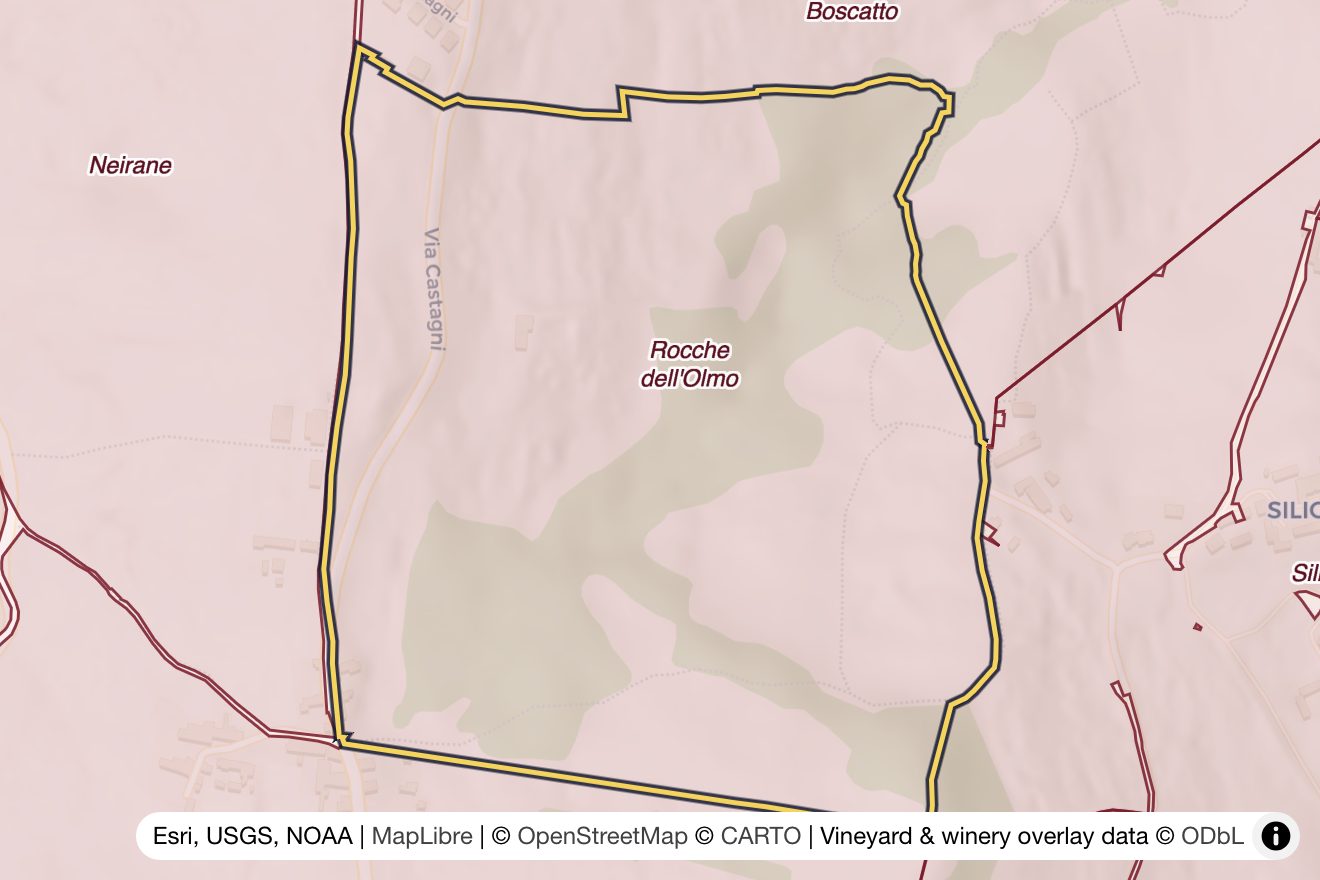
The introduction of the MGA system provided official recognition to vineyard sites throughout the Barolo zone, creating a framework that acknowledges historical designations while allowing lesser-known sites like Rocche dell'Olmo to gain formal status. Though not among the most historically documented or commercially prominent crus, Rocche dell'Olmo benefits from its location within Verduno, a commune whose geological and climatic conditions have long been recognized for their suitability to Nebbiolo cultivation.
Terroir and Location
La Morra's viticultural identity is fundamentally shaped by its soils, which differ markedly from those found in the communes of Serralunga d'Alba, Monforte d'Alba, and parts of Castiglione Falletto. The commune is characterized predominantly by Tortonian soils) younger, more calcareous marls that derive from the Tertiary period. These soils, rich in sand and silt with significant calcium carbonate content, contrast with the older, more compact Serravallian (Helvetian) sandstones that dominate in Serralunga and parts of Monforte, which tend to produce more structured, austere wines requiring extended aging.
The Tortonian formations that define La Morra's geology create physical soil conditions that influence water regulation and vine nutrition in ways that favor elegance over power. These younger marls tend to be more friable and permeable than the harder sandstones found elsewhere in the zone, allowing for moderate water retention while ensuring adequate drainage, conditions that help produce wines of refinement and aromatic complexity rather than sheer structural density.
Rocche dell'Olmo, like other Verduno sites, benefits from vineyard positions that typically offer good sun exposure, though specific details regarding its precise elevation, aspect, and microclimate variations distinguish it from neighboring MGAs. The topography of La Morra is characterized by rounded hills and gentler slopes compared to the more dramatic relief found in Serralunga, and this geomorphology influences both mesoclimate and the practical aspects of vineyard management.
Wine Characteristics
Wines from the western communes such as La Morra and Verduno, including those from Rocche dell'Olmo, typically express the more immediately appealing side of Barolo's personality. The Tortonian soils tend to produce wines that emphasize aromatic expression and textural finesse over the iron-fisted tannic grip characteristic of sites on Serravallian sandstone. This is not to suggest these wines lack structure or aging potential (Nebbiolo's inherent tannins and acidity ensure longevity) but rather that they achieve their balance through elegance rather than power.
The aromatic profile of La Morra Barolos often showcases floral notes (rose petals and violets) alongside red fruit characters such as cherry, raspberry, and strawberry. These wines tend to develop their secondary and tertiary characteristics somewhat earlier than their counterparts from Serralunga or Monforte, with notes of leather, tobacco, tar, and dried flowers emerging within the first decade or two of bottle age. The tannins, while present and providing necessary structure, typically integrate more readily, making La Morra wines more approachable in their youth while still rewarding patience.
Rocche dell'Olmo would be expected to reflect these broader communal characteristics while expressing its own particular interpretation based on its specific mesoclimate, exact soil composition, and the viticultural and winemaking choices of producers working the site. The interplay between the commune's general terroir signature and site-specific variation is what makes the study of individual MGAs compelling, even when a vineyard has not achieved the fame of its more celebrated neighbors.
Context Within Verduno's Hierarchy
It is important to understand Rocche dell'Olmo's position within Verduno's qualitative hierarchy. The written tradition regarding Barolo crus, from Lorenzo Fantini in the late 19th century through Luigi Veronelli, Renato Ratti, and contemporary authorities like Alessandro Masnaghetti, has consistently identified certain sites as the commune's finest. In Verduno, Monvigliero, on a south-facing slope, is widely regarded as the most celebrated vineyard.
These top-tier sites have established their reputations through centuries of observation and the premium prices commanded by their grapes and wines, market recognition that reflects both historical prestige and consistent quality. Rocche dell'Olmo, by contrast, represents what might be termed a lesser-known tier of Verduno MGAs: officially recognized sites that produce legitimate Barolo but without the same depth of historical documentation or commercial prominence.
This positioning does not diminish the potential quality of wines from Rocche dell'Olmo. The introduction of the MGA system has had the paradoxical effect of focusing attention on individual producers rather than solely on vineyard sites. In the absence of an official classification, a talented winemaker working a less-famous MGA can produce wines of excellence that compete with more celebrated bottlings. The producer's skill in understanding and expressing the particular characteristics of their holdings becomes as important as the inherent advantages of any given terroir.
Conclusion
Rocche dell'Olmo occupies a position in Barolo's landscape that is both defined by and distinct from La Morra's general character. As an officially recognized MGA, it contributes to the commune's diverse expression of Nebbiolo while maintaining its own identity within the broader framework of Tortonian-soil sites. For wine enthusiasts seeking to understand Barolo's complexity beyond its most famous names, exploring MGAs like Rocche dell'Olmo offers insight into the appellation's full spectrum of terroir expression and the ongoing evolution of how single vineyards are understood and valued.
The site serves as a reminder that Barolo's greatness extends beyond a handful of celebrated crus to encompass a rich diversity of vineyard sites, each contributing its voice to one of the wine world's most compelling and terroir-driven appellations.