Introduction
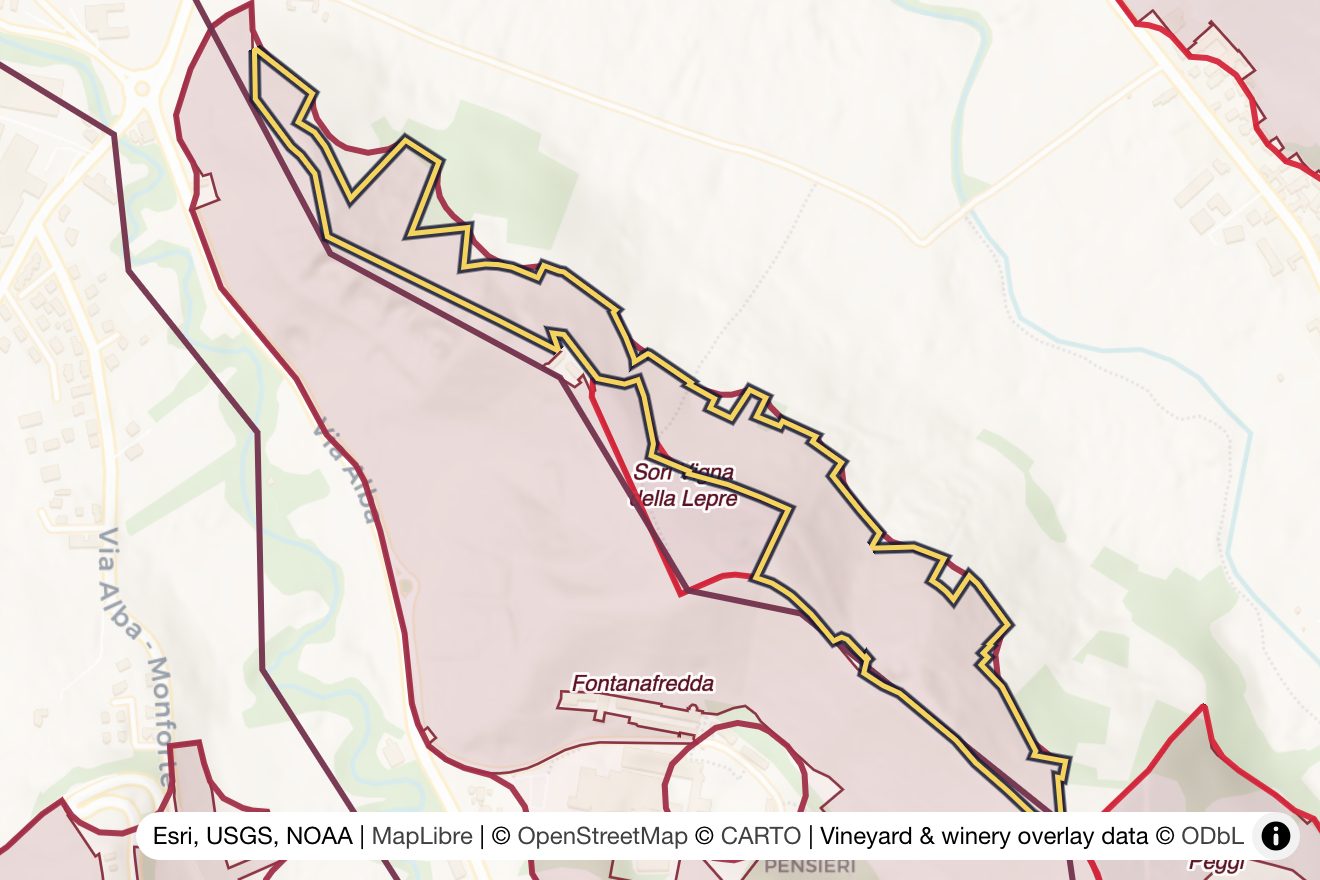
The inclusion of Gallaretto within the official MGA registry represents formal recognition of its status as a recognized cru within the Barolo appellation. The MGA system, introduced to bring order and transparency to Barolo's complex patchwork of historic vineyard sites, establishes Gallaretto as an officially identified vineyard capable of producing site-designated Barolo, though it remains among the less documented and less commercially prominent sites within the appellation.
Geographic and Administrative Context
Understanding Gallaretto requires understanding Diano d'Alba's peculiar relationship to the Barolo DOCG. Diano d'Alba is one of seven communes that fall only partially within Barolo's boundaries (the others being Monforte d'Alba, Novello, La Morra, Verduno, Grinzano Cavour, and Roddi. In Diano d'Alba's case, geographical and geological considerations led to the exclusion of all but a western slice from the Barolo zone during the appellation's delimitation. This places Gallaretto within a transitional landscape where Barolo's territorial boundaries meet areas dedicated to other expressions of Nebbiolo.
The Nebbiolo d'Alba DOC, spread across communes surrounding Alba, represents an important center of Nebbiolo production outside the traditional Barolo heartland. The soils in areas excluded from Barolo) particularly on the sandier soils that predominate in much of the surrounding territory (tend to produce wines that are softer, less intense, and faster maturing than traditional Barolo. This geological and stylistic contrast underscores the significance of those vineyard sites, including Gallaretto, that met the criteria for inclusion within the more restrictive Barolo DOCG.
Terroir Considerations
While specific terroir documentation for Gallaretto remains limited in published literature, its position within the western section of Diano d'Alba that qualified for Barolo DOCG inclusion suggests certain geological and exposure characteristics. The Barolo zone as a whole is divided roughly between two major soil types, conveniently separated by the Alba-Barolo road running through the valley floor. The western communes of La Morra and Barolo are characterized by calcareous marls of the Tortonian epoch) relatively compact and more fertile soils that can produce softer, fruitier, and more aromatic wines depending on vineyard location. The eastern townships of Castiglione Falletto, Monforte d'Alba, and Serralunga d'Alba feature Helvetian-epoch soils with a higher proportion of compressed sandstone, typically yielding more structured wines.
Diano d'Alba lies north of Serralunga d'Alba, on the eastern, Helvetian side of this geographical divide, where sandier soils prevail, though the specifics of elevation, aspect, and soil composition at the site level require further documentation. The exclusion of most of Diano d'Alba from the Barolo zone (based partly on the prevalence of sandier, less suitable soils) indicates that sites like Gallaretto possess superior terroir within their commune, meeting the stricter geological and qualitative standards required for Barolo production.
Wine Characteristics and Production Standards
Any Barolo produced from Gallaretto must conform to the DOCG's stringent production requirements: maximum yields of 56 hectoliters per hectare and mandatory aging of 38 months in total, with at least 18 months in oak. These regulations, among Italy's most restrictive, ensure a baseline quality and aging potential regardless of vineyard origin.
Given Diano d'Alba's position in the northeastern part of the Barolo zone and the probable sandy soil composition, Barolo from Gallaretto would likely be softer and earlier-maturing than the structured wines of neighbouring Serralunga, and potentially more accessible fruit expression. However, without extensive documentation of specific bottlings from this MGA, such characterizations remain necessarily general.
Current Status and Recognition
Gallaretto represents one of the numerous MGAs throughout the Barolo zone that have been officially registered and identified as recognized crus, though not formally classified in qualitative terms. The MGA system resolved some of the paradoxes created by the proliferation of single-vineyard bottlings from the 1980s onward, providing official recognition to historic sites while allowing market forces and critical opinion to determine relative prestige.
The site does not appear on the consensus shortlists of Barolo's most celebrated crus (those lists typically include Rocche dell'Annunziata, Brunate, and Cerequio in La Morra; Cannubi in Barolo village; Rocche di Castiglione, Villero, and Monprivato in Castiglione Falletto; Bussia and Ginestra in Monforte d'Alba; and Francia, Lazzarito, and Vignarionda in Serralunga d'Alba. This absence from the most prominent tier reflects either limited commercial bottling from the site, more recent development, or simply the reality that Barolo's hierarchy of crus encompasses a wide range of recognition levels.
Conclusion
Gallaretto occupies an interesting position within Barolo's complex geography) officially recognized through MGA designation yet relatively undocumented in wine literature. Its location in Diano d'Alba, a commune divided between Barolo DOCG and other denominations such as Dolcetto di Diano d'Alba DOCG, places it in a transitional zone where geological suitability determined appellation boundaries. As a formally recognized MGA within the Barolo system, Gallaretto has the potential to produce wines meeting the DOCG's exacting standards, though further documentation of specific producers, bottlings, and site characteristics would be valuable for wine enthusiasts seeking to understand this corner of the Barolo landscape. The site represents the type of officially acknowledged but lesser-known cru that rewards exploration by those interested in discovering Barolo beyond its most celebrated names.