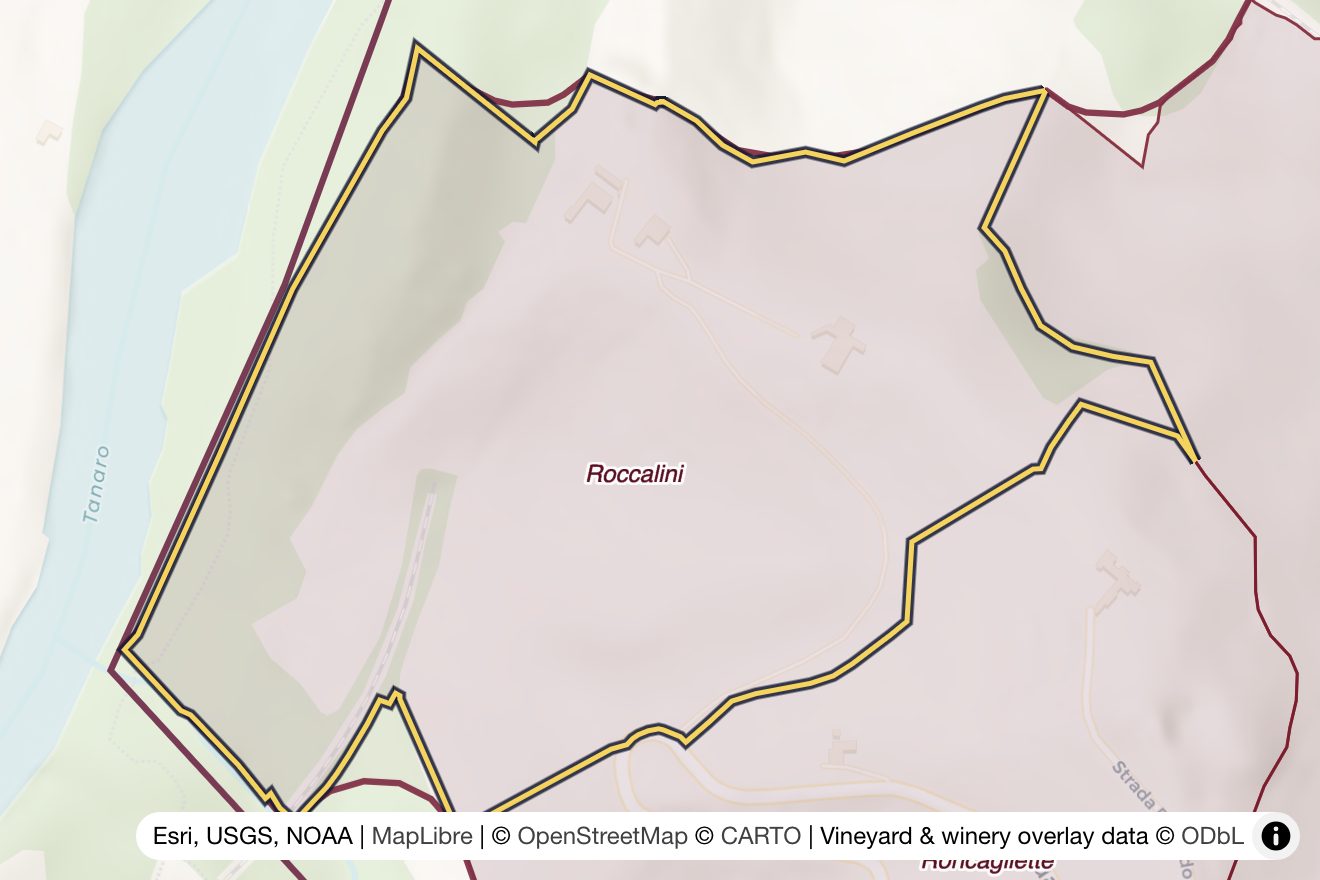
Introduction
Unlike the most celebrated MGAs of Barbaresco (Asili, Rabajà, and Martinenga, plus Gaja's sites in Secondine and Roncagliette) which gained international prestige through the dedicated work of prominent producers such as Gaja, Giacosa, and Alberto di Gresy, Roccalini remains among the less-documented sites within the denomination. This does not diminish its legitimacy as an officially recognized cru, but it does reflect the reality that certain vineyards have received more focused attention from both producers and critics in establishing Barbaresco's reputation on the world stage.
The Barbaresco Context
To understand Roccalini's place within Barbaresco, one must first appreciate the broader characteristics that define this denomination. Barbaresco produces wines from 100% Nebbiolo that must achieve a minimum alcoholic strength of 12.5%, though they commonly reach 13.5% or higher. Despite often being characterized as lighter-bodied than their Barolo counterparts: a perception partly driven by shorter minimum aging requirements (26 months total with 9 in wood, versus Barolo's 38 months with 18 in wood), Barbaresco wines are by no means delicate. They possess the substantial tannins and pronounced acidity that are hallmarks of Nebbiolo, making young Barbaresco a challenging, sometimes austere experience that rewards patience.
The notion that Barbaresco is less age-worthy than Barolo is a false assumption that has unfortunately influenced some producers to attempt emulating Barolo's power and structure rather than embracing Barbaresco's distinctive character. The finest expressions of Barbaresco demonstrate remarkable longevity while maintaining an elegance and aromatic complexity that distinguishes them from their neighbors to the south.
Winemaking Evolution in Barbaresco
Understanding the contemporary approach to sites like Roccalini requires knowledge of how Barbaresco winemaking has evolved. Historically, producers favored prolonged maceration and extended aging in large oak casks. During the 1970s and 1980s, this approach shifted dramatically toward shorter macerations and aging in French barriques, responding to modern consumer preferences for rounder, more immediately accessible, fruit-forward wines. Traditional winemakers criticized this trend, arguing that French oak suppressed Nebbiolo's delicate perfume (one of the variety's most precious attributes.
Today, a growing number of Barbaresco producers have returned to longer macerations, often extending up to 40 days, combined with aging in large oak casks (botti) rather than barriques. This represents neither pure traditionalism nor modernism, but rather an evolved understanding of how to coax both power and perfume from Nebbiolo while allowing terroir expression to emerge with clarity.
Barbaresco's Aromatic and Structural Profile
Wines from Barbaresco, regardless of specific MGA, share certain family characteristics rooted in the Nebbiolo grape and the denomination's overall terroir. Classic Barbaresco aromatics include cherry, violet, and rose, with age bringing additional layers of iron, tar, tobacco, leather, and orange peel. The finest examples achieve a remarkable balance between muscular structure and ethereal perfume, between grip and grace.
The tannins in Barbaresco tend toward a fine-grained quality that, while substantial, can integrate more readily than Barolo's often more prominent tannic architecture. Acidity remains pronounced, providing both freshness and aging potential. These structural elements, combined with the complex aromatic profile, allow Barbaresco to evolve beautifully over decades, developing tertiary complexity while maintaining vitality.
The MGA System and Terroir Recognition
The formalization of the MGA system in 2007 represented a crucial step in recognizing the importance of specific vineyard sites to wine quality and character. The system sensibly retained almost all historically known vineyards, preserving local knowledge and traditional designations. This approach acknowledged that Barbaresco's reputation had been built not just on the general denomination but on specific sites whose names had appeared on bottles for decades.
Single-vineyard Barbaresco wines are a relatively recent phenomenon in the modern era, with Prunotto's Barbaresco Montestefano in 1961 representing one of the first contemporary examples. While there is a less firmly established written record of cru designation in Barbaresco compared to some other wine regions, the oral tradition and local knowledge of vineyard quality differences runs deep. The MGA system gave official status to this accumulated wisdom.
Producers and Quality Benchmarks
The elevation of Barbaresco's reputation to its current heights owes much to key producers who demonstrated the zone's potential for world-class wines. The Produttori del Barbaresco, one of Italy's finest cooperatives, played a crucial role in establishing quality benchmarks and maintaining consistently high standards across multiple vineyard sites. Individual producers such as Angelo Gaja and Bruno Giacosa brought international attention to Barbaresco through their exacting standards and distinctive wines.
In recent years, numerous smaller producers have entered the conversation, many converting to organic and biodynamic viticulture while employing traditional winemaking techniques to produce highly original, long-lived wines. This new generation has further enriched Barbaresco's diversity of expression while deepening the understanding of individual vineyard sites.
Conclusion
Roccalini stands as one of many officially recognized vineyard sites within Barbaresco, part of a denomination that has successfully balanced tradition with evolution, power with elegance. While less documented than the most famous MGAs, sites like Roccalini contribute to the rich mosaic of terroir expressions that make Barbaresco one of Italy's most compelling wine regions. As the wine world's attention continues to deepen regarding Barbaresco's individual vineyards, and as producers continue refining their approach to both viticulture and winemaking, our understanding of sites across the denomination) including Roccalini, will undoubtedly grow richer and more nuanced.
The future of Barbaresco lies not only with its most celebrated sites but with the full spectrum of its officially recognized vineyards, each contributing its voice to the complex conversation about what Nebbiolo can express in this remarkable corner of Piedmont.