Introduction
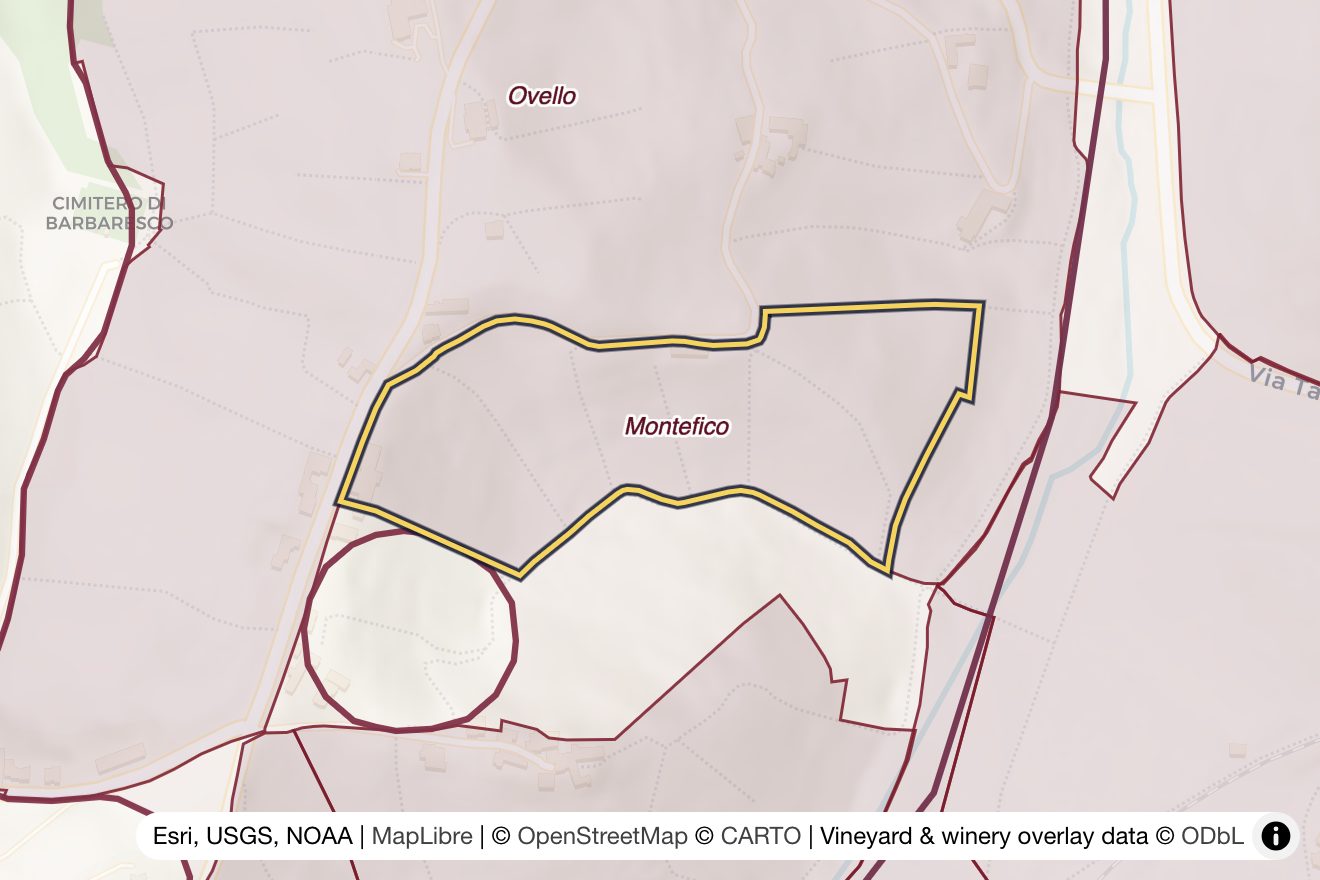
The vineyard's reputation represents a relatively modern consensus, built not on centuries of documented acclaim but rather on the empirical evidence of the wines themselves and the willingness of négociants to pay significantly higher prices for Montefico grapes. This market-driven recognition speaks to the site's consistent ability to produce Nebbiolo of remarkable character, even as Barbaresco's formal system of vineyard classification has evolved over the past six decades.
Historical Context and Recognition
The story of Montefico as a recognized cru reflects the broader evolution of single-vineyard designation in Barbaresco. Unlike Barolo, where certain vineyard names appear in historical records dating back centuries, Barbaresco's cru system developed primarily in the second half of the 20th century. Lorenzo Fantini's influential monograph on Piedmontese viticulture from the late 19th century noted very few "choice positions" in Barbaresco, and none at all in Neive, suggesting that vineyard-specific recognition was far less developed than in neighboring Barolo.
The modern understanding of Barbaresco's finest sites began taking shape in the 1960s with Luigi Veronelli's assessments, followed by Renato Ratti's influential work in the 1970s. These early attempts to classify and rate Barbaresco's vineyards helped establish the framework for recognizing sites like Montefico. Single-vineyard Barbaresco bottlings began appearing in the 1960s, marking the beginning of an era in which individual sites could claim distinct identities.
Montefico's emergence as one of Barbaresco's elite sites represents the intersection of terroir quality and market validation. While certain famous vineyards gained their prestige through the dedicated work of individual producers. San Lorenzo and Tildin through Gaja, Martinenga through di Gresy, Santo Stefano in Neive through Giacosa (Montefico's reputation was established through broader négociant consensus. The willingness of multiple buyers to pay premium prices for Montefico grapes created a market-based designation of quality that has proven remarkably durable.
The formal recognition came with the introduction of the MGA (menzioni geografiche aggiuntive) system in 2007, three years before Barolo implemented its own official cru designations. This system of additional geographic mentions provided legal structure to what the market had already acknowledged. Significantly, the MGA list retained almost all historically known vineyards, avoiding the commercial temptation to absorb smaller, lesser-known sites into more famous vineyard names) a sensible approach that preserved Barbaresco's viticultural heritage and genuine diversity.
Barbaresco Context: Understanding the Denomination
To appreciate Montefico's significance, one must understand its context within Barbaresco. The appellation occupies a production zone northeast and east of Alba, covering only one-third the area of Barolo. Despite its smaller size, Barbaresco has seen dramatic vineyard expansion, growing from 484 hectares in the early 1990s to 733 hectares by 2019. The wine is produced across three townships: Barbaresco, Neive, and Treiso (the latter formerly part of Barbaresco), with minor production in a fraction of Alba's territory.
Barbaresco emerged as a distinct wine in the 1890s, when Domizio Cavazza, head of the Oenological School of Alba, founded the Cantine Sociali di Barbaresco cooperative in 1894 (its successor, the Produttori del Barbaresco, was founded in 1958). Before this, wines from the area were often blended with Barolo to add freshness. Unlike Barolo, which enjoyed connections to the House of Savoy and Turin's royal court, Barbaresco suffered relative commercial obscurity until the 1960s, when Angelo Gaja and Bruno Giacosa demonstrated the wine's full potential.
The denomination's regulations require a minimum aging period of 26 months, including nine months in wood, with 50 months total for Riserva bottlings (shorter than Barolo's requirements. This has led to misconceptions about Barbaresco being less ageworthy, though in reality, the finest examples possess remarkable longevity. The wines must achieve a minimum alcohol level of 12.5%, though they often reach 13.5% or higher.
Terroir Considerations in Barbaresco
While specific terroir information about Montefico remains limited in the available documentation, understanding the broader terroir principles of Barbaresco provides essential context. Research has demonstrated that soil characteristics significantly influence grape quality, yield, and wine individuality, though these effects remain subsidiary to climate, vine variety, and vine management. Among influential soil characteristics, the most important are those governing water supply to the vine, followed by factors influencing soil and above-soil temperatures.
Dr. Gérard Seguin's groundbreaking work in Bordeaux's grand cru vineyards showed that diverse soil types can produce high-quality wines when they share certain characteristics: moderate fertility and well-regulated, moderately sufficient water supply. This principle applies to Barbaresco's varied vineyard sites, where differences in topography and soil composition create significant variation even within small areas. Despite receiving identical rainfall, different parts of a vineyard may have vastly different water access due to variations in topography, soil depth, and composition.
The manner in which roots navigate the complex layering of soil strata dictates the water and nutrients accessible to the vine throughout the growing season. These variations manifest as differences in vine vigor and, ultimately, in wine character. The soil attributes can change rapidly within a vineyard, both vertically through the soil profile and horizontally across the site) variations increasingly managed through precision viticulture techniques.
Wine Characteristics and Style
Barbaresco wines made from Nebbiolo possess distinctive characteristics that differentiate them from Barolo while maintaining the variety's essential character. These wines showcase pronounced tannins and acidity (hallmarks of Nebbiolo) meaning young Barbaresco is not always immediately pleasurable despite its reputation for relative approachability compared to Barolo.
The aromatic profile of fine Barbaresco centers on cherry and violet notes in youth, evolving with age toward more complex tertiary aromas of iron, tar, and orange peel. The wines demonstrate both elegance and aromatic intensity, qualities that distinguish Barbaresco from Barolo's more muscular structure. If Barbaresco has historically been considered lighter-bodied than Barolo, this perception reflects stylistic differences rather than a lack of substance or aging potential.
Winemaking approaches have evolved significantly over recent decades. The 1970s and 1980s saw a shift from prolonged maceration and cask aging toward shorter macerations and aging in French barriques, responding to modern preferences for rounder, fruitier wines. Traditional winemakers criticized this trend, arguing that French oak suppressed Nebbiolo's delicate perfume. Today's trajectory shows many producers returning to extended maceration (often up to 40 days) and aging in large oak casks rather than barriques, seeking to emphasize site expression and varietal character.
For Montefico specifically, as one of the sites commanding premium prices and recognized for consistent quality, the wines would be expected to demonstrate Barbaresco's finest attributes: the balance of power and elegance, aromatic complexity, and aging potential that justify the vineyard's elite status.
Montefico in the Contemporary Landscape
Montefico's position among Barbaresco's premier crus (specifically named alongside Asili, Montestefano, and Rabajà) places it in distinguished company. These four sites in the Barbaresco township represent a consensus built on decades of observation, tasting, and market response. The willingness of négociants to pay higher prices for Montefico grapes reflects not promotional hype but demonstrated quality over time.
This market-based recognition carries particular weight in a region where single-vineyard bottlings remain relatively young phenomena. While individual producer-driven sites like Gaja's San Lorenzo and Tildin gained fame through the vision and standards of particular estates, Montefico's reputation emerges from broader validation (multiple actors in the market acknowledging the site's capacity to produce exceptional wine.
The work of organizations like the Produttori del Barbaresco, one of Italy's finest cooperatives, has helped establish and maintain quality standards across Barbaresco's vineyard landscape. This cooperative model, where member growers deliver grapes from specific sites to be vinified separately, has helped preserve and document the distinctions between individual MGAs. Such approaches have contributed to the understanding of sites like Montefico, demonstrating vintage after vintage how terroir expresses itself through wine.
Conclusion
Montefico represents a fascinating case study in how vineyard reputation develops and solidifies. Without the centuries of documentation that support some European crus, and without a single iconic producer defining its character, Montefico's status rests on the cumulative evidence of quality recognized by those most attuned to subtle differences: the négociants and producers who work with grapes from across Barbaresco's varied terrain.
As one of the four vineyards specifically identified as elite within the Barbaresco township) alongside Asili, Montestefano, and Rabajà, Montefico stands as testament to terroir's tangible impact on wine quality. The site's ability to command premium prices in a market where buyers have numerous options speaks to consistent excellence. For students of Barbaresco and collectors seeking wines of genuine distinction, Montefico merits attention as a site where the intersection of soil, climate, and viticulture produces Nebbiolo of exceptional character and aging potential.
The formal recognition through the MGA system in 2007 provided legal framework for what the market had already acknowledged, ensuring that Montefico's reputation and distinct identity will be preserved for future generations of winemakers and wine lovers exploring Barbaresco's remarkable diversity.