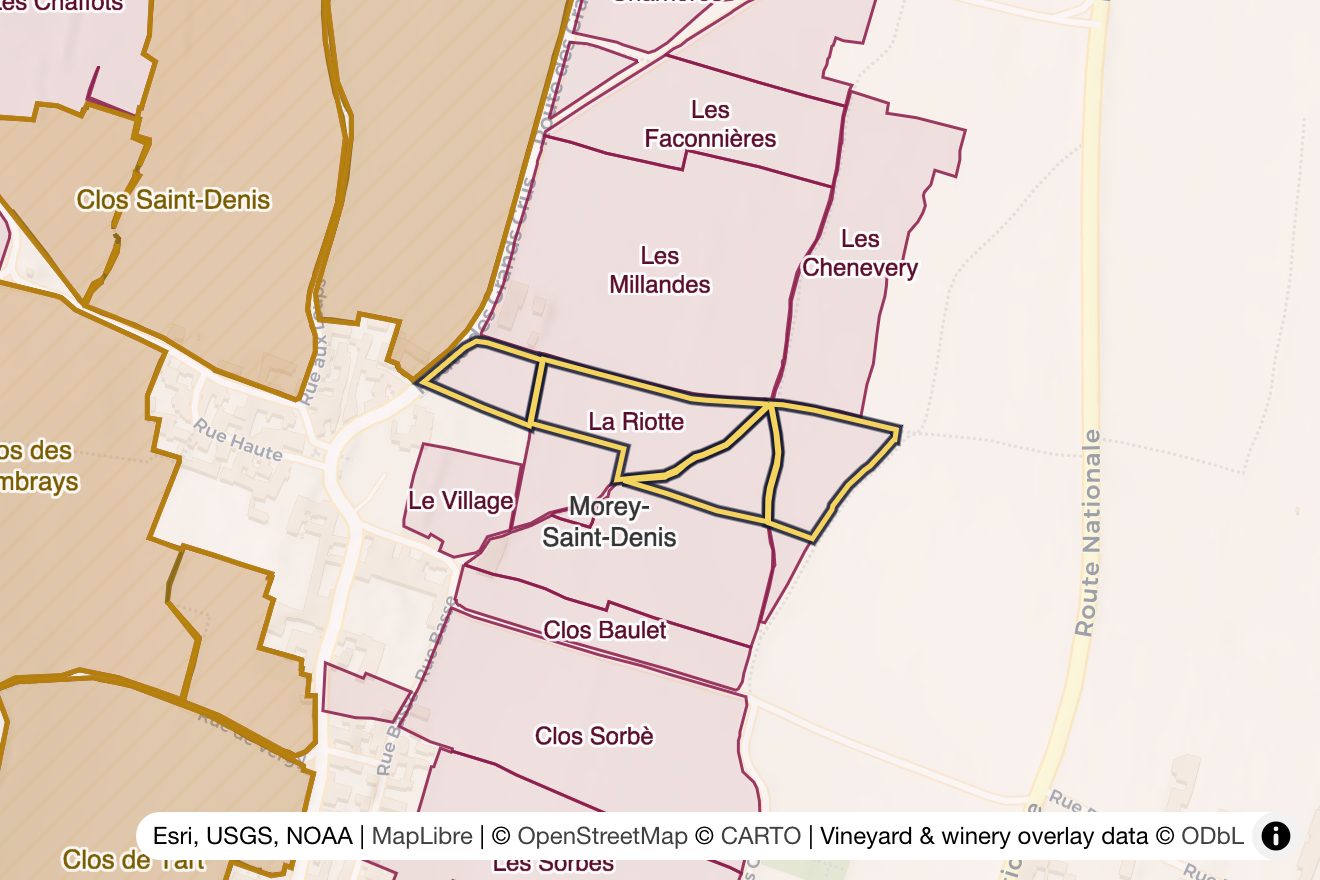
Overview & Location
The vineyard's position places it within the optimal elevation range for Pinot Noir cultivation in Burgundy, typically between 250 and 300 meters above sea level. This elevation provides the perfect balance between adequate drainage and protection from harsh weather conditions, while ensuring sufficient exposure to sunlight for proper grape ripening. La Riotte's orientation and slope contribute significantly to its unique character, distinguishing it from neighboring climats through subtle but important variations in exposure, drainage, and soil composition.
The geographical coordinates of La Riotte position it within the carefully delineated boundaries established by centuries of viticultural observation and legal classification. The vineyard forms part of the complex geological transition zone that characterizes much of Morey-Saint-Denis, where different soil types and rock formations create distinct growing conditions within relatively small areas. This geological diversity is fundamental to understanding the unique expression that La Riotte produces in its wines.
Size
La Riotte encompasses a little under three hectares, making it a moderately sized Premier Cru within the Morey-Saint-Denis appellation. This size places it among the medium-scale Premier Cru vineyards in the commune, neither among the largest nor the smallest of the classified sites. The vineyard's dimensions allow for meaningful production while maintaining the intimacy and specific character that defines individual climats in Burgundy.
The relatively modest size of La Riotte reflects the typical scale of Burgundian vineyards, where small parcels create the opportunity for intense focus on terroir expression. This limited hectarage means that total annual production remains constrained, contributing to the exclusivity and careful attention that characterizes Premier Cru wines from this site. The vineyard's boundaries have been precisely defined through historical usage and legal classification, ensuring that only grapes grown within these specific limits can claim the La Riotte Premier Cru designation.
Within these few hectares, the vineyard may be divided among multiple owners, following the typical Burgundian pattern of fragmented ownership that developed over centuries through inheritance and subdivision. This fragmentation often results in different winemaking approaches applied to grapes from the same climat, creating variations in style while maintaining the fundamental terroir characteristics that define La Riotte.
Terroir & Geology
The geological foundation of La Riotte reveals the complex history of the Côte d'Or's formation, characterized by limestone-based soils that provide the mineral backbone essential for producing wines of distinction. The vineyard sits upon Jurassic limestone formations, specifically dating to the Middle Jurassic period, which created the calcareous base that defines much of the Côte de Nuits. This limestone foundation provides excellent drainage while retaining sufficient moisture during dry periods, creating optimal growing conditions for Pinot Noir.
The soil composition in La Riotte typically features a mixture of limestone, clay, and marl, with varying proportions creating subtle differences within the vineyard itself. The topsoil generally consists of brown limestone soil mixed with clay particles, providing good water retention while maintaining the drainage characteristics essential for quality viticulture. The presence of active limestone in the soil contributes to the wine's mineral character and helps regulate vine nutrition throughout the growing season.
Geological surveys of the area reveal the presence of various limestone types, including hard limestone and softer marly limestone, creating a complex substrate that influences root development and nutrient uptake. The vineyard's position on the hillside means that erosion and sedimentation have played roles in soil development over millennia, concentrating certain minerals and creating the distinctive terroir profile that characterizes La Riotte wines.
The subsoil structure includes fractured limestone that allows for deep root penetration while providing natural drainage channels. This geological architecture enables vines to access water and nutrients from deeper layers during stress periods, contributing to the complexity and depth found in wines from this site. The interaction between surface soil and underlying geology creates the unique terroir signature that distinguishes La Riotte from neighboring Premier Cru vineyards.
Climate & Microclimate
La Riotte benefits from the continental climate that characterizes the Côte de Nuits, modified by local topographical features that create specific microclimatic conditions. The vineyard experiences the typical Burgundian pattern of cold winters, mild springs, warm summers, and generally favorable autumns that allow for extended ripening periods. However, the specific position and orientation of La Riotte create localized variations that influence grape development and wine character.
The vineyard's elevation and slope provide natural air drainage, helping to minimize frost risk during critical spring periods while promoting air circulation that reduces humidity and disease pressure. The hillside position ensures good exposure to morning and midday sun, while the specific orientation may provide some protection from harsh afternoon heat during particularly warm vintages. This balance of exposure and protection contributes to the even ripening that characterizes quality Pinot Noir production.
Temperature variations within La Riotte can be significant, with different sections of the vineyard experiencing slightly different growing conditions based on subtle changes in elevation, slope angle, and exposure. These variations contribute to the complexity found in wines from the climat, as different portions of the vineyard may ripen at slightly different rates or develop different flavor components.
Precipitation patterns affect La Riotte similarly to other vineyards in Morey-Saint-Denis, with the site's drainage characteristics becoming crucial during years of excessive rainfall. The limestone-based soils and hillside position help prevent waterlogging while ensuring that vines have access to adequate moisture during dry periods. Wind patterns influenced by the local topography help regulate temperature and humidity, contributing to the overall growing environment that shapes wine character.
Viticulture
Viticultural practices in La Riotte follow the traditional methods developed over centuries of winemaking in Burgundy, adapted to the specific requirements of this Premier Cru site. Vine density typically follows regional standards, with approximately 10,000 to 12,000 vines per hectare, allowing for appropriate competition between plants while ensuring adequate space for mechanization where applicable. The high vine density characteristic of Burgundy forces individual vines to develop extensive root systems, enhancing their ability to express terroir characteristics.
Pruning methods generally employ the Guyot system, either simple or double depending on individual grower preferences and vine vigor considerations. The choice of pruning method affects yield control and grape quality, with careful attention paid to maintaining balance between vegetation and fruit production. Winter pruning decisions significantly impact the following vintage, requiring extensive knowledge of vine behavior in the specific terroir conditions of La Riotte.
Canopy management throughout the growing season involves strategic leaf removal, shoot positioning, and green harvesting when necessary to optimize grape exposure and ripening. The timing and extent of these interventions depend on vintage conditions and individual vine development, requiring constant observation and adjustment. Sustainable viticulture practices have become increasingly common, with many producers in La Riotte adopting organic or biodynamic approaches to vineyard management.
Harvest timing in La Riotte requires careful assessment of grape maturity across different sections of the vineyard, as variations in exposure and soil composition may create differences in ripening patterns. Hand harvesting remains the standard practice for Premier Cru production, allowing for selective picking and immediate sorting to ensure only the highest quality grapes reach the winery. The decision of when to harvest represents one of the most critical choices affecting wine quality and style.
Wine Character & Style
Wines from La Riotte exhibit the elegant complexity that characterizes quality Premier Cru Burgundy, displaying a distinctive personality that reflects the specific terroir conditions of this climat. The typical color profile shows the classic Pinot Noir transparency with ruby to garnet hues, developing brick tones with age while maintaining clarity and brilliance. The visual presentation immediately suggests the wine's refined character and potential for development.
Aromatic complexity in La Riotte wines often begins with red fruit characteristics, including cherry, raspberry, and strawberry notes, frequently accompanied by floral elements such as violet and rose. As the wines develop, secondary aromas emerge, including earth, forest floor, and mineral components that reflect the limestone-rich terroir. Spice notes, particularly those suggesting cinnamon, clove, and white pepper, add layers of complexity that evolve with bottle age.
The palate structure of La Riotte wines demonstrates the balance between power and finesse that defines quality Burgundy. Tannin levels are typically moderate to firm, providing structure without overwhelming the fruit character, while acidity maintains the freshness essential for food compatibility and aging potential. The texture often shows silky qualities that develop into more complex, integrated mouthfeel sensations as the wine matures.
Mineral expression plays a significant role in La Riotte's character profile, with limestone influences appearing as subtle chalky or stony notes that provide backbone and enhance the wine's complexity. This mineral component becomes more pronounced with age, often integrating with developed fruit and earth flavors to create the complex tertiary character that marks fully mature Premier Cru Burgundy.
Comparison to Surrounding Crus
La Riotte's position within Morey-Saint-Denis places it among several distinguished Premier Cru vineyards, each expressing subtle variations of the commune's terroir characteristics. Compared to neighboring climats, La Riotte typically shows more refined elegance and mineral precision than some of the more powerful sites in the appellation. The wine's character often displays greater finesse than some of the more structured Premier Crus while maintaining sufficient depth and complexity for serious consideration.
When compared to Clos de la Bussière, another Premier Cru in Morey-Saint-Denis, La Riotte generally shows less immediate power but often demonstrates superior aging potential and complexity development. The limestone influence in La Riotte creates a different mineral profile than some neighboring sites, contributing to its distinctive character within the commune's range of expressions.
The relationship between La Riotte and the Grand Cru vineyards of Morey-Saint-Denis reveals the hierarchical quality differences that define Burgundy's classification system. While La Riotte produces wines of exceptional quality, they typically lack the concentration, complexity, and aging potential of Grand Cru sites like Clos de Tart or Clos des Lambrays. However, La Riotte wines often provide better value and earlier accessibility while maintaining the essential character that makes Morey-Saint-Denis distinctive.
Comparisons with Premier Cru sites in neighboring communes highlight regional characteristics that unite the Côte de Nuits while showcasing local variations. La Riotte wines generally show different aromatic profiles and structural characteristics than similar-level sites in Gevrey-Chambertin or Chambolle-Musigny, reflecting the specific growing conditions and terroir influences of Morey-Saint-Denis.
Notable Producers
Several distinguished producers work with parcels in La Riotte, each bringing individual winemaking philosophies and techniques to express the vineyard's terroir potential. These producers range from established domaines with long histories in the region to newer operations that have gained recognition for their quality and innovation. The diversity of approaches applied to La Riotte grapes demonstrates how different winemaking styles can highlight various aspects of the vineyard's character.
Domaine Hubert Lignier has established a strong reputation for their work with La Riotte, producing wines that emphasize the site's mineral complexity and aging potential. Their approach typically involves traditional fermentation techniques combined with careful oak management to preserve the vineyard's distinctive character while adding appropriate structure and complexity.
Other producers working with La Riotte fruit have developed different stylistic approaches, some emphasizing immediate accessibility and fruit expression, while others focus on structure and long-term development potential. These varying approaches provide consumers with different perspectives on La Riotte's terroir, demonstrating the site's versatility and quality potential.
The reputation of La Riotte wines depends significantly on the skill and philosophy of individual producers, as the vineyard's characteristics can be enhanced or diminished by winemaking decisions. The most successful producers understand the specific requirements of La Riotte fruit and adapt their techniques accordingly, creating wines that authentically express the vineyard's terroir while meeting contemporary quality standards.
Historical Background & Classification
The history of La Riotte as a recognized vineyard site extends back centuries, reflecting the gradual development of Burgundy's classification system through practical experience and quality observation. Like many Burgundian climats, La Riotte's reputation developed through generations of cultivation, with local growers and merchants recognizing the distinctive character of wines produced from this specific location.
The formal classification of La Riotte as Premier Cru status came through the systematic evaluation process that established Burgundy's current appellation structure in the mid-20th century. This classification recognized the vineyard's consistent ability to produce wines of superior quality compared to village-level sites while acknowledging its position below Grand Cru level in terms of exceptional character and aging potential.
Historical records indicate that La Riotte has been under vine cultivation for several centuries, with monastic influence likely playing a role in early development, as was common throughout the Côte d'Or. The vineyard's name and boundaries evolved through traditional usage, with local knowledge and practice establishing the specific limits that define the climat today.
The ownership history of La Riotte reflects typical Burgundian patterns of division and inheritance, with parcels changing hands through family succession and occasional sales. This historical fragmentation has created the current ownership structure, where multiple producers may work different sections of the vineyard, contributing to the diversity of styles produced from La Riotte fruit.
Aging Potential & Quality Level
La Riotte wines demonstrate significant aging potential, typically requiring 5-8 years from vintage to reach optimal drinking windows, with the best examples continuing to develop favorably for 15-20 years or more. The aging trajectory of these wines follows classic Burgundian patterns, with initial fruit-forward character gradually giving way to more complex earth, mineral, and tertiary flavors that define mature Premier Cru Burgundy.
Quality levels in La Riotte vary according to vintage conditions, producer skill, and specific vineyard management practices, but the site consistently produces wines that merit Premier Cru classification. The vineyard's terroir provides sufficient complexity and structure to create wines of serious character, while maintaining the elegance and finesse that distinguish quality Burgundy from more powerful wine regions.
The development pattern of La Riotte wines typically shows an initial period of primary fruit expression, followed by a transitional phase where tannins integrate and secondary characteristics emerge. The final mature phase reveals the full terroir expression, with mineral components, earth influences, and developed fruit flavors combining to create the complex profile that justifies Premier Cru status.
Storage conditions significantly affect the aging potential of La Riotte wines, with proper cellaring essential for optimal development. The wines' structure and acidity provide good aging foundations, but they require appropriate temperature and humidity control to reach their full potential. Well-stored examples can continue improving for decades, demonstrating the lasting quality that characterizes this distinguished Premier Cru site.