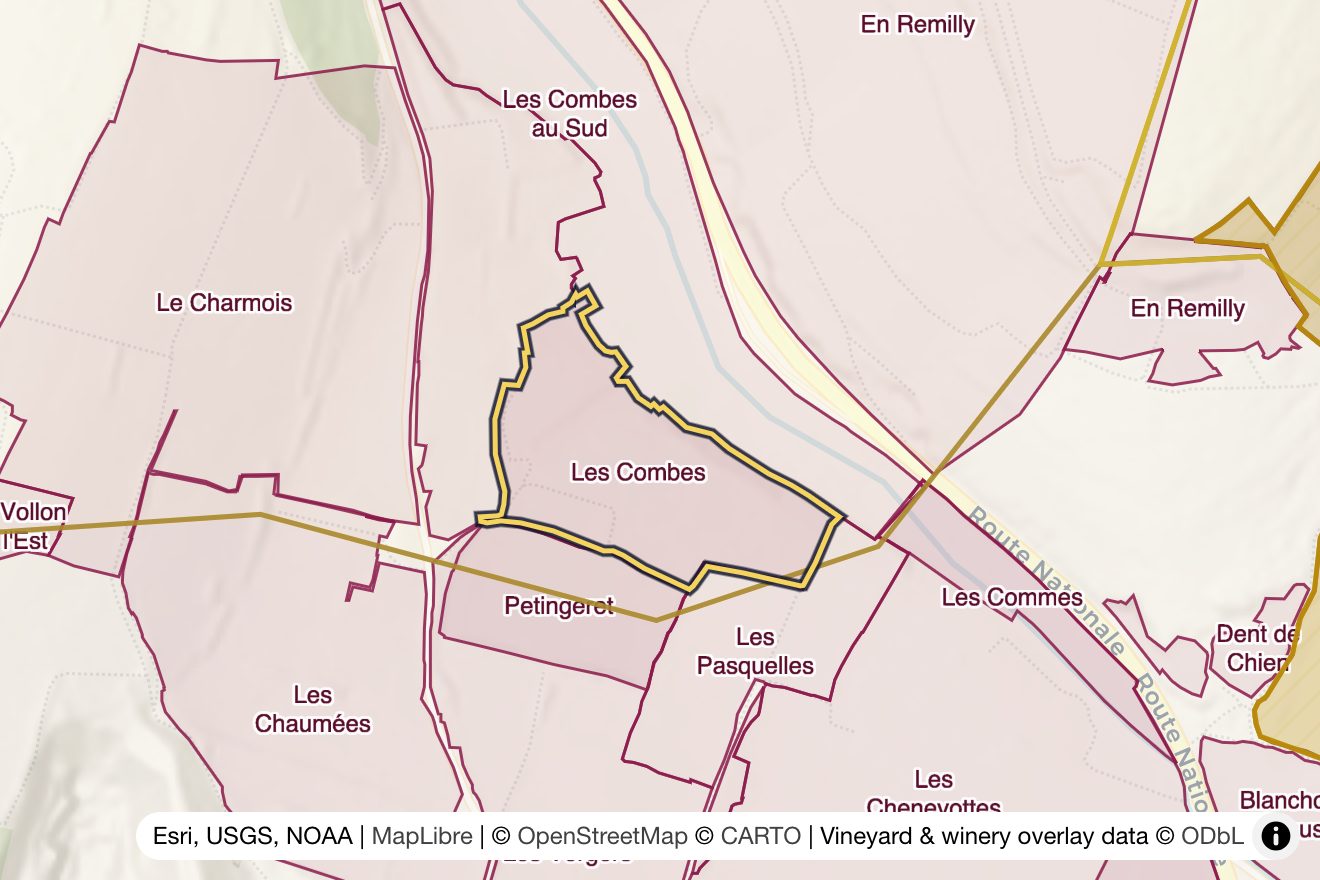
Overview & Location
The vineyard's location within Saint-Aubin is particularly noteworthy, as it lies on the eastern slopes of the commune, benefiting from the same geological formations that make the neighboring Grand Cru sites so exceptional. Pitangeret occupies the middle slopes of the hillside, positioned at an elevation that captures optimal sun exposure while maintaining the crucial diurnal temperature variations essential for producing wines of complexity and finesse.
Saint-Aubin itself represents something of a hidden gem within the Côte de Beaune, often overshadowed by its illustrious neighbors but producing wines of remarkable quality and distinctive character. The commune's Premier Cru vineyards, including Pitangeret, demonstrate the same geological foundations and climatic conditions that have made this corner of Burgundy legendary for both Chardonnay and Pinot Noir production.
The climat's position places it within the broader context of the Côte de Beaune's eastern-facing slopes, where the morning sun provides gentle warming while afternoon shade helps preserve the crucial acidity that defines great Burgundian wines. This location also benefits from the protection offered by the higher elevations to the west, creating a microenvironment that is both favorable for ripening and conducive to the development of the complex aromatics that characterize Premier Cru Burgundy.
Size
Pitangeret encompasses approximately 2.4 hectares (5.9 acres) of vineyard land, making it one of the smaller Premier Crus within Saint-Aubin's hierarchy of classified sites. This size places it among the smaller climats in the commune.
The vineyard's dimensions allow for meaningful diversity in microclimatic conditions and soil expressions across different sections of the climat, contributing to the complexity potential of wines produced here. The relatively compact size also ensures that quality control and consistent viticultural practices can be maintained across the entire vineyard area, a factor that contributes to the reliability of Pitangeret's wine quality.
Within this total area, the vineyard is divided among several proprietors, with parcel sizes ranging from small family holdings to more substantial domaine properties. This division creates an interesting dynamic where different winemaking philosophies and techniques are applied to the same fundamental terroir, resulting in stylistic variations that demonstrate the site's versatility and potential for expression.
Terroir & Geology
The geological foundation of Pitangeret represents a classic expression of Côte de Beaune terroir, built upon the Jurassic limestone formations that define this renowned wine region. The soil composition reveals the complex interplay between limestone parent rock, clay content, and surface materials that creates the distinctive terroir character for which Burgundy is celebrated.
The underlying geology consists primarily of Bathonian limestone, the same formation that extends through the most prestigious sites of Chassagne-Montrachet and Puligny-Montrachet. This limestone base provides excellent drainage while offering sufficient water retention during dry periods, creating the balanced hydric conditions essential for producing wines of both power and elegance.
The soil profile varies across different sections of the vineyard, with the proportion of clay and marl varying across the climat. Areas with higher clay content tend to produce wines with greater structure and aging potential, while sections with more limestone-dominant soils often yield wines of greater finesse and mineral expression. This variation contributes to the complexity and layered character that distinguishes Pitangeret wines.
The topsoil is poor and stony, providing sufficient soil volume for root development while maintaining the crucial connection to the limestone bedrock that imparts the distinctive mineral character associated with great Burgundian whites. In some areas, the presence of fossilized marine materials adds additional mineral complexity to the soil composition.
The vineyard's slope ranges from 8% to 15% gradient, with the steeper sections typically found in the upper portions of the climat. This slope provides natural drainage and optimal sun exposure while preventing excessive erosion. The aspect is predominantly east-southeast, ensuring morning sun exposure that promotes even ripening while avoiding the potentially excessive heat of late afternoon sun during the warmest part of the growing season.
Elevation varies from approximately 280 to 320 meters above sea level, placing Pitangeret in the optimal altitude range for both Chardonnay and Pinot Noir cultivation in this region. This elevation provides the necessary cooling influence to maintain acidity while allowing for complete phenolic ripening.
Climate & Microclimate
Pitangeret benefits from the continental climate characteristic of the Côte de Beaune, moderated by the protective influence of the surrounding hills and the vineyard's specific topographical position. The climate combines the seasonal temperature variations necessary for proper vine dormancy and budbreak with the growing season warmth required for optimal grape maturation.
The microclimate within Pitangeret is influenced by several key factors that distinguish it from surrounding sites. The east-southeast orientation provides ideal morning sun exposure, allowing for gentle warming during the early hours while avoiding the intense afternoon heat that can stress vines during the warmest months. This orientation also provides protection from the prevailing westerly winds, creating a more stable growing environment.
The vineyard's mid-slope position creates beneficial air circulation patterns that help prevent frost damage during vulnerable periods in spring and reduce humidity levels that could promote fungal diseases. Cold air drainage from the higher elevations flows through the vineyard during nighttime hours, contributing to the significant diurnal temperature variation that preserves acidity and promotes the development of complex aromatic compounds.
Compared to neighboring sites, Pitangeret tends to ripen slightly later than vineyards at lower elevations, allowing for extended hang time that contributes to the complexity and depth characteristic of the site's wines. The vineyard typically experiences 10-15 days less risk of spring frost compared to sites in valley bottoms, while maintaining the cooling influence necessary to prevent over-ripening during hot summers.
Annual precipitation averages 750-800 millimeters, distributed relatively evenly throughout the year with slightly drier conditions during the crucial harvest period. The well-draining limestone soils prevent waterlogging during wet periods while the clay content provides sufficient water retention during drier spells.
Viticulture
Pitangeret is planted primarily to Chardonnay, which represents approximately 85% of the vineyard area, with the remainder dedicated to Pinot Noir. This proportion reflects the site's particular suitability for white wine production, though the Pinot Noir sections produce wines of notable quality and distinctive character.
Vine age across the vineyard varies considerably, with some sections containing vines over 60 years old while other areas feature more recently planted blocks. The older vines, particularly those planted in the 1960s and 1970s, are highly prized for their deep root systems and naturally reduced yields that contribute to wine concentration and complexity.
Planting density typically ranges from 10,000 to 12,000 vines per hectare, following traditional Burgundian practices designed to encourage competition between vines and promote deeper root development. The spacing allows for mechanical cultivation while maintaining the vine density necessary for optimal fruit quality.
Viticultural practices in Pitangeret generally follow sustainable or organic principles, with many producers having converted to certified organic farming in recent years. The well-draining soils and favorable microclimate reduce disease pressure compared to some other Burgundian sites, making sustainable viticulture more achievable.
Pruning follows the traditional Guyot system, with careful attention paid to yield management through green harvesting and cluster thinning when necessary. Target yields typically range from 45 to 55 hectoliters per hectare for Chardonnay and slightly lower for Pinot Noir, ensuring optimal concentration while maintaining the vineyard's natural balance.
Specific viticultural challenges include managing vigor in the clay-rich sections of the vineyard, where excessive growth can dilute fruit quality. Producers address this through careful canopy management and selective harvesting practices that prioritize quality over quantity.
Harvest timing is crucial in Pitangeret, with producers carefully monitoring sugar development, acidity retention, and phenolic ripeness to determine optimal picking dates. The vineyard's diverse soil conditions often require selective harvesting over several passes to ensure each section is picked at optimal maturity.
Wine Character & Style
Wines from Pitangeret display a distinctive character that combines the mineral precision associated with great Côte de Beaune Chardonnay with the depth and complexity that defines Premier Cru quality. The Chardonnay wines typically exhibit a brilliant golden color with subtle green highlights in their youth, developing deeper golden tones with age.
The aromatic profile of Pitangeret Chardonnay is characterized by intense mineral notes, often described as wet stone or limestone dust, accompanied by citrus fruits, particularly lemon and lime, and subtle floral elements including white flowers and acacia. With barrel aging, these wines develop additional complexity through integration of oak-derived vanilla and spice notes, though the mineral foundation remains prominent.
On the palate, Pitangeret Chardonnay demonstrates excellent structure with vibrant acidity that provides both freshness and aging potential. The texture is typically medium to full-bodied with a distinctive chalky minerality that reflects the limestone-rich terroir. The wines show excellent length with a persistent finish that emphasizes mineral and citrus characters.
The Pinot Noir from Pitangeret, while less common, displays remarkable finesse and complexity. These wines typically show bright ruby color with aromatic profiles emphasizing red fruits, particularly cherry and raspberry, combined with floral notes and the distinctive limestone minerality that characterizes the site. The palate shows elegant structure with fine-grained tannins and excellent length.
What distinguishes Pitangeret from other Premier Cru sites is the particular combination of power and elegance in the wines, with the limestone-derived minerality providing a distinctive backbone that supports both immediate appeal and long-term aging potential. The site consistently produces wines with excellent acid-fruit balance and distinctive terroir expression.
The wines demonstrate excellent vintage variation, reflecting the site's sensitivity to climatic conditions while maintaining consistent quality and character markers that identify them as distinctly from Pitangeret. In warmer vintages, the wines show greater richness and tropical fruit notes, while cooler years emphasize the site's mineral precision and citrus character.
Comparison to Surrounding Crus
Within Saint-Aubin's Premier Cru hierarchy, Pitangeret occupies a distinctive position that sets it apart from neighboring classified sites. Compared to Les Murgers des Dents de Chien, arguably Saint-Aubin's most prestigious Premier Cru, Pitangeret wines typically show greater immediate approachability while maintaining similar aging potential. The mineral character in Pitangeret is more pronounced, while Les Murgers des Dents de Chien often displays greater fruit richness and power.
En Remilly, another respected Saint-Aubin Premier Cru, produces wines with similar mineral foundations but typically shows more floral character and slightly less structure than Pitangeret. The elevation difference between the sites contributes to these stylistic variations, with Pitangeret's mid-slope position providing optimal balance between power and finesse.
Compared to La Chatenière, Pitangeret wines demonstrate greater complexity and aging potential, reflecting the superior geological conditions and optimal exposition of the site. La Chatenière wines, while excellent, typically mature earlier and show less of the distinctive limestone minerality that characterizes Pitangeret.
When compared to Premier Cru sites in neighboring Chassagne-Montrachet, Pitangeret wines show similar mineral intensity but with a more focused, precise character. Chassagne Premier Crus like Morgeot or Caillerets often display greater richness and body, while Pitangeret maintains a more elegant, refined profile that some consider closer in style to Puligny-Montrachet.
The comparison to Puligny-Montrachet Premier Crus reveals interesting parallels, particularly with sites like Les Folatières or Clavoillon, which share similar geological foundations. Pitangeret wines often display comparable mineral precision and aging potential, though typically at more accessible price points, making them attractive alternatives for those seeking authentic Premier Cru quality.
While Saint-Aubin contains no Grand Cru vineyards, the quality of Pitangeret wines approaches that of some Grand Cru sites in neighboring communes, particularly in exceptional vintages when the site's potential is fully realized.
Notable Producers
Several distinguished domaines produce wine from Pitangeret, each bringing their own interpretation to this exceptional terroir.
Domaine Pierre-Yves Colin-Morey uses Pitangerets as one component of its blended Saint-Aubin Premier Cru Hommage à Marguerite. Colin-Morey's parcels include sections with varying soil compositions, allowing for blending that captures the full complexity of the climat while maintaining excellent balance and finesse.
Domaine Joseph Colin, founded by a son of Marc Colin, makes a Saint-Aubin Premier Cru Pitangeret from Chardonnay.
Smaller producers including Domaine Paul Pillot and Domaine Jacques Carillon also work parcels within Pitangeret, often producing limited quantities that demonstrate the site's versatility and potential for different stylistic interpretations while maintaining the fundamental character that defines this Premier Cru.
The diversity of producers working in Pitangeret creates an interesting range of stylistic expressions, from more traditional approaches that emphasize minerality and restraint to more modern interpretations that highlight fruit richness and textural complexity. This diversity demonstrates the site's fundamental quality and its ability to respond to different winemaking philosophies while maintaining its distinctive terroir character.
Historical Background & Classification
The history of Pitangeret as a recognized vineyard site extends back several centuries, with documented evidence of viticulture in this location dating to the medieval period when monastic communities first established systematic wine production in the region. The name "Pitangeret" itself reflects the ancient French terminology for vineyard designations, though the exact etymology remains subject to scholarly debate.
The climat gained particular recognition during the 18th and 19th centuries as Saint-Aubin's reputation for quality wine production became established. Historical records from this period indicate that wines from Pitangeret commanded premium prices in regional markets, suggesting early recognition of the site's superior quality potential.
The formal classification of Pitangeret as a Premier Cru occurred under the appellation contrôlée system that established Burgundy's current quality hierarchy. This classification recognized the site's distinctive terroir characteristics and consistent quality production, placing it among the elite vineyard sites within Saint-Aubin.
The classification process involved detailed analysis of soil conditions, climate factors, and historical quality records that demonstrated Pitangeret's superiority compared to village-level sites within the commune. The INAO (Institut National des Appellations d'Origine) evaluation confirmed that the vineyard met the strict criteria for Premier Cru status, including distinctive terroir characteristics, proven quality potential, and historical reputation for excellence.
During the post-World War II period, Pitangeret benefited from the general improvement in viticultural practices and winemaking techniques that elevated quality standards throughout Burgundy. The 1960s and 1970s saw significant replanting in portions of the vineyard, with careful selection of superior clonal material that enhanced the site's quality potential.
The modern era has brought increased recognition for Saint-Aubin Premier Crus generally, with Pitangeret participating in this quality renaissance. Contemporary producers have embraced both traditional techniques and modern innovations to maximize the site's expression, resulting in wines that honor the historical reputation while achieving new levels of precision and complexity.
Aging Potential & Quality Level
Pitangeret wines demonstrate exceptional aging potential that ranks among the finest examples of Premier Cru quality in Burgundy. The Chardonnay wines typically show optimal drinking windows beginning 3-5 years after vintage, when the initial oak integration has occurred and the wine's fundamental structure has settled. However, the best examples can continue developing complexity for 15-20 years or more in proper cellaring conditions.
The aging trajectory of Pitangeret Chardonnay follows a classic pattern of evolution, with the initial fruit-forward character gradually giving way to more complex secondary and tertiary aromatics. Young wines emphasize citrus fruits and mineral notes, developing honeyed characteristics, nuts, and deeper mineral complexity with age. The limestone-derived acidity provides the structural foundation necessary for this extended development.
Quality consistency across vintages is remarkably high, reflecting both the inherent advantages of the terroir and the skill of the producers working in the vineyard. Even in challenging vintages, Pitangeret typically produces wines that maintain Premier Cru quality standards, though stylistic variations reflect vintage character and climatic conditions.
In exceptional vintages, Pitangeret wines can approach Grand Cru quality levels, demonstrating the site's ultimate potential when all conditions align favorably. These outstanding examples can age gracefully for decades, developing the complex tertiary characteristics that define truly great Burgundy.
The Pinot Noir from Pitangeret, while produced in smaller quantities, shows similar aging potential with optimal drinking typically beginning 5-7 years after vintage and extending 12-18 years for the finest examples. These wines develop classic Burgundian complexity with age, showing evolution from primary fruit character toward earthier, more complex aromatics.
Investment quality for Pitangeret wines is strong within the context of Saint-Aubin Premier Crus, offering excellent value compared to more famous appellations while delivering authentic Premier Cru quality and aging potential. The site's growing reputation suggests continued appreciation potential for the finest examples.
Storage requirements follow standard Burgundy protocols, with consistent temperatures around 12-14°C and high humidity levels essential for optimal aging. Proper cellaring conditions allow these wines to develop their full potential and justify their Premier Cru classification through decades of evolution and complexity development.
The combination of immediate quality, aging potential, and relative value makes Pitangeret an excellent example of the quality and character that can be achieved in Burgundy's Premier Cru sites when superior terroir meets skilled viticulture and winemaking.