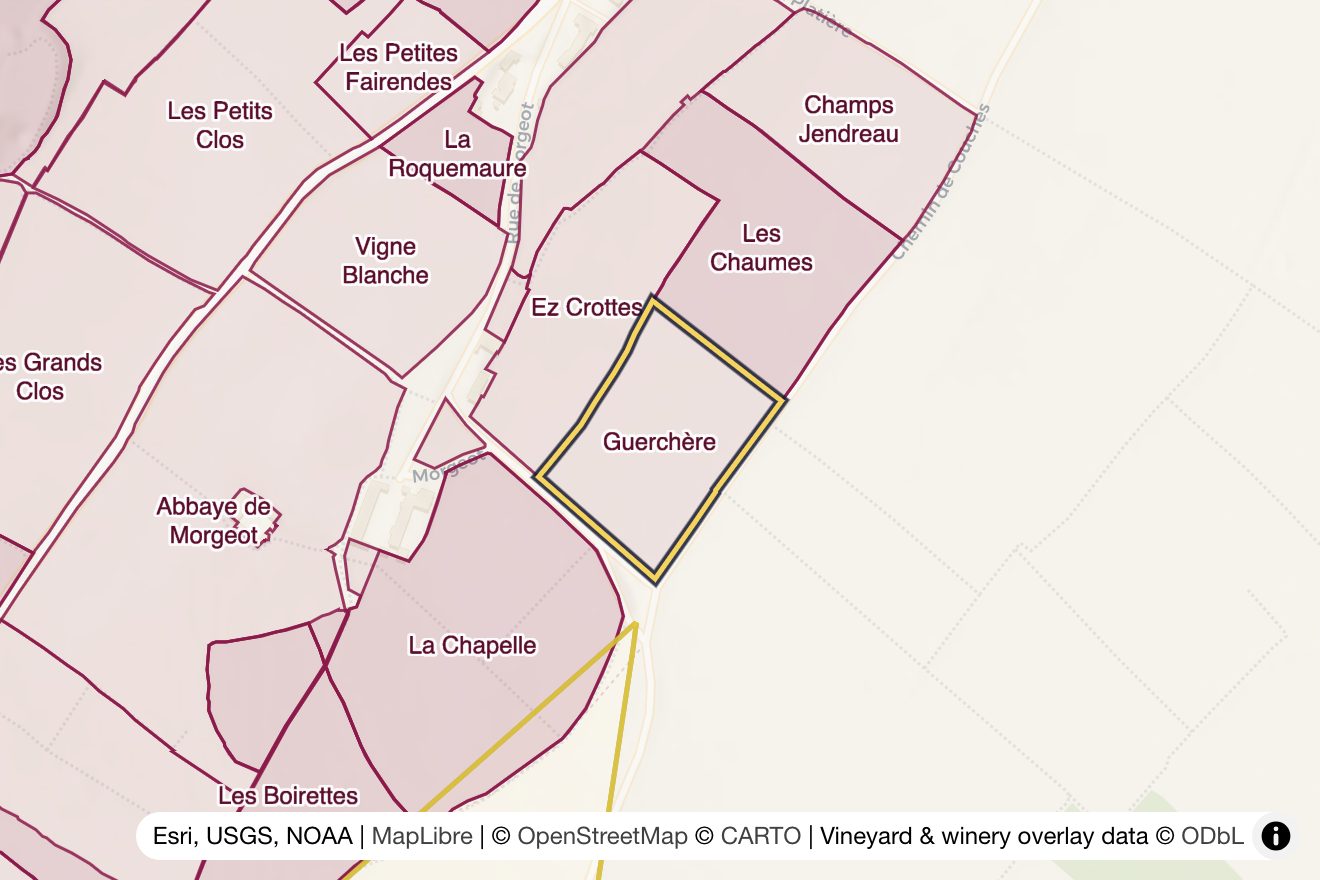
Overview & Location
The vineyard sits in the southern part of the commune, within the Morgeot sector. Guerchere occupies a transitional zone between the higher-elevation Premier Crus and the village-level appellations below, benefiting from both the mineral intensity associated with elevated sites and the slightly warmer microclimate that promotes full phenolic ripeness.
Within the broader context of the Côte de Beaune, Guerchere represents part of the geological continuation of the escarpment that runs from Dijon to Santenay. The vineyard's position places it firmly within the influence of the Saône Valley's continental climate, while its elevation and exposure provide protection from excessive heat and humidity that can compromise wine quality in warmer vintages.
The climat's boundaries are clearly delineated by ancient stone walls and natural topographical features, with the vineyard sharing borders with several other Premier Cru sites that collectively form one of Burgundy's most prestigious white wine terroirs. This positioning allows Guerchere to benefit from the accumulated viticultural knowledge and techniques refined over centuries in this exceptional microregion.
Size
Guerchere is a small Premier Cru climat within Chassagne-Montrachet.
The vineyard's dimensions contribute significantly to its character, as the relatively compact area ensures geological and climatic homogeneity while allowing for subtle variations in exposition and drainage that add complexity to the resulting wines. The size permits multiple ownership, with several domaines holding parcels of varying dimensions, from small family holdings of 0.2 hectares to more substantial plots approaching one hectare.
This scale allows for diverse interpretations of the terroir while maintaining the essential characteristics that define Guerchere's identity. The fragmentation typical of Burgundy ownership means that the total production rarely exceeds 1,200-1,500 cases annually, ensuring that wines from this climat remain relatively exclusive in the international marketplace.
Terroir & Geology
The Morgeot sector, which includes Guerchere, has marl with thin limestone banks on its upper slope and fine sand and silt lower down., creating a complex matrix that influences both drainage and nutrient availability to the vines.
The topsoil composition varies across the climat but typically features 40-60 centimeters of brown calcareous clay mixed with limestone fragments and fossil debris. This relatively shallow soil layer forces vine roots to penetrate deeply into the underlying rock formations, encouraging the development of the complex root systems necessary for accessing diverse mineral nutrients and maintaining consistent water supply during dry periods.
Soils are described as heavy clay-gravel over deep red soils that hold water well. The presence of iron-rich red clay deposits in certain sections adds distinctive mineral notes to wines produced from those specific parcels.
Guerchere's slope characteristics play a crucial role in its terroir expression. The vineyard faces predominantly east-southeast, with an average gradient of 8-12% that ensures optimal solar exposure during morning and early afternoon hours while providing protection from the harsh western sun that can cause premature grape dehydration. This orientation allows for gentle, progressive ripening that preserves natural acidity while developing full aromatic complexity.
Elevation ranges from 280 to 320 meters above sea level, positioning the vineyard in the optimal zone for balanced ripening in Burgundy's continental climate. The slight elevation differential across the climat creates subtle microclimate variations that contribute to the wine's complexity, with higher sections typically producing more mineral-driven wines and lower portions offering greater richness and body.
The geological formation includes several distinctive features that influence terroir expression. Limestone outcroppings appear throughout the vineyard, and underground rock fissures create natural drainage channels that prevent water stagnation while allowing deep root penetration. These geological characteristics combine to create the ideal environment for both Chardonnay and Pinot Noir cultivation.
Climate & Microclimate
Guerchere experiences a continental climate typical of the Côte de Beaune, characterized by cold winters, warm summers, and significant diurnal temperature variations that promote aromatic development and natural acidity retention. The vineyard's specific positioning creates several microclimate advantages that distinguish it from surrounding sites.
The east-southeast exposure ensures optimal morning sun exposure, allowing for gentle warming of the grape clusters while avoiding the potentially damaging effects of intense afternoon heat. This orientation proves particularly beneficial during hot vintages, when excessive sun exposure can lead to accelerated sugar accumulation at the expense of aromatic complexity and natural acidity.
Wind patterns significantly influence the climat's character. The vineyard benefits from gentle morning breezes that promote air circulation through the canopy, reducing humidity levels and minimizing disease pressure. These air currents also help moderate temperatures during warm periods, contributing to the extended ripening periods that allow for full flavor development without excessive alcohol levels.
Frost protection occurs naturally through the vineyard's elevation and slope, as cold air drainage prevents the temperature inversions that can devastate lower-lying vineyards during critical spring growth periods. The limestone bedrock also provides thermal mass that moderates temperature extremes throughout the growing season.
Precipitation patterns interact favorably with the terroir's drainage characteristics. The vineyard receives adequate rainfall during winter and spring to support healthy vine growth, while summer drought stress encourages deep rooting and concentrated fruit development. The well-drained soils prevent waterlogging during wet periods, maintaining consistent growing conditions regardless of seasonal weather variations.
Viticulture
Chardonnay dominates plantings in Guerchere, occupying approximately 85% of the vineyard area, with the remainder dedicated to Pinot Noir. This distribution reflects both historical tradition and the exceptional suitability of the terroir for white wine production, though the Pinot Noir from this site demonstrates remarkable quality and distinctive character.
Vine age varies significantly across different parcels, with some sections containing plants approaching 60-70 years old, while recent replantings have introduced younger vines in previously damaged or diseased areas. The older vines contribute exceptional depth and complexity to the wines, their extensive root systems accessing deep mineral layers and providing natural yield regulation.
Planting density typically ranges from 10,000 to 12,000 vines per hectare, following traditional Burgundian practices that encourage competition among plants while ensuring adequate canopy development for photosynthesis. This density requires careful canopy management to prevent overcrowding and ensure proper air circulation through the vine rows.
Viticultural practices in Guerchere emphasize sustainable and traditional methods. Most producers employ organic or biodynamic farming techniques, avoiding synthetic chemicals and focusing on soil health and natural vine balance. Cover crops planted between rows help prevent erosion on the sloped terrain while adding organic matter to the soil ecosystem.
Pruning follows the traditional Guyot system, with careful attention paid to yield regulation through green harvesting when necessary. The challenging terroir naturally limits yields, typically producing 35-45 hectoliters per hectare for Chardonnay and slightly less for Pinot Noir, ensuring concentrated flavors and optimal ripeness.
Site-specific challenges include erosion management on steeper sections, requiring careful soil conservation practices and occasional terracing maintenance. The rocky soils can complicate mechanical cultivation, necessitating hand work for many viticultural operations. Disease pressure remains manageable due to good air circulation and drainage, though careful attention to canopy management prevents humidity-related problems.
Wine Character & Style
Chardonnay from Guerchere exhibits distinctive characteristics that clearly identify its terroir origins. The wines typically display remarkable mineral precision, with pronounced chalky and limestone-derived notes that provide both aromatic complexity and structural backbone. Fresh citrus elements dominate the initial aromatic profile, particularly lemon zest and lime, complemented by white flower notes including acacia and hawthorn.
The wine's textural qualities distinguish it from many other Chassagne-Montrachet Premier Crus. Guerchere produces wines with exceptional mid-palate density and a distinctive saline minerality that extends through a remarkably long finish. The mouthfeel combines richness with precision, offering substantial weight without heaviness, and maintaining the tension essential for aging potential.
Oak treatment varies among producers, but the terroir responds exceptionally well to careful barrel fermentation and aging. The wine's natural structure accommodates moderate oak influence without losing its essential character, often displaying subtle vanilla and spice notes that integrate seamlessly with the mineral core. Many producers opt for a combination of new and used barrels to maintain terroir expression while adding complexity.
Secondary characteristics develop with proper cellar aging, revealing deeper mineral notes, honeyed textures, and complex nutty flavors that enhance rather than mask the fundamental terroir expression. The wine's acidity structure ensures graceful evolution over 10-15 years, with peak drinking windows typically occurring 5-8 years after vintage for most producers' styles.
Pinot Noir from Guerchere demonstrates the terroir's versatility, producing wines with distinctive limestone-influenced character. The red wines exhibit bright red fruit aromatics, particularly cherry and raspberry, with underlying mineral notes that echo the white wine's geological expression. The limestone bedrock contributes to exceptionally elegant tannin structures and natural acidity that supports aging potential comparable to many Côte de Nuits Premier Crus.
Comparison to Surrounding Crus
Guerchere's character differs markedly from neighboring Premier Crus within Chassagne-Montrachet, reflecting the subtle but significant terroir variations that make Burgundy classification so precise. Compared to the more powerful and structured wines of Morgeot, Guerchere offers greater immediate accessibility while maintaining equivalent aging potential through different structural components.
The wines show more mineral precision and less overt richness than those from Caillerets, reflecting differences in soil depth and drainage characteristics. While Caillerets often produces wines with greater initial fruit concentration, Guerchere's limestone influence creates more linear development and distinctive saline notes that become more prominent with age.
Relative to La Boudriotte, another prestigious Chassagne Premier Cru, Guerchere wines typically display more refined tannins in their Pinot Noir expressions and greater mineral complexity in their Chardonnays. The elevation and exposure differences contribute to these distinctions, with Guerchere's position promoting more gradual ripening and enhanced aromatic development.
When compared to the Grand Cru appellations of the Côte de Beaune, Guerchere wines show the essential character differences that separate Premier Cru from Grand Cru classifications. While lacking the absolute power and aging potential of Montrachet or the exotic complexity of Bâtard-Montrachet, Guerchere offers exceptional value and distinctive character that clearly expresses its specific terroir origins.
The climat's wines demonstrate more immediate charm than many Grand Cru expressions while maintaining the complexity and structure necessary for serious cellaring. This accessibility, combined with distinctive terroir expression, positions Guerchere as an excellent introduction to premier-level Chassagne-Montrachet while satisfying experienced collectors seeking unique expressions.
Notable Producers
Several distinguished domaines hold parcels within Guerchere, each bringing different philosophical approaches and winemaking techniques that highlight various aspects of the terroir's potential. Domaine Lamy-Pillot makes its red Chassagne-Montrachet 1er Cru Morgeot from its Guerchere and Ez Crottes plots. Gagnard's approach emphasizes traditional winemaking with judicious oak use, producing wines that showcase the terroir's mineral precision while developing complexity through careful cellar aging.
Domaine Vincent Dancer, despite being a relatively young operation, has gained recognition for its work in Chassagne-Montrachet. Dancer's biodynamic farming practices and minimal intervention winemaking philosophy allow pure terroir expression, resulting in wines with pronounced mineral character and exceptional aging potential.
The Moreau family's long experience with Chassagne-Montrachet terroirs shows in their ability to extract maximum complexity while maintaining elegance and balance. Their Pinot Noir from this climat demonstrates the site's exceptional potential for red wine production.
Colin's approach emphasizes longer lees contact and extended barrel aging, producing wines with enhanced textural complexity and distinctive nutty characteristics that complement the underlying mineral structure.
Each producer's interpretation reflects different aspects of Guerchere's terroir potential, from mineral-driven styles that emphasize geological influences to more fruit-forward approaches that highlight the microclimate's ability to achieve full phenolic ripeness. These stylistic variations provide wine enthusiasts with multiple perspectives on a single terroir's expression.
Historical Background & Classification
Guerchere's viticultural history extends back to the medieval period, though the specific climat boundaries took several centuries to establish definitively.
Medieval records indicate that wines from this area commanded premium prices in regional markets, suggesting early recognition of quality potential.
Chassagne-Montrachet was recognized as an AOC by decree in 1937, and its premiers crus were integrated into the appellation by a 1970 decree. This classification formalized centuries of empirical knowledge about the site's distinctive terroir and wine quality, providing legal protection for the vineyard's boundaries and production standards.
Guerchere is part of the Morgeot sector, and its wines are often labeled Morgeot. This recognition placed the climat among Burgundy's most prestigious vineyard sites, subject to strict regulations governing viticulture and winemaking practices.
Throughout the 20th century, Guerchere's reputation continued to grow as modern winemaking techniques allowed fuller expression of the terroir's potential. The climate's wines gained recognition from wine critics and collectors, establishing it as one of Chassagne-Montrachet's most reliable sources of distinctive Premier Cru wines.
Aging Potential & Quality Level
Chardonnay from Guerchere demonstrates exceptional aging potential, typically reaching peak maturity 7-12 years after vintage depending on producer style and vintage conditions. The wine's natural acidity structure and mineral backbone provide the foundation for graceful evolution, with properly stored bottles improving for 15-20 years in exceptional vintages.
The aging trajectory follows a predictable pattern, with youthful wines displaying primary fruit and floral characteristics supported by pronounced mineral notes. After 3-5 years, secondary development begins revealing deeper complexity, enhanced textural richness, and integration of oak-derived flavors with terroir characteristics.
Peak drinking windows typically occur when the wine achieves optimal balance between retained freshness and developed complexity, usually 6-10 years post-vintage. During this period, Guerchere wines display their most distinctive characteristics, with mineral precision complemented by honeyed textures and subtle nutty notes that reflect both terroir and cellar evolution.
Quality consistency remains remarkably high across different vintages and producers, reflecting the terroir's inherent stability and the expertise of vignerons working these parcels. Even in challenging vintages, Guerchere typically produces wines with distinctive character and adequate structure for medium-term aging.
The Pinot Noir expressions, while produced in smaller quantities, demonstrate comparable aging potential with peak maturity occurring 5-8 years after vintage. These wines maintain their distinctive mineral character while developing secondary aromatics that enhance complexity without masking terroir expression.
Investment potential for Guerchere wines reflects their position within Burgundy's Premier Cru hierarchy, offering excellent value relative to Grand Cru expressions while maintaining distinctive character that appeals to serious collectors. The limited production and growing recognition of the climat's quality suggest continued appreciation potential, particularly for wines from top producers and exceptional vintages.
The climat's consistent quality and distinctive character position it as an excellent representative of Chassagne-Montrachet's Premier Cru potential, offering both immediate drinking pleasure and long-term cellaring rewards for those willing to wait for full maturity.