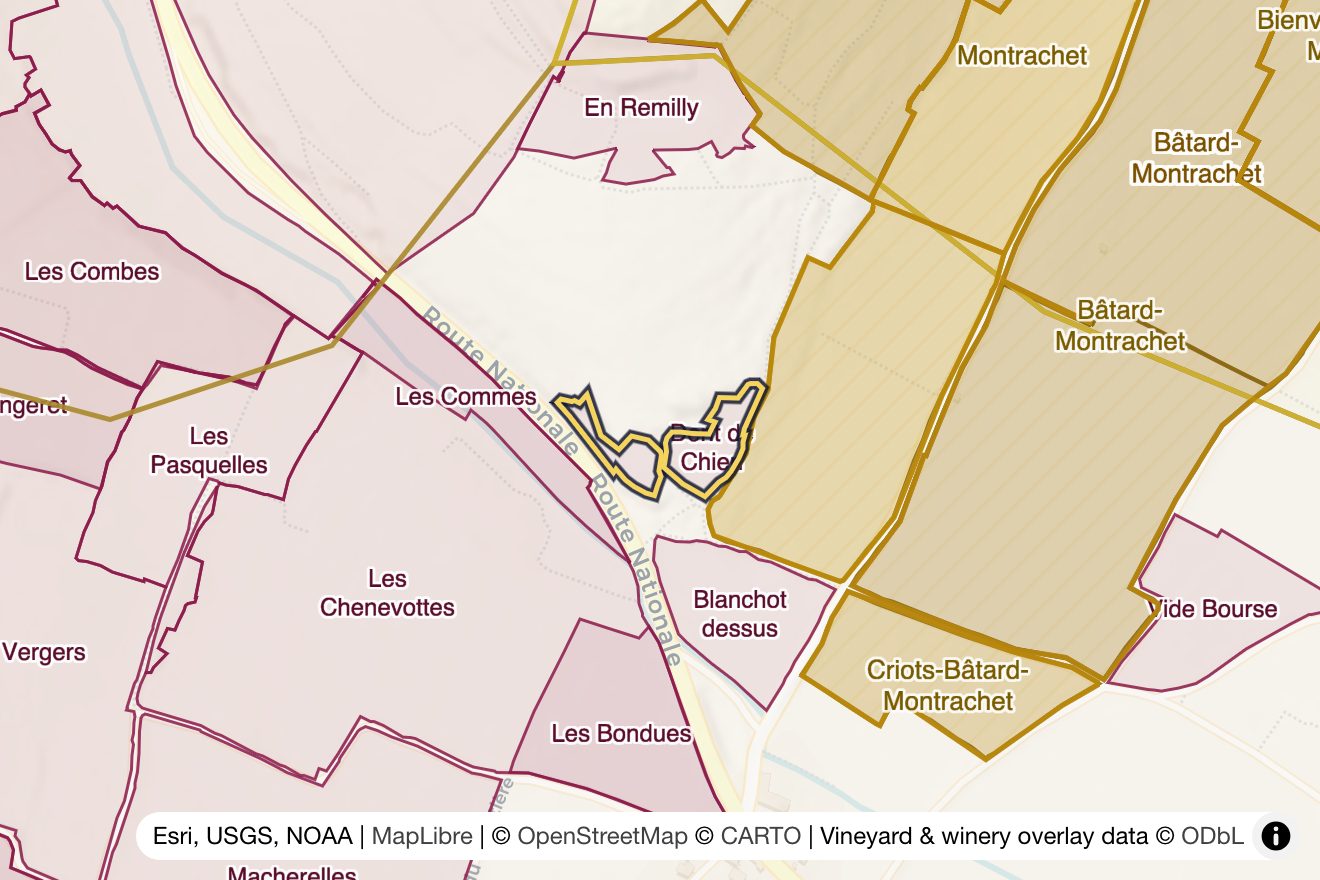
Overview & Location
The climat sits high on the Chassagne hillside, just above the Grand Cru Montrachet and below a limestone outcrop. This placement within the commune's topographical hierarchy is crucial to understanding its wine character, as it benefits from optimal drainage while maintaining sufficient soil depth for vine development. The vineyard's location provides it with ideal exposure to morning sunlight while offering protection from the most intense afternoon heat, a characteristic that proves particularly beneficial for Chardonnay.
Within the broader context of the Côte de Beaune, Dent de Chien represents the southern expression of Burgundian terroir, where the geological foundations begin their subtle transition toward the different soil structures found further south. This positioning contributes to wines that display both the mineral precision characteristic of great Côte de Beaune sites and a distinctive richness that speaks to Chassagne-Montrachet's unique identity.
Size and Parcel Structure
Dent de Chien encompasses a very small area, making it one of the smallest Premier Cru climats in Chassagne-Montrachet. This modest size contributes to both its exclusivity and the intimate knowledge that producers can develop of every vine row and soil variation within the climat. The vineyard's compact nature allows for meticulous attention to viticultural detail, as producers can monitor and respond to the subtle variations in soil depth, drainage, and microclimate that exist even within this limited area.
The parcel structure within Dent de Chien reflects the typical Burgundian pattern of fragmented ownership, with several domaines holding plots of varying sizes. This fragmentation, while creating complexity in terms of wine availability, also provides valuable insight into how different viticultural approaches and winemaking philosophies can express the same terroir in distinct ways. The relatively small individual holdings mean that producers often treat their Dent de Chien parcels with particular care, viewing them as precious resources that demand the highest standards of cultivation.
Terroir & Geology
The geological foundation of Dent de Chien rests upon the Bathonian limestone that forms the backbone of the Côte de Beaune's most distinguished vineyards. This Middle Jurassic limestone, approximately 165 million years old, provides the mineral framework that defines the wine's character. The limestone base is overlain with a complex mixture of clay and limestone fragments, creating a soil profile that offers both excellent drainage and sufficient water retention for consistent vine nutrition throughout the growing season.
The soil composition varies subtly across the climat, with the upper portions displaying a higher proportion of limestone fragments and better drainage, while the lower sections contain more clay, providing greater water retention. This variation creates distinct microzones within the vineyard, each contributing different elements to the final wine's complexity. The limestone content is particularly significant, as it not only influences drainage patterns but also contributes directly to the wine's mineral character through root absorption and soil chemistry interactions.
The slope characteristics of Dent de Chien are moderate but significant, with gradients ranging from 8 to 15 degrees. This slope provides crucial drainage benefits while ensuring optimal sun exposure throughout the day. The vineyard faces primarily east-southeast, capturing the gentle morning light that gradually warms the vines without subjecting them to the harsh afternoon sun that can stress the vines during hot summers. This orientation is particularly beneficial for Chardonnay, allowing for the gradual accumulation of sugars while preserving the natural acidity that gives Chassagne-Montrachet wines their distinctive freshness.
The elevation of Dent de Chien ranges from approximately 240 to 260 meters above sea level, positioning it in the sweet spot for Burgundian viticulture. This elevation provides sufficient cooling effects to maintain acidity while ensuring adequate heat accumulation for full phenolic ripeness. The soil depth varies from 40 to 80 centimeters over the limestone bedrock, with the variation in depth contributing to different vine stress levels and ultimately to wine complexity.
Climate & Microclimate
Dent de Chien benefits from a microclimate that represents a subtle but significant variation from the broader Chassagne-Montrachet climate. The vineyard's upper-slope position and eastern exposure shape its microclimate. This positioning results in a longer growing season that allows for gradual flavor development and the retention of natural acidity.
The climat experiences slightly less wind exposure than the higher Premier Cru sites, which can be beneficial during flowering and fruit set, reducing the risk of poor weather disrupting these crucial developmental stages. However, sufficient air movement exists to prevent humidity buildup and reduce disease pressure, particularly important given Burgundy's sometimes challenging growing conditions.
Morning fog occasionally settles in the vineyard during certain weather patterns, typically burning off by mid-morning. This phenomenon can actually benefit the vines by providing additional moisture during dry periods and moderating temperature extremes. The fog patterns also contribute to the distinctive aromatic development found in Dent de Chien wines, as the humidity variations influence the concentration of aromatic compounds in the developing grapes.
Temperature variations within the climat are more moderate than in either the valley floor or the highest slopes, with daily temperature swings that promote flavor complexity without creating excessive vine stress. This thermal regulation contributes to the consistent quality that Dent de Chien demonstrates across different vintages, even in challenging years.
Viticulture
Dent de Chien is planted entirely to Chardonnay. The vines produce wines that exemplify the mineral-driven, elegant style for which the climat is renowned.
Vine age in Dent de Chien varies significantly among different producers, with some parcels containing vines over 50 years old while others have been more recently replanted. The older vines contribute significantly to wine quality, as their deep root systems access the limestone bedrock more effectively, drawing mineral elements that translate directly into wine character. These mature vines also naturally limit yields, concentrating flavors and creating more complex aromatic profiles.
Planting density typically ranges from 10,000 to 12,000 vines per hectare, following traditional Burgundian practices that encourage vine competition and root development. This density, combined with the soil characteristics, naturally limits yields to levels that promote quality over quantity. Most producers practice severe pruning and green harvesting to further control yields, with final production rarely exceeding 40 hectoliters per hectare for the finest cuvées.
Viticultural practices in Dent de Chien have evolved to respect both tradition and modern understanding of vineyard management. Many producers employ organic or biodynamic practices, recognizing that the climat's terroir expression is best preserved through minimal chemical intervention. Cover crops are increasingly common, helping to manage soil structure and compete with vines for nutrients, further concentrating fruit character.
Site-specific challenges include managing water stress during dry years, as the well-draining limestone soils can limit water availability. Conversely, wet vintages require careful canopy management to prevent fungal issues, particularly given the clay component in the soil that can retain moisture. The moderate slope also requires erosion control measures, with many producers using grass cover between rows to maintain soil stability.
Wine Character & Style
Wines from Dent de Chien display a distinctive character that sets them apart within the Chassagne-Montrachet Premier Cru hierarchy. The Chardonnay wines exhibit a remarkable balance between mineral precision and textural richness, with the limestone terroir contributing a distinctive chalky minerality that forms the backbone of the wine's structure. This mineral character is immediately apparent on the nose, where wet stone and limestone dust aromas provide a foundation for more complex fruit and floral notes.
The aromatic profile typically develops from citrus and green apple notes in youth to more complex expressions of white peach, pear, and subtle tropical fruits with age. Floral elements, particularly acacia and hawthorn, add elegance to the bouquet, while the mineral foundation provides continuity throughout the wine's evolution. Oak integration tends to be seamless when properly handled, adding spice notes and textural complexity without overwhelming the terroir expression.
On the palate, Dent de Chien Chardonnays demonstrate exceptional mineral drive combined with a distinctive textural richness that reflects the clay component in the soil. The wines show excellent acidity levels that provide both freshness and aging potential, while the limestone influence contributes a particular kind of tension that keeps the wines focused despite their textural weight. The finish is characteristically long and mineral-driven, with limestone and chalk notes persisting well after the fruit flavors fade.
The Chardonnay from this climat demonstrates what many consider the ideal balance between power and elegance, showing sufficient concentration and complexity to merit Premier Cru status while maintaining the finesse and mineral character that distinguishes great Burgundy from other wine regions.
Comparison to Surrounding Crus
Dent de Chien occupies a unique position within the Chassagne-Montrachet Premier Cru hierarchy, displaying characteristics that distinguish it from neighboring climats while sharing the overall mineral character that defines the commune. Compared to Les Ruchottes, Dent de Chien wines tend to show more immediate richness and textural weight while maintaining similar mineral precision. This difference reflects the slightly different soil composition and microclimate influences between the two sites.
When compared to Les Champs-Gain, another nearby Premier Cru, Dent de Chien demonstrates more obvious limestone character and typically shows greater aging potential. Les Champs-Gain wines often display more immediate fruit character and accessibility, while Dent de Chien requires more time to fully express its complexity. This difference makes Dent de Chien particularly appealing to collectors seeking wines with long-term development potential.
The climat's wines show distinct differences from La Boudriotte, which tends toward more powerful, structured expressions with greater tannin presence in the Pinot Noir and more oak integration requirements for the Chardonnay. Dent de Chien's more elegant, mineral-driven style represents a different expression of Chassagne terroir, one that emphasizes finesse over power.
In the context of the commune's Grand Cru sites, particularly the Chassagne-Montrachet portion of Le Montrachet itself, Dent de Chien wines show recognizable family resemblance in their mineral character and elegant structure, though naturally at a different level of concentration and complexity. The shared limestone geology creates similar aromatic profiles and structural elements, though the Grand Cru sites benefit from even more optimal exposition and soil characteristics.
Notable Producers
Several distinguished domaines cultivate parcels within Dent de Chien, each bringing different viticultural and winemaking approaches that highlight various aspects of the terroir. Producers bottling Dent de Chien include Château de la Maltroye, Domaine Morey-Coffinet and Olivier Leflaive.
Each producer's interpretation reveals different facets of the terroir, from more restrained, mineral-focused styles to richer expressions that emphasize the clay component's influence on texture and weight. These variations provide wine enthusiasts with multiple perspectives on how this distinctive terroir can be expressed through different viticultural and winemaking philosophies.
Historical Background & Classification
The name "Dent de Chien" translates to "dog's tooth," referring to a sharp limestone rock overlooking the vines that resembles a dog's canine tooth. This evocative name reflects the long tradition of French vineyard nomenclature that often draws from local geographical or geological features, providing insight into how historical vignerons perceived and categorized their terroir.
The climat is classified Premier Cru within the Chassagne-Montrachet appellation, which was recognized by decree in 1937. This recognition acknowledged the site's demonstrated ability to produce wines of superior quality consistently over many decades, if not centuries. Historical records suggest that the vineyard was recognized for exceptional quality well before formal classification, with local vignerons understanding its particular characteristics and managing it accordingly.
The classification process involved extensive analysis of soil composition, microclimate conditions, and historical wine quality, with Dent de Chien meeting all criteria for Premier Cru status. The site's consistent production of wines that showed distinct terroir character and aging potential convinced authorities that it merited inclusion in the Premier Cru category, a recognition that has proven accurate over the subsequent decades.
Throughout the 20th century, Dent de Chien maintained its reputation for producing distinctive wines, even as ownership patterns changed and viticultural practices evolved. The climat weathered various challenges, including phylloxera replanting, world wars, and economic difficulties, demonstrating the resilience that characterizes truly exceptional terroir.
Aging Potential & Quality Level
Wines from Dent de Chien demonstrate exceptional aging potential, particularly the Chardonnay expressions, which can develop and improve for 15 to 25 years in optimal storage conditions. The high natural acidity and strong mineral backbone provide the structural foundation necessary for long-term evolution, while the complexity derived from the limestone terroir ensures continued development of new aromatic and flavor dimensions over time.
Young Dent de Chien Chardonnays typically show primary fruit flavors supported by mineral notes, but time allows the limestone character to emerge more prominently while fruit flavors evolve toward more complex expressions. The wines often enter a closed period after 3-5 years, during which the oak integration progresses and the terroir character begins to dominate over primary fruit expressions. Re-emergence typically occurs after 8-12 years, when the wines show their full complexity and distinctive character.
Quality consistency remains high across different vintages, with the terroir's characteristics providing stability even in challenging weather years. Cool vintages often produce particularly fine examples that emphasize mineral character and elegance, while warmer years result in richer expressions that still maintain the essential limestone character that defines the site.
The classification level accurately reflects the wine quality, with Dent de Chien consistently producing wines that justify Premier Cru status through their complexity, distinctiveness, and aging potential. The climat represents excellent value within the Premier Cru hierarchy, often producing wines that rival more expensive sites while maintaining accessibility for serious Burgundy enthusiasts.
This exceptional aging potential and consistent quality level make Dent de Chien an important climat for understanding how limestone terroir expresses itself in Chassagne-Montrachet, providing wine lovers with access to authentic Premier Cru character at a level that demonstrates why this site earned and maintains its distinguished classification.