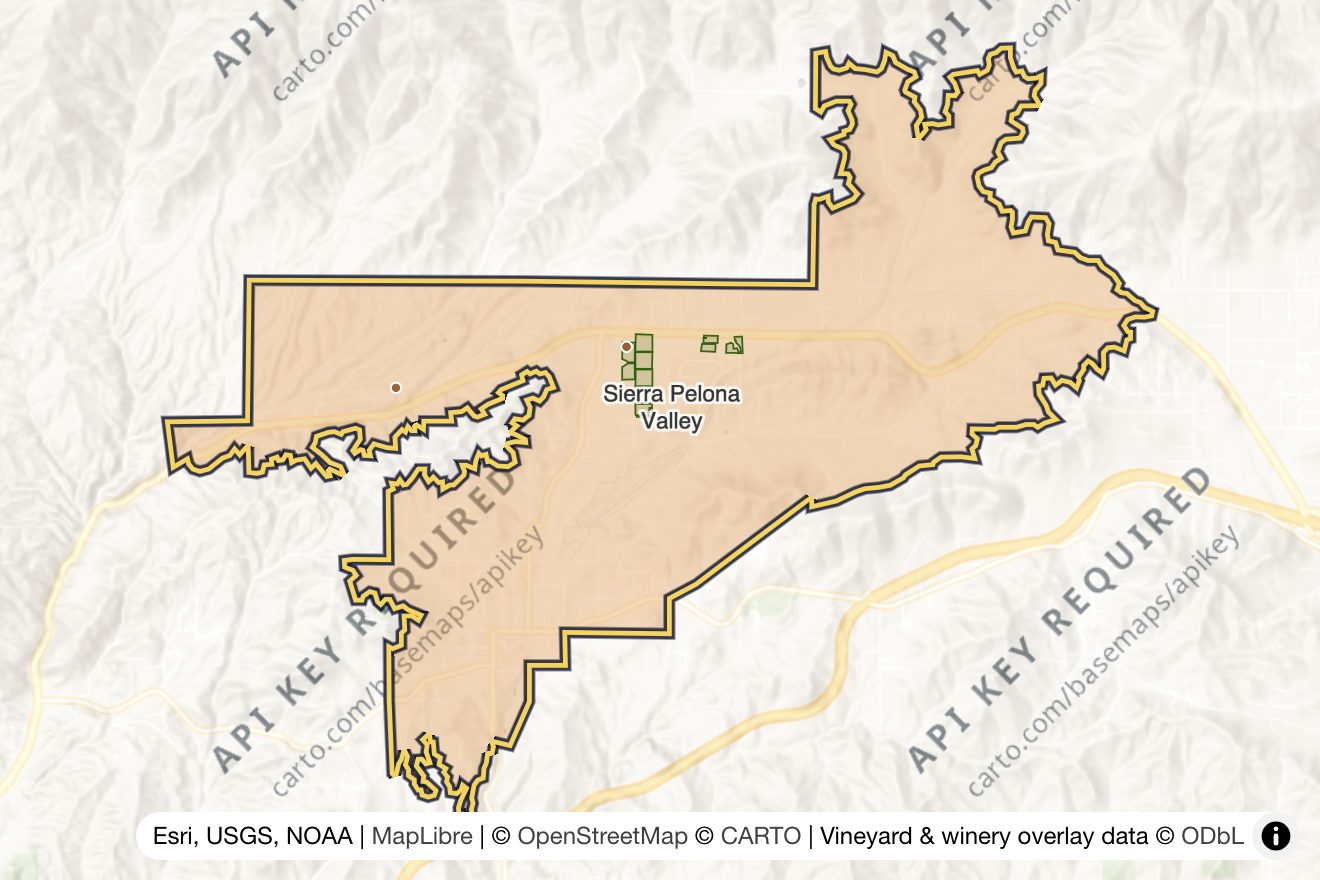
The Appellation
The AVA covers about 6,200 acres (under ten square miles) north of State Route 14, with vineyards planted between roughly 2,400 and 3,400 feet and the surrounding Sierra Pelona ridges climbing past 5,000. The petition was brought by Ralph Jens Carter on behalf of the Antelope Valley Winegrowers Association together with Rancho Santiago Vineyards and Madsen Vineyards. Modern viticulture here only dates to 1995, and plantings remain tiny: on the order of 100 acres when the AVA was approved, spread among small family sites.
Climate and Terrain
This is unambiguously hot-climate viticulture: the growing season racks up roughly 3,500 to 3,800 growing degree days (Region IV), summer afternoons can reach 102F, and annual rainfall averages only about 12 inches, almost all of it outside the growing season. What rescues the valley for wine is altitude. Nights drop into the 50s even in high summer, a diurnal swing of 40 degrees or more that preserves acidity in grapes that would otherwise bake. The valley floor's decomposed granite and alluvial soils drain fast and keep vigor low.
Grapes and Wines
Plantings lean toward varieties that shrug off heat: Syrah, Zinfandel, Tempranillo, Cabernet Sauvignon, Merlot and Malbec among the reds, with Chardonnay, Viognier and Muscat the principal whites. The wines are ripe, generous and sun-driven, sold almost entirely through tasting rooms and local channels rather than distribution.
Producers
Agua Dulce Winery, whose vineyards anchor the valley floor, is the appellation's founding producer, and Reyes Winery joined it around the time the AVA was approved. Production is boutique in scale; for most of the wine world the Sierra Pelona Valley is a curiosity, but it holds a real distinction as one of the few working AVAs inside Los Angeles County, alongside the remnants of the county's once-vast pre-Prohibition vineyard economy.