Overview
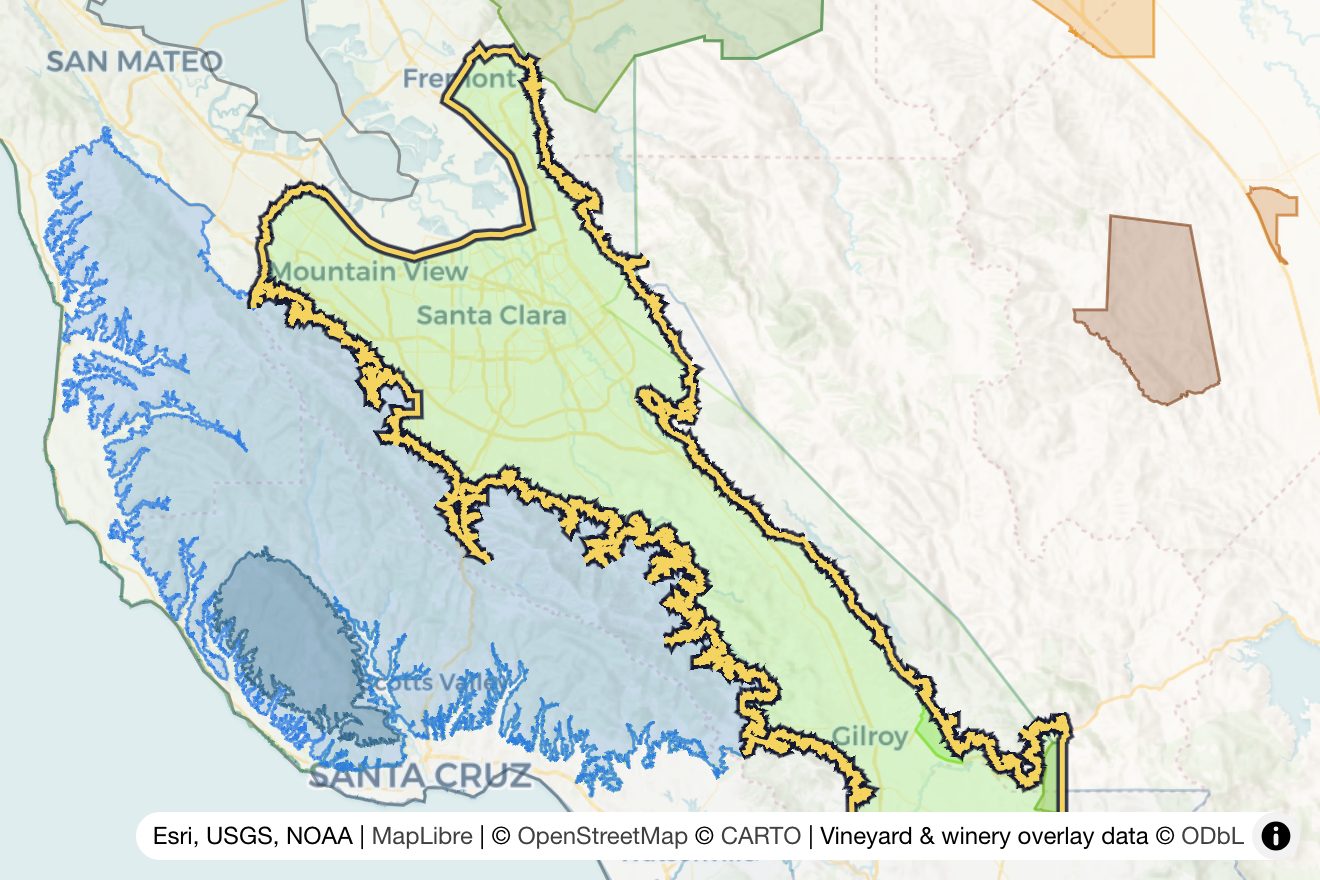
Santa Clara Valley is an American Viticultural Area, established in 1989, covering the valley south and east of San Francisco Bay in Santa Clara County. It is one of California's oldest winegrowing districts and now one of its most constrained: the northern valley became Silicon Valley, and commercial viticulture survives chiefly in the south, around Morgan Hill, San Martin and Gilroy's Hecker Pass, together with the small San Ysidro District AVA in the southeastern hills.
History
Mission plantings at Santa Clara in the late eighteenth century make the valley one of the state's founding wine sites, and by the late nineteenth century it carried major acreage and French-influenced houses; the Almaden and Paul Masson enterprises trace to this district. Urbanization after the Second World War, faster and more total than in any other California wine county, removed most of the vineyard land, leaving family wineries from the early twentieth century, Guglielmo at Morgan Hill, founded 1925, among them, to carry the tradition. The AVA was recognized in 1989, and the valley today combines small estate production with wineries drawing fruit from the broader Central Coast.
Terroir & Climate
The valley floor is alluvial loam and gravel between the Santa Cruz Mountains to the west and the Diablo Range to the east. Marine air enters both around the Bay and through the Pajaro River and Hecker Pass gaps, cooling the southern valley more than its inland position suggests; the San Ysidro District, in a wind gap of the Diablo foothills, is markedly cool and breezy. Summers are warm and dry, with the district's viticulture concentrated where the marine paths temper the heat.
Grape Varieties & Wine Styles
Plantings are small and varied: Cabernet Sauvignon, Merlot and Zinfandel on the warmer sites, Chardonnay and Pinot Noir where marine influence reaches, and a legacy of Rhône and Italian varieties reflecting the valley's immigrant winemaking history. San Ysidro District fruit, principally Chardonnay and Syrah, appears in vineyard-designated bottlings from producers outside the county. Styles are traditional and table-oriented, with local sales dominant.
Notable Producers
Guglielmo Winery is the valley's senior estate. Sarah's Vineyard and the Hecker Pass cluster of family wineries work the Gilroy end, Clos LaChance farms at San Martin, and J. Lohr, headquartered in San Jose, represents the county's larger presence while sourcing principally from Paso Robles and Monterey. The San Ysidro District's vineyards sell largely to outside wineries.
What to Know
Santa Clara Valley is a historic name with a reduced footprint: the AVA persists around and beneath one of the world's most urbanized valleys. Its wine identity today is local, family-scale and unpretentious, with San Ysidro District the appellation's most distinctive subzone. The valley's chief significance to the broader story of California wine is historical, as a cradle of the industry whose houses and vine material seeded regions far beyond it.