History
Davids, a video game entrepreneur with a taste for Burgundy, found the site in the late 1990s and planted the first hundred acres in 1999. Organic farming began in 2005 and biodynamic practice followed over the next decade, though the estate declined formal Demeter certification on the grounds that it could not produce enough manure on site. Sea Smoke bought the neighbouring Rita's Crown in 2016, reportedly as much to protect the organic farming on its estate vineyard as for the fruit. Constellation announced the purchase of the whole operation in May 2024 and closed it that June, placing Sea Smoke alongside Schrader and Lingua Franca in its fine wine portfolio.
The Site
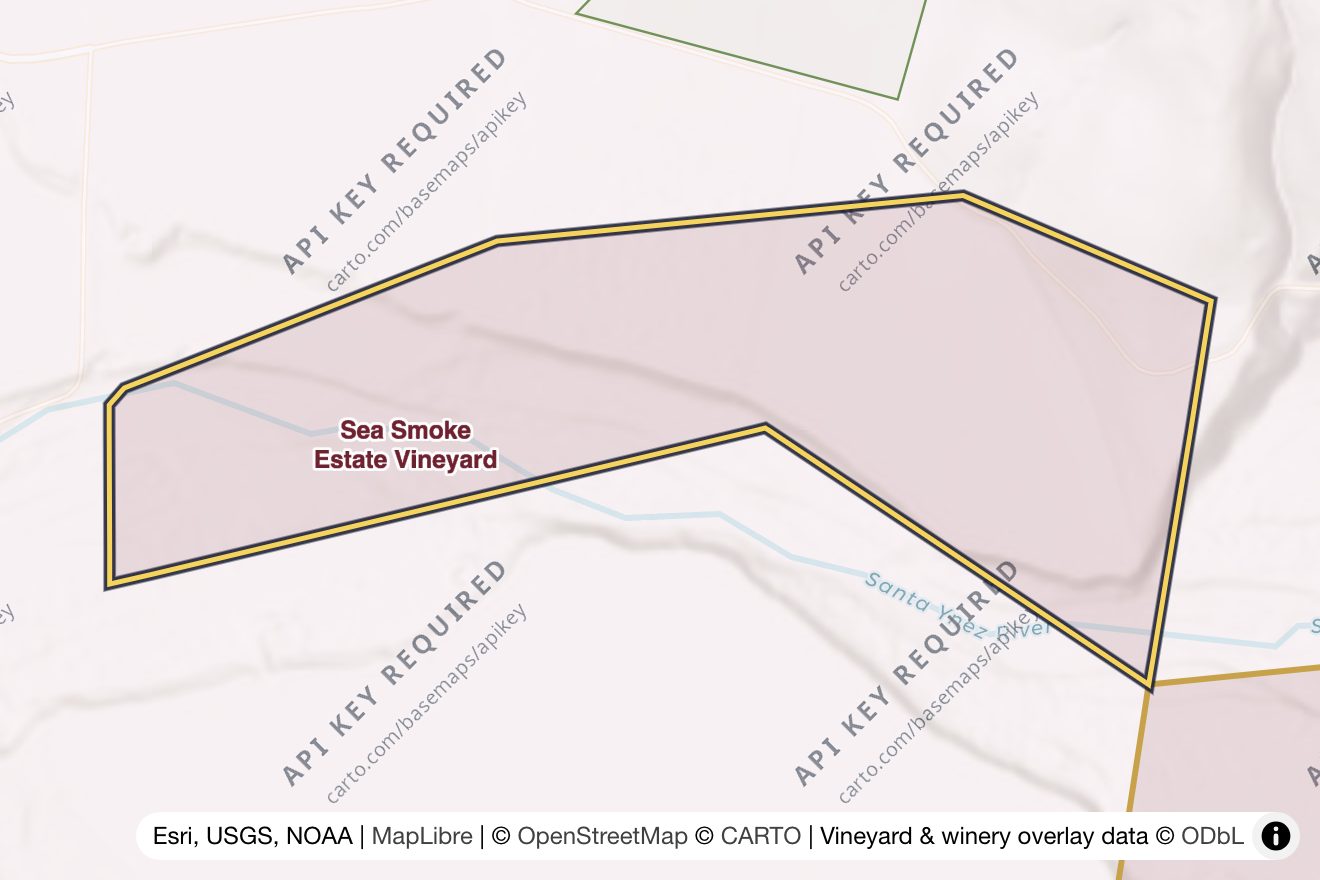
Published figures differ with what is being counted: the estate's own site gives 172 acres and an elevation range of 218 to 720 feet, older profiles describe a 100 acre vineyard between 300 and 700 feet, and the 2024 reporting put 256 planted acres across a 1,100 acre property once Rita's Crown is included. The vineyard occupies rare south-facing slopes above the river, positioned to catch the fog moving inland. Beneath thin topsoils of the Gazos, Lopez and Botella clay series lies semi-siliceous shale with calcareous strata and diatomite, the Miocene seabed that runs under this end of the appellation. Fiddlestix lies below it.
Vines and Blocks
Pinot Noir dominates with Chardonnay alongside, and the estate is known for the breadth of its clonal library: ten Pinot Noir clones are listed, among them 113, 115, 2A, 459, 667, 777, 828 and Pommard, planted so that individual blocks carry a single clone and are vinified separately. The wine names encode the vineyard rather than the other way round: Ten is named for the ten clones, Southing for the south-facing bluffs, and Botella for the soil series.
The Wines
Sea Smoke presents itself as a monopole that neither buys nor sells fruit, and that is how it operates now. The historical record is less absolute: Foxen bottled a Sea Smoke Vineyard Pinot Noir across several vintages in the 2000s, and older profiles list Brewer-Clifton and the Hitching Post as buyers. When outside sales stopped is not documented anywhere. What has not changed is the style, which is the ripe, dark, structured end of Sta. Rita Hills Pinot Noir rather than its lean end.