History
The planting went in on a family ranch near Foxen Canyon Road. Ron Burk's son Gary manages the vineyard today and makes wine from it under the label Costa de Oro, which is simply gold coast in Spanish; the tasting room opened in 2006 on the site of the family's old strawberry stand in Santa Maria. In the vineyard's first decade the fruit went to the producers then building the valley's name, Au Bon Climat and Foxen and Lane Tanner and the Hitching Post among them, which is how a thirty acre grower's block came to be known well beyond the county.
The Site
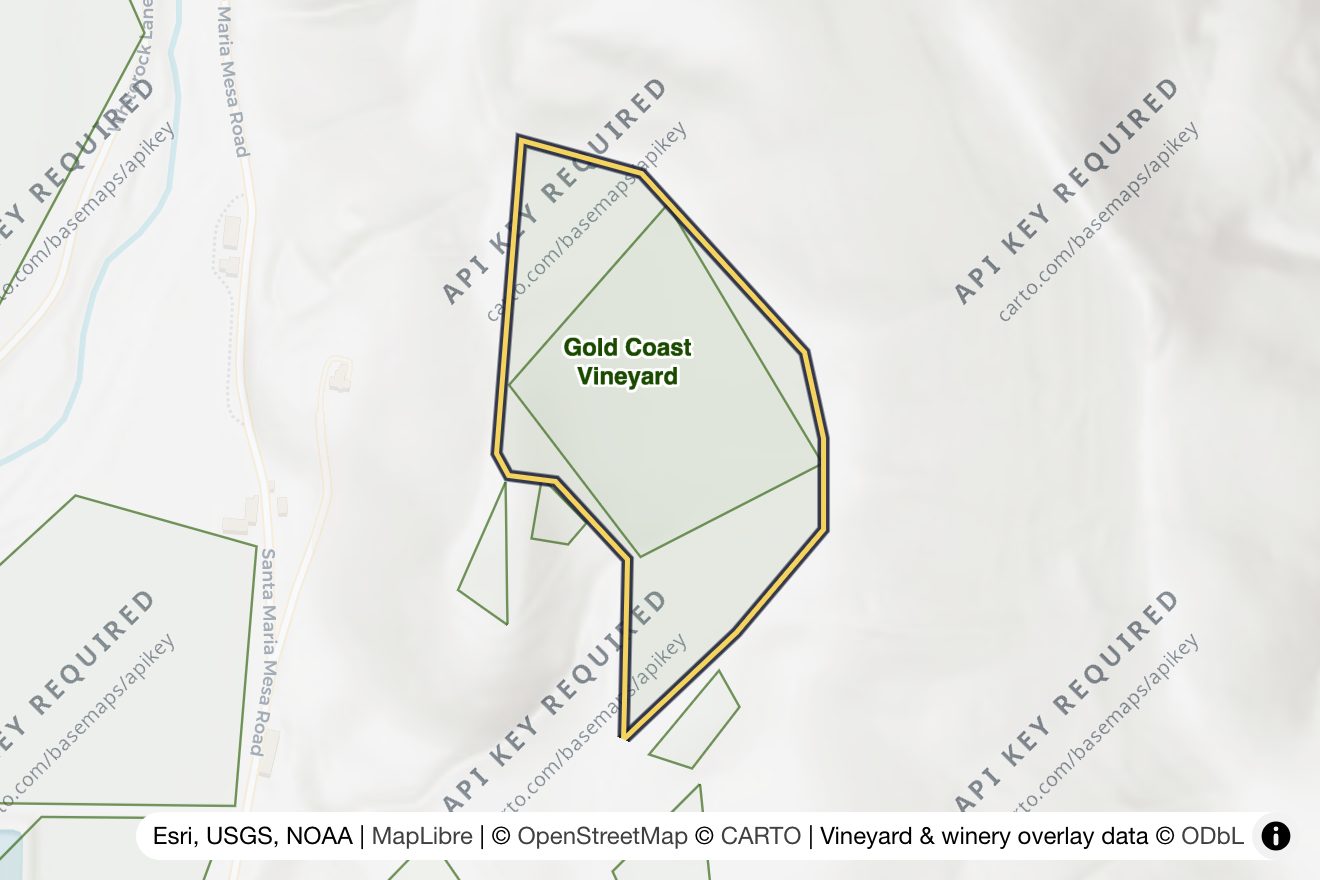
About thirty acres on a sandy plateau that drains hard and holds little. Despite the name, this is the inland end of the Santa Maria Valley rather than anywhere near the coast, well east of the city and away from the marine air that governs the western vineyards. The soils are described consistently as sandy loam, though no soil series is published for the site, and neither elevation nor aspect appears in any public record.
Vines and Blocks
Chardonnay and Pinot Noir, split roughly evenly across the original 1989 planting. The Pinot Noir behind Paul Lato's Duende is own-rooted Martini selection, unusual in a valley that replanted heavily to Dijon material. No internal blocks carry names.
The Wines
Costa de Oro is the estate voice and the reason the vineyard has a label of its own at all. Paul Lato's Duende is the best known outside bottling, a Pinot Noir he has made from this fruit for well over a decade. The wines lean on the sand: light on their feet and aromatic.