History
Philip Togni trained in Bordeaux and worked through a long list of Napa cellars before establishing his own vineyard high on Spring Mountain. The estate has stayed deliberately tiny and family-run: Philip, his wife Birgitta and their daughter Lisa, who now does most of the winemaking, run it between them. The style has not chased the valley's stylistic shifts: indigenous yeast fermentation, twenty months in French oak with around forty per cent new, and a wine built to need a decade before it opens.
The Site
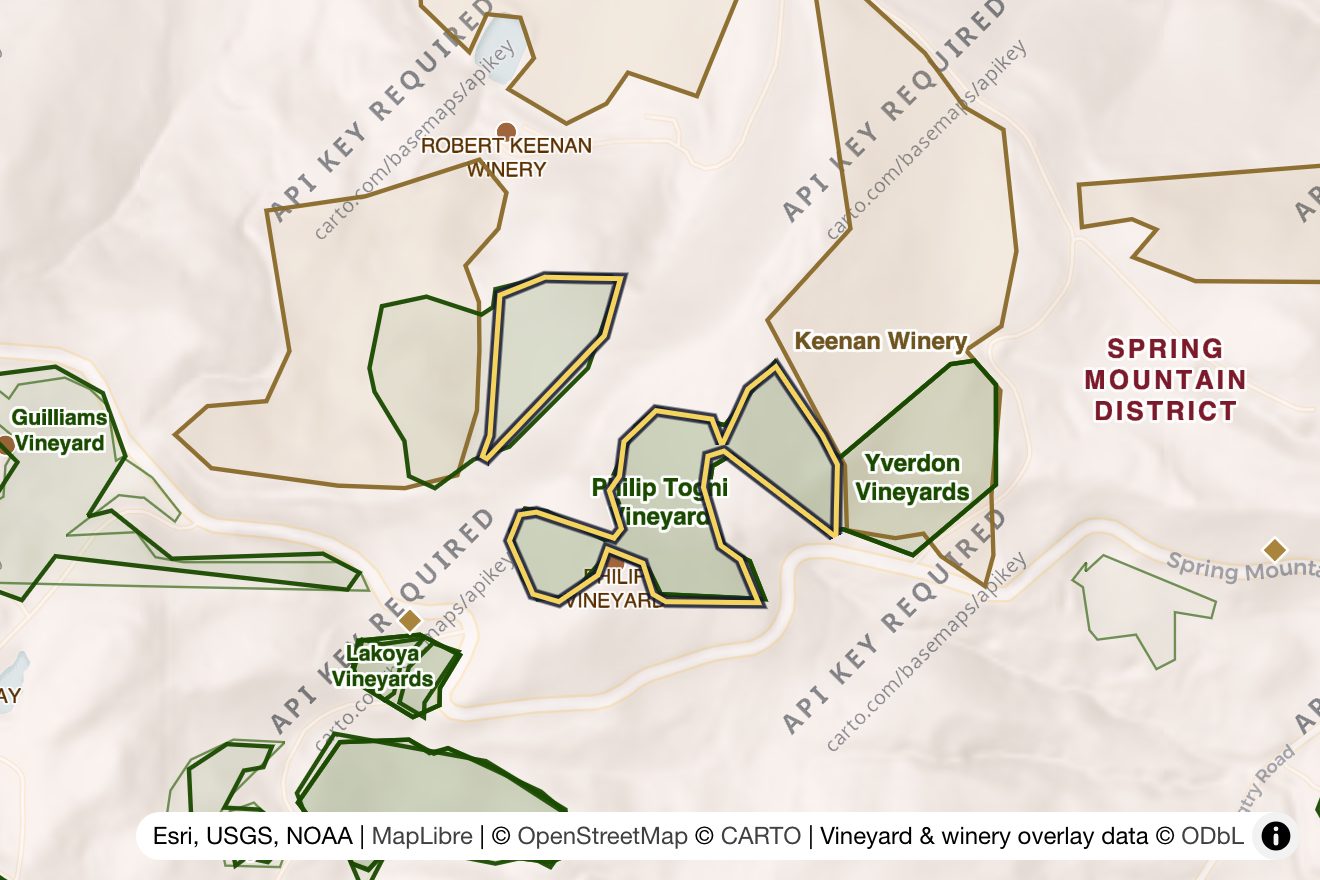
A ten-acre vineyard at about 2,000 feet, near the top of the Spring Mountain District. Most of the estate is shallow, rocky volcanic soil, which is the source of the flagship wine's structure. A slight swale on the property carries slightly deeper, richer and less stony soil.
Vines and Blocks
The estate is planted to the Margaux-style set: Cabernet Sauvignon with Merlot, Cabernet Franc and Petit Verdot, mostly grown from budwood taken from old Napa hillside vineyards.
Tanbark Hill is not a separate property but the estate's second wine, drawn from Cabernet blocks on that richer ground, about three acres in all. The extra soil depth softens the vine stress, so the fruit arrives rounder and more approachable. Barrels destined for the estate bottling that show forward fruit or softer tannin are declassified into it, in the Bordeaux manner.
The Wines
The estate Cabernet is savoury, firm and slow, requiring ten to twenty years. Tanbark Hill is made to the same standard but read earlier: mountain herbs, tart redcurrant and cassis over grainy tannin and driving acidity.