History
Bill Hill developed the vineyard, starting to plant it in 1997. Hill had spent a career arguing for hillside planting in Napa, and used this site to test whether very tight spacing could deliver European structure on sun-baked volcanic ground. It has since been a single-vineyard source for Oleandri Wines, Hill's own Prime Solum label, and historically for Paul Hobbs.
The Site
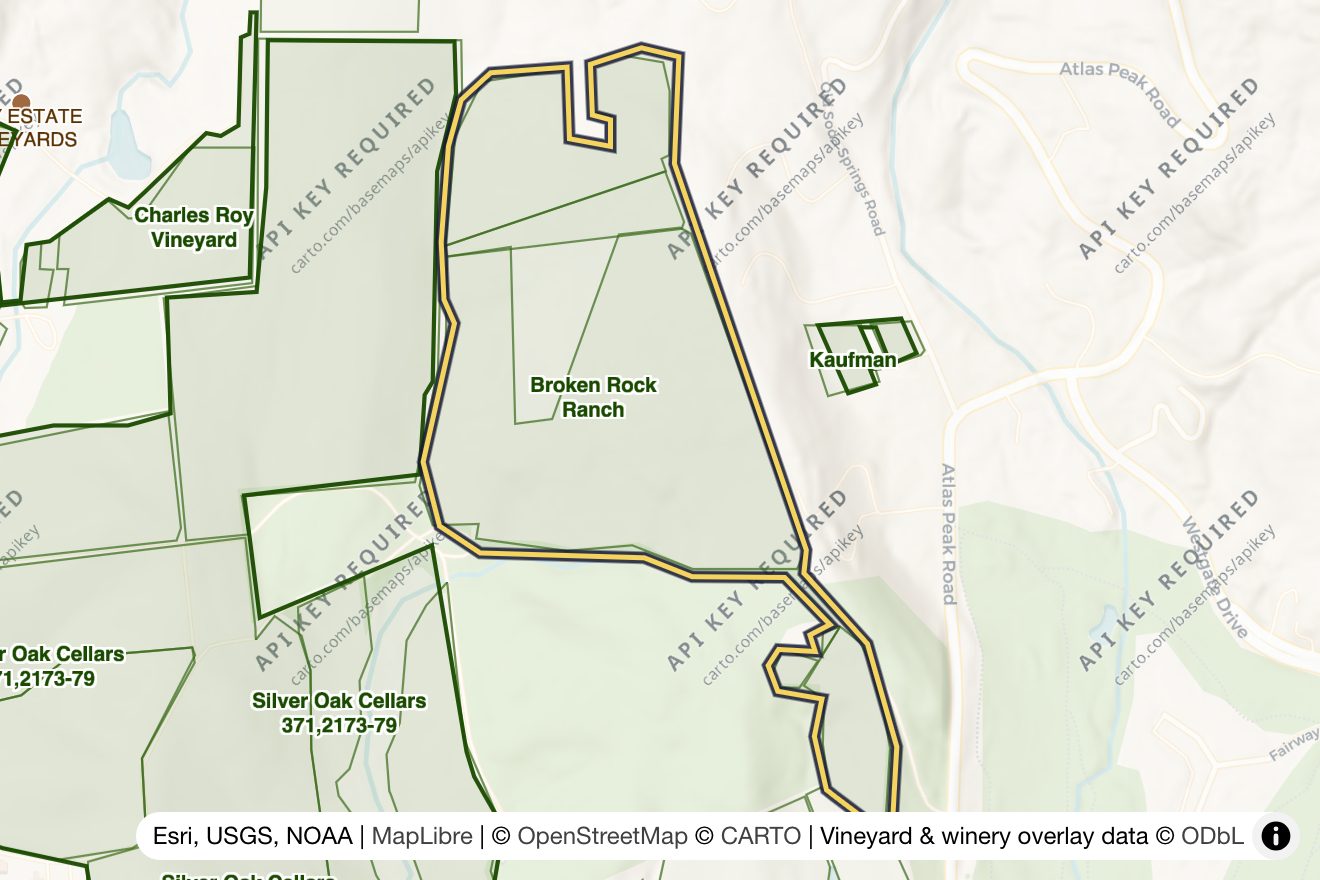
A property of roughly ninety-six acres with about forty-five planted, on Atlas Peak Road, on the southwest shoulder of Atlas Peak, on an undulating mountainside grade with a southwest exposure above the fog line. The soil is skeletal and restrictive: rocky volcanic soil, draining almost instantly. The wines are usually described as Atlas Peak fruit, but the vineyard sits at 600 to 700 feet, below the 760-foot floor the AVA requires, so the appellation on the label is Napa Valley.
Vines and Blocks
Hill planted at roughly two thousand vines per acre, which forces root-to-root competition and reduces cluster size on soil that would otherwise run to vigour. The upper slopes are planted exclusively to Cabernet Sauvignon in clones including 337, facing southwest and driving the colour, graphite aromatics and tannin. Where the slope flattens along the lower margins, finer volcanic silt colluvium collects and those blocks are given to Merlot, whose fruit rounds out the blends.
The Wines
Broken Rock Cabernet is dense and opaque, with creme de cassis and stewed black cherry over graphite and volcanic topsoil, plush on entry and firmly tannic behind it.