History
Harvey founded Rhys in 2004 in search of shallow, low-vigour ground over deeply fractured rock, and he came to Anderson Valley after tasting the elegant, mineral Pinot Noir the Deep End hills give. Bearwallow broke the usual method, since the other estate sites were developed from bare land while this one arrived with six acres of Dijon and Pommard Pinot Noir, eight years old at purchase, which places the original planting around 2000 or 2001. That fruit made the first vintage in 2008. Chardonnay was planted from 2009 and first harvested in 2014, and the property reached roughly thirty-one planted acres by 2017.
The Site
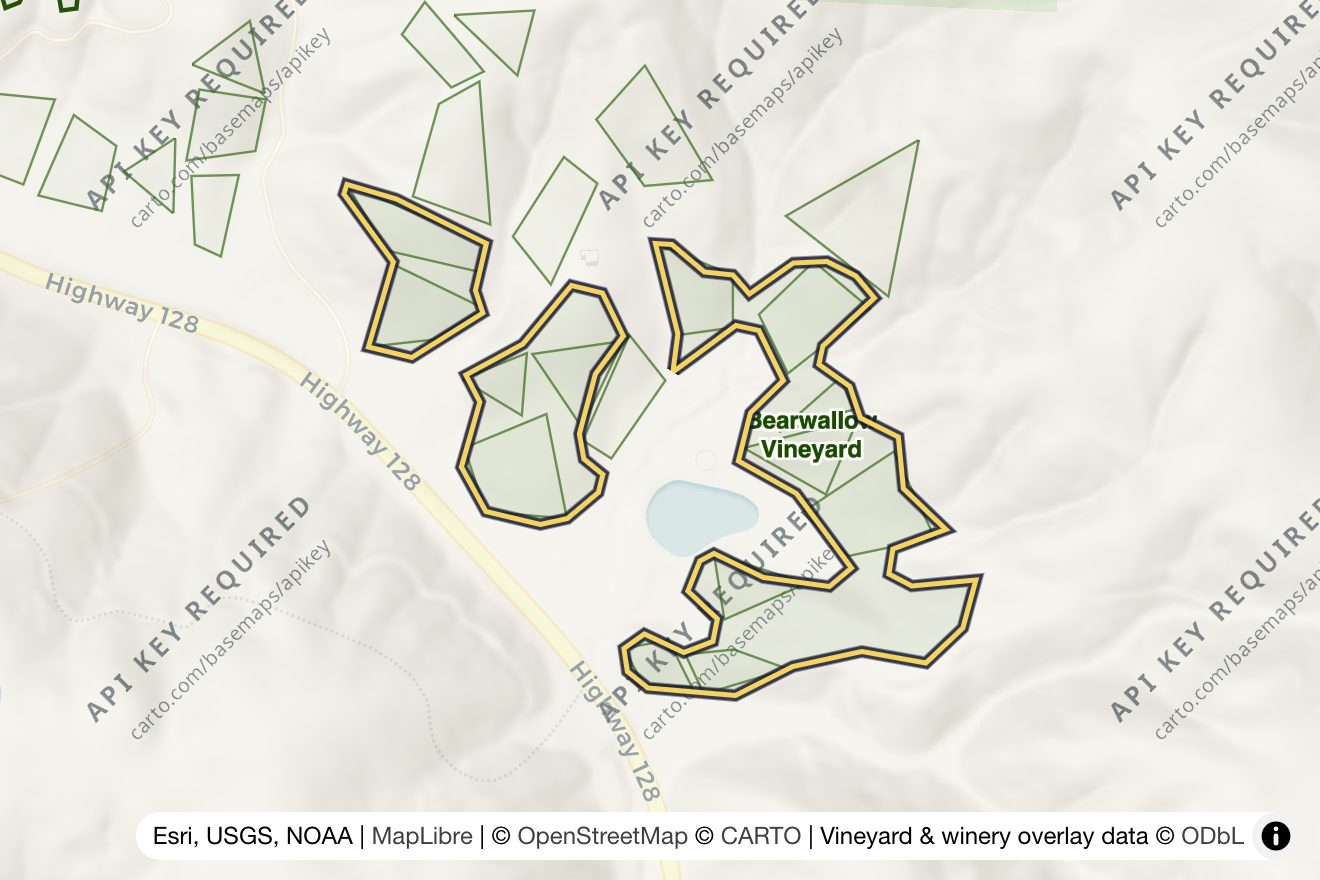
The vineyard rises on steep ground above the redwoods along Highway 128 near Philo, in the Deep End, the cool northwestern reach of the valley nearest the Pacific. Elevation is given as 300 to 600 feet, and exposures run southeast through southwest. Topsoil is ten to twenty-five inches of the Bearwallow-Wolfey series over Franciscan Complex bedrock of fractured shale, quartz and sandstone, deeper cover than the few inches at Skyline but still thin enough to hold vigour down over rock broken enough for roots to descend. Farming follows organic practices and is dry-farmed. The same series appears under other Anderson Valley vineyards, Wendling and One Acre among them.
Vines and Blocks
Pinot Noir leads here. The original Dijon and Pommard blocks sit alongside newer plantings of the Rhys selection massale and heritage clones, the diversity Harvey prefers to monoclonal blocks, while the Chardonnay carries Hyde, Old Wente and Dijon material. One weaker original Pinot Noir block was replanted to Syrah with a massale selection taken from Rhys's Horseshoe Vineyard, and half an acre of Chenin Blanc went in during 2018 on the highest, steepest part of the site. Porcupine Hill is the one named block, three acres of selection massale and heritage clones on its own small hill with eastern and southerly exposures, planted three feet by two at about seven thousand vines to the acre. The stakes that density required suggested quills, which is where the name comes from, and the first crop came in 2013.
The Wines
Rhys is the only producer, selling mainly by mailing list. The site carries three levels of Pinot Noir: the Alesia Anderson Valley bottling, the Bearwallow Vineyard designate and Porcupine Hill, which the estate describes as a distillation of the vineyard. Alesia began as the label for purchased fruit, was wound down after the 2008 harvest and has been revived occasionally since, and the Anderson Valley wine that now carries the name is drawn entirely from Bearwallow. A Bearwallow Chardonnay runs alongside, whole-cluster pressed to barrel and aged twelve months in fifteen percent new oak, and the Syrah debuted in 2019. The Pinot Noir ferments on native yeast, is foot-trodden twice daily, ages around eighteen months in French oak with five to ten percent new and lands near 12.5 to 13.8 percent alcohol. The register is wild berry, spice and saline minerality rather than weight.