History
Jose Lopez planted the vineyard in 1918. Its purpose was Prohibition: thick-skinned grapes that would survive a rail journey east to home winemakers in Chicago and the East, a trade that kept a good deal of California's old-vine acreage alive through the dry years. Don Galleano of Galleano Winery has leased and farmed it for decades.
The Site
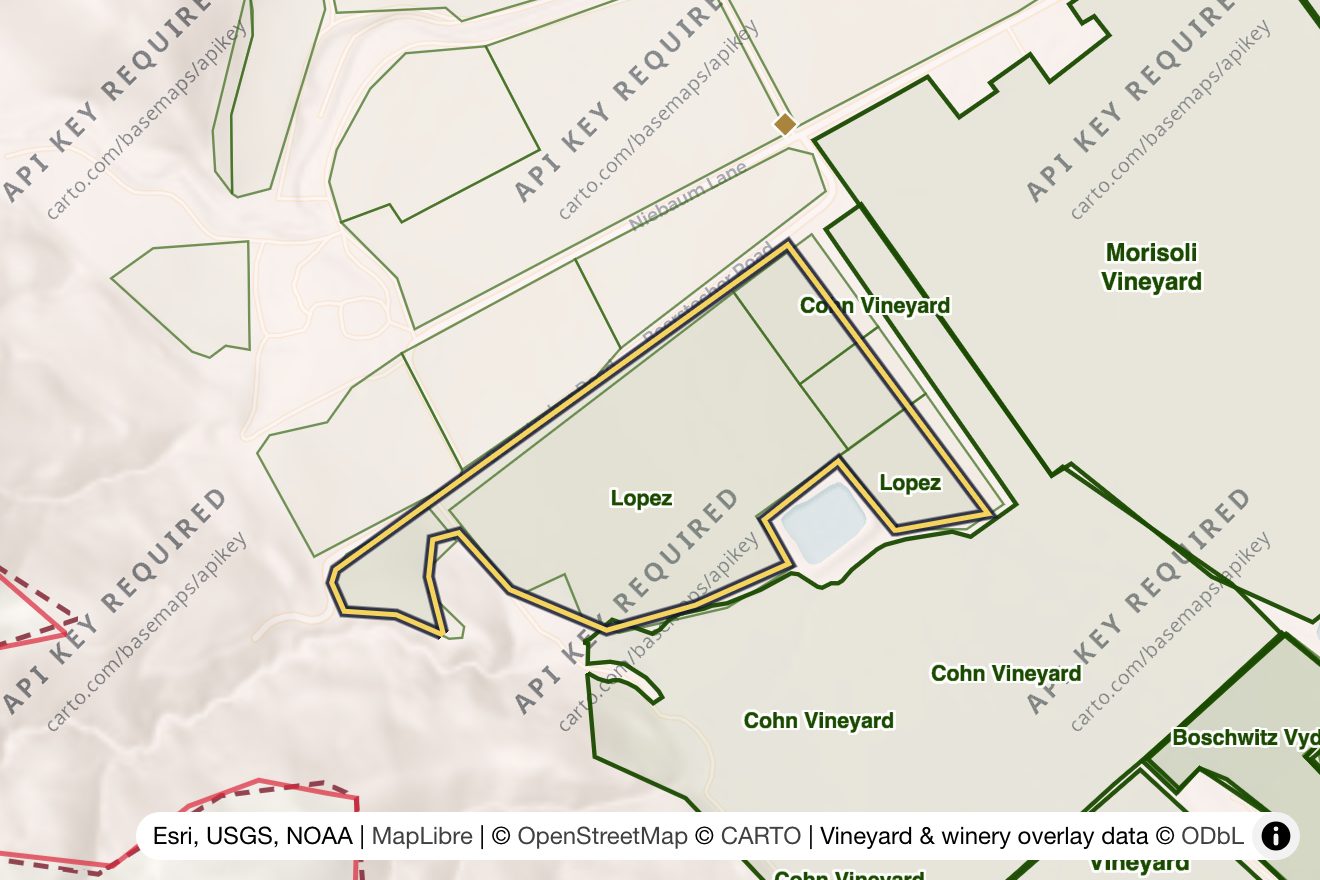
At the south-east corner of the Interstate 15 and 210 interchange near Fontana and Rancho Cucamonga, San Bernardino County, at roughly 500 feet on deep desert sand and granitic rock, inside the Cucamonga Valley AVA. It is CCOF certified organic. Reported acreage varies sharply with the era of the source, from about 130 acres in an older account that already described it as surrounded on three sides by housing, to about 300 in more recent ones.
Vines and Blocks
Own-rooted, head-trained, dry-farmed Zinfandel (with some Palomino), pruned into a low bush form roughly two feet tall, with roots reaching thirty to fifty feet down through the sand. Yields run about a third to a half ton per acre.
The Wines
Carol Shelton has bottled Monga Zin from the site since 2000. Scar of the Sea and Galleano also make wine from it, and Kempton Clark did historically.