Overview
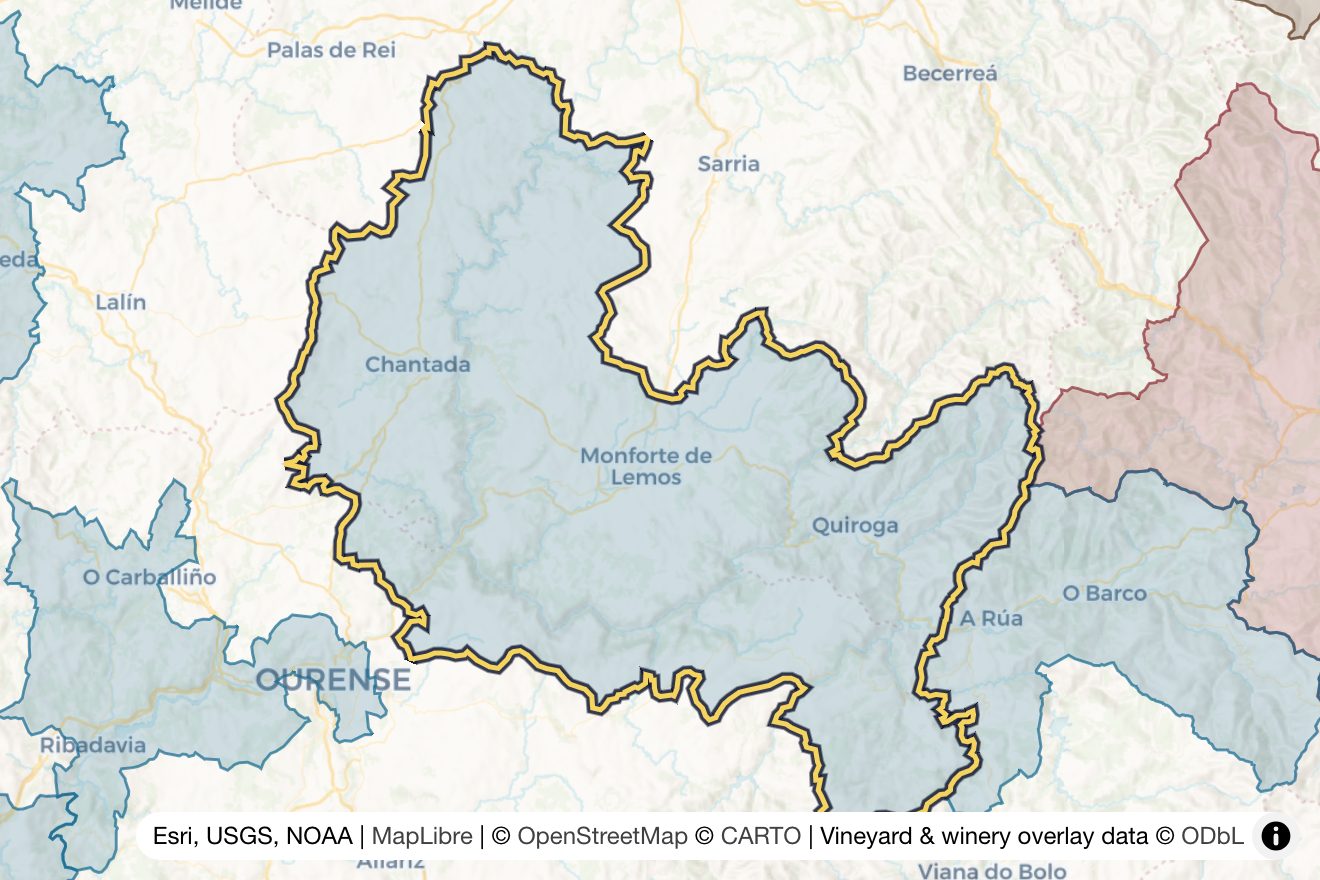
Ribeira Sacra is a Denominación de Origen in inland Galicia, northwestern Spain, established in 1996, covering the canyon slopes of the Sil and Miño rivers in the provinces of Lugo and Ourense. It is Spain's definitive heroic-viticulture zone: vineyards on terraces, socalcos, stacked into gorge walls at gradients that require all work by hand. Mencía leads a roster of native varieties, and the zone's fresh, mineral reds have moved from local obscurity to international prominence over the past two decades.
History
The terraces are attributed in tradition to Roman origin and were sustained through the Middle Ages by the monasteries that give the zone its name, the sacred riverbank. Emigration and the difficulty of the terrain drained the vineyards through the twentieth century, and the DO's creation in 1996 came amid genuine risk of abandonment. Revival followed on two tracks: cooperative modernization, and a wave of small growers and outside projects from the 2000s onward that treated the canyon parcels as Spain's answer to the great river-slope terroirs, raising both quality and the price of terrace fruit.
Terroir & Climate
The zone's defining fact is slope: vineyards fall toward the rivers at inclines that commonly exceed fifty percent, on slate, schist and granite with thin topsoil. Five subzones divide the canyons, with Amandi on the Sil the most renowned. The climate crosses Atlantic and continental influences; the gorges trap heat and reflect light off the water, ripening grapes at a latitude and humidity that would otherwise struggle, while altitude and shade preserve acidity. Erosion, labor and access are the permanent constraints.
Grape Varieties & Wine Styles
Mencía is the principal red grape, supported by Brancellao, Merenzao, Sousón and Caíño Tinto, with old parcels frequently field blends. Ribeira Sacra Mencía is aromatic and fresh: red and black cherry, flowers, slate and herbs, medium body, fine tannin and marked acidity, generally best within its first decade, with village and parcel bottlings extending that. Whites, a minority, draw on Godello, Albariño, Treixadura and Dona Branca, and run taut and stony. Extraction and new oak are modest by mainland Spanish standards; transparency is the zone's house style.
Notable Producers
Guímaro at Amandi is the reference grower estate. Dominio do Bibei, Algueira and Regina Viarum represent the zone's larger serious cellars, and Envínate's Lousas bottlings carried the canyon's name to the international fine wine market. Cooperatives and dozens of sub-hectare growers account for much of the remaining production.
What to Know
Ribeira Sacra's costs are structural: the terraces cannot be mechanized, and pricing reflects labor, not fashion. Mencía here is a different proposition from the fuller Bierzo rendering of the same grape, lighter-framed and more mineral. Subzone and parcel names, Amandi above all, are the zone's quality shorthand, and the category rewards drinking on the fresher side.