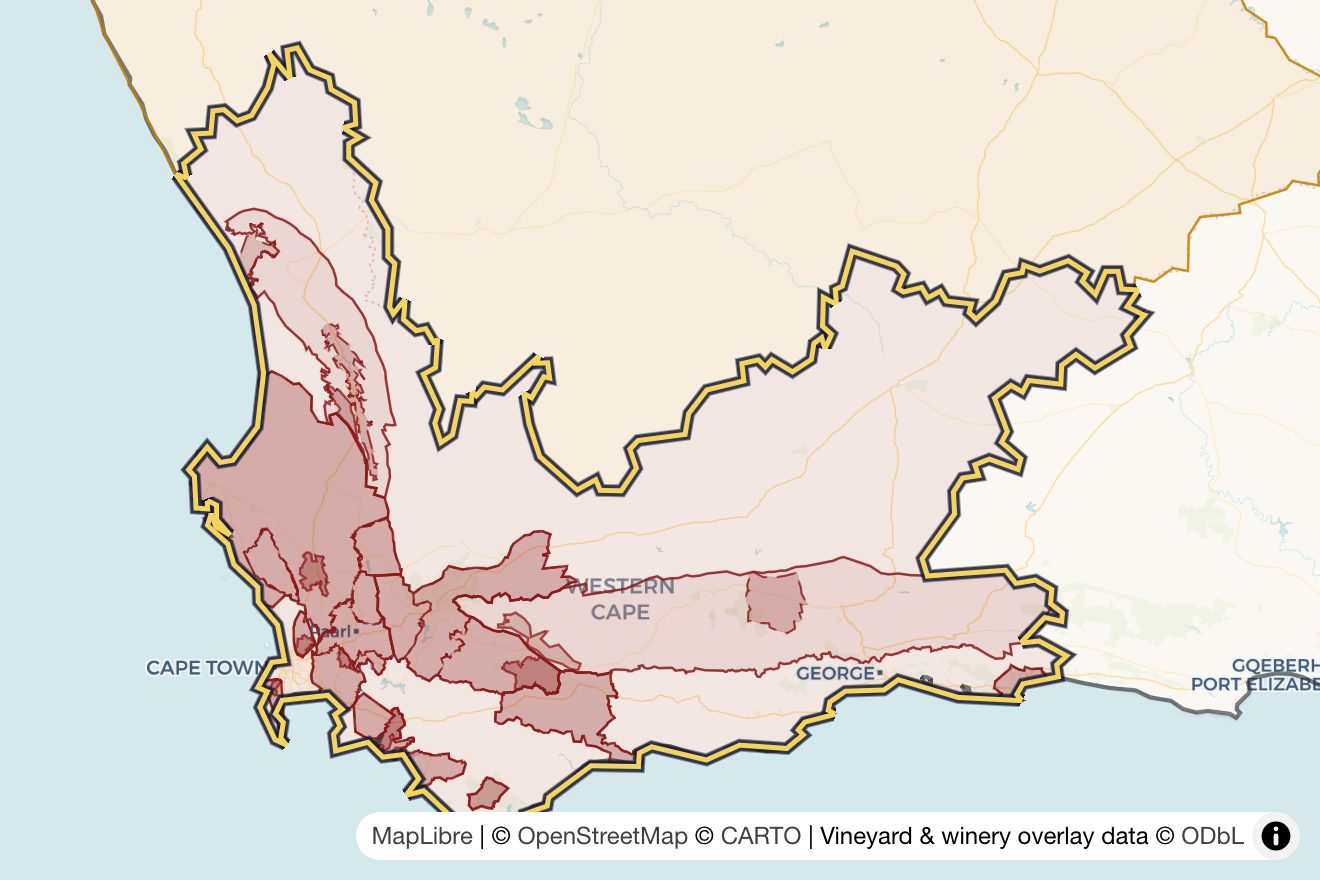
Overview
The Western Cape is the geographical unit that contains nearly all of South African wine. Under the Wine of Origin system it is the broadest designation in common use, covering the winelands from the Atlantic and False Bay coasts inland through the Cape Fold mountains: Stellenbosch, Paarl, Swartland, Constantia, Walker Bay, Elgin, the Breede River valley and the Olifants River among them. A Western Cape label guarantees only that the fruit comes from somewhere within the unit, whether from one district or blended across several regions.
History
Cape viticulture began in 1655 with the Dutch East India Company settlement, and Constantia's sweet wines became one of the eighteenth century's most celebrated luxuries. The modern framework dates from 1973, when the Wine of Origin legislation established the hierarchy of regions, districts and wards that still governs labeling, with geographical units added as the broadest tier in 1993. The KWV cooperative's regulatory dominance through most of the twentieth century gave way during the 1990s, as the end of apartheid reopened export markets; the decades since have seen replanting, the rise of independent estates and the emergence of the Cape's old-vine and site-specific movements.
Terroir & Climate
The winelands occupy the southwestern corner of Africa in a Mediterranean climate: wet winters, dry warm summers, and pervasive maritime influence from the cold Benguela current and the south-easterly winds, the Cape Doctor among them, that cool the coastal districts. Terrain is defined by the Cape Fold belt, granite and sandstone mountains over some of the world's oldest viticultural soils, decomposed granite, Table Mountain sandstone and shale. Conditions range from cool, wind-exposed coastal wards to hot irrigated valleys inland, which is precisely why the Western Cape designation spans such stylistic breadth.
Grape Varieties & Wine Styles
Chenin Blanc is the Cape's most planted variety and its historic workhorse, now the vehicle for many of its finest whites, particularly from old dryland bush vines. Cabernet Sauvignon, Syrah, Merlot and Pinotage, the country's own 1925 crossing of Pinot Noir and Cinsaut, lead the reds; Sauvignon Blanc and Chardonnay the other leading quality whites, alongside the widely planted Colombard, with Pinot Noir established in the coolest districts. Styles span traditional-method sparkling wine under the Cap Classique designation, fortified and dessert traditions including Constantia's revived sweet wines, and the Rhône-styled blends that carried the Swartland movement. Multi-region blends labeled Western Cape range from volume brands to serious cuvées assembled deliberately across districts.
Notable Producers
The unit contains essentially all of the country's noted names, from historic estates such as Kanonkop, Meerlust and Klein Constantia to the newer wave led by Sadie Family Wines, Mullineux, Alheit and Savage; large houses and cooperatives account for the bulk of Western Cape-labeled volume, and many premium producers use the designation for cross-regional blends alongside their single-origin bottlings.
What to Know
Western Cape on a label is a statement of breadth, not of quality in either direction: it accommodates both commodity blends and deliberate multi-district assemblages. The finer the origin claim, the narrower the designation, descending from geographical unit to region, district and ward. South Africa's certification seal guarantees the origin, vintage and variety claims on every bottle carrying the designation.