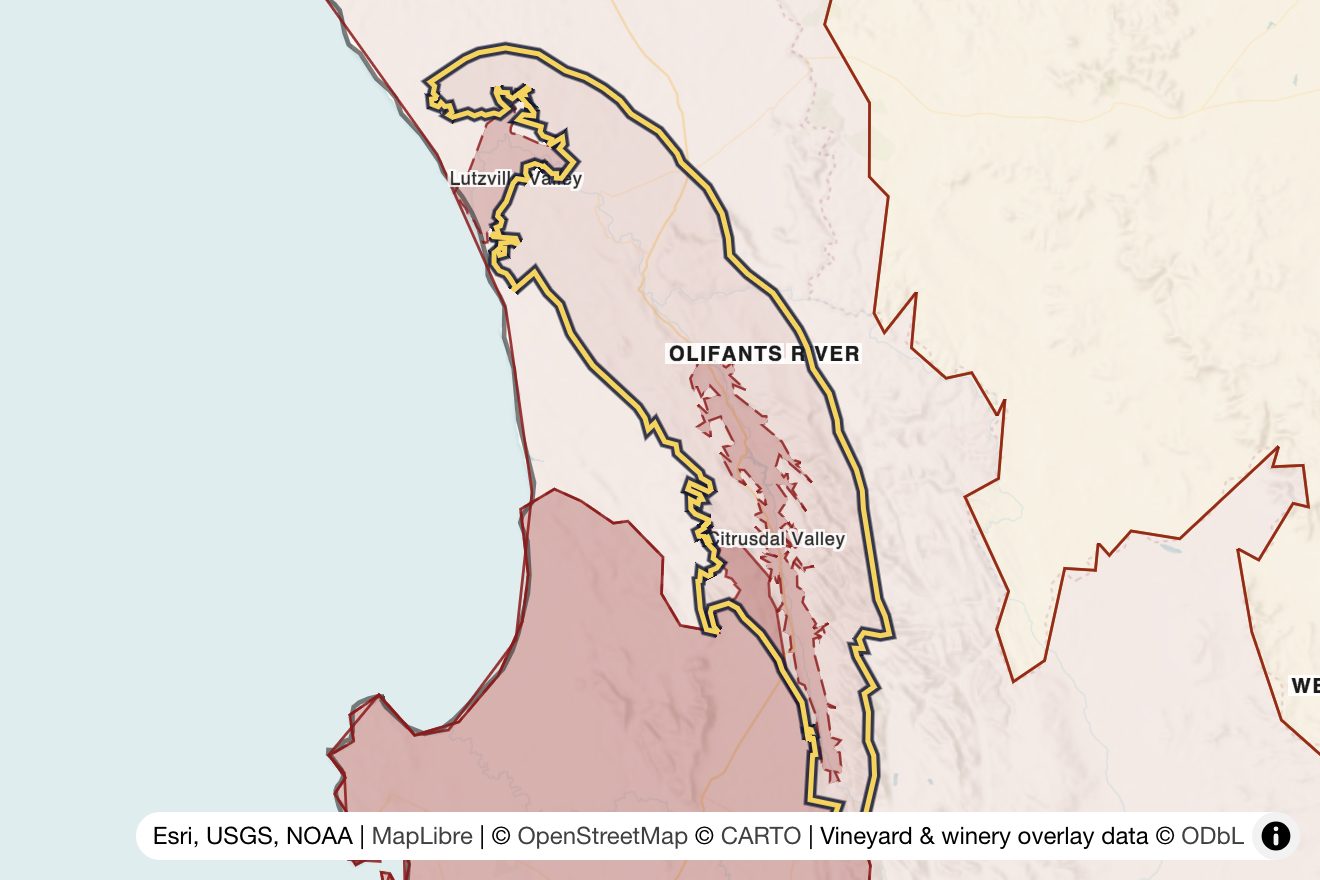
Overview
The Olifants River region lies in the northwest of South Africa's Western Cape, following its namesake river from the Cederberg foothills toward the Atlantic. Historically a bulk-production area built on irrigated valley-floor vineyards and large cooperatives, it has acquired a second identity in the modern era: the source of some of the country's most sought-after old-vine parcels, above all the dryland Chenin Blanc of the Citrusdal Mountain district's Skurfberg, and cool-climate plantings within sight of the ocean.
History
Vineyards spread along the river through the twentieth century on irrigation schemes, with cooperatives at Vredendal, Lutzville and elsewhere processing most of the crop for distilling wine, bulk export and value brands; the region became one of the country's largest by volume. Its reappraisal began in the 2000s, when producers of the old-vine movement traced surviving early- and mid-twentieth-century bush-vine Chenin and Grenache to the sandstone heights above Citrusdal, and estates pushed vineyards to the coast at Bamboes Bay. Fruit from these margins now appears in several of South Africa's most celebrated white wines.
Terroir & Climate
The region divides sharply. The valley floor is warm, dry and irrigated from the river, on alluvial soils, and farmed for volume. The margins are another matter: the Citrusdal Mountain district rises onto Table Mountain sandstone at 500 to 700 metres, where deep sands hold winter rain and old bush vines are dry-farmed; and the coastal strip at Bamboes Bay sits within a few kilometres of the cold Atlantic, among the coolest sites in the country. Fog and the Benguela current's influence reach well inland along the river's lower course.
Grape Varieties & Wine Styles
Chenin Blanc dominates and defines both identities: crisp volume wine from the valley, and concentrated, honeyed, mineral old-vine expressions from the mountain sands. Colombard remains widely planted for the valley's fresh whites and brandy base. Grenache, Cinsault and Carignan from old parcels supply the region's most interesting reds, in a fresh, aromatic register, and Sauvignon Blanc performs strongly at Bamboes Bay. Vergelegen-scale estate culture is absent; growers and cellars trade heavily in fruit.
Notable Producers
Fryer's Cove farms the Bamboes Bay coast. The old-vine mountain parcels reach the market chiefly through outside producers: Skurfberg and neighboring vineyards supply bottlings from the Sadie Family's Ouwingerdreeks, Alheit Vineyards and other members of the Cape's old-vine movement, while Cederberg Private Cellar works high-altitude vineyards just beyond the regional boundary. The cooperatives, Namaqua among them, remain the volume backbone.
What to Know
Olifants River wine spans two different economies: some of South Africa's least expensive bottles and some of its most allocated. The regional name on a label usually signals the former; the latter travels under vineyard and ward names, Skurfberg and Citrusdal Mountain foremost. Old dryland bush vines in deep sand are the region's contribution to the Cape's top tier, and their custodianship is a running theme of its present.