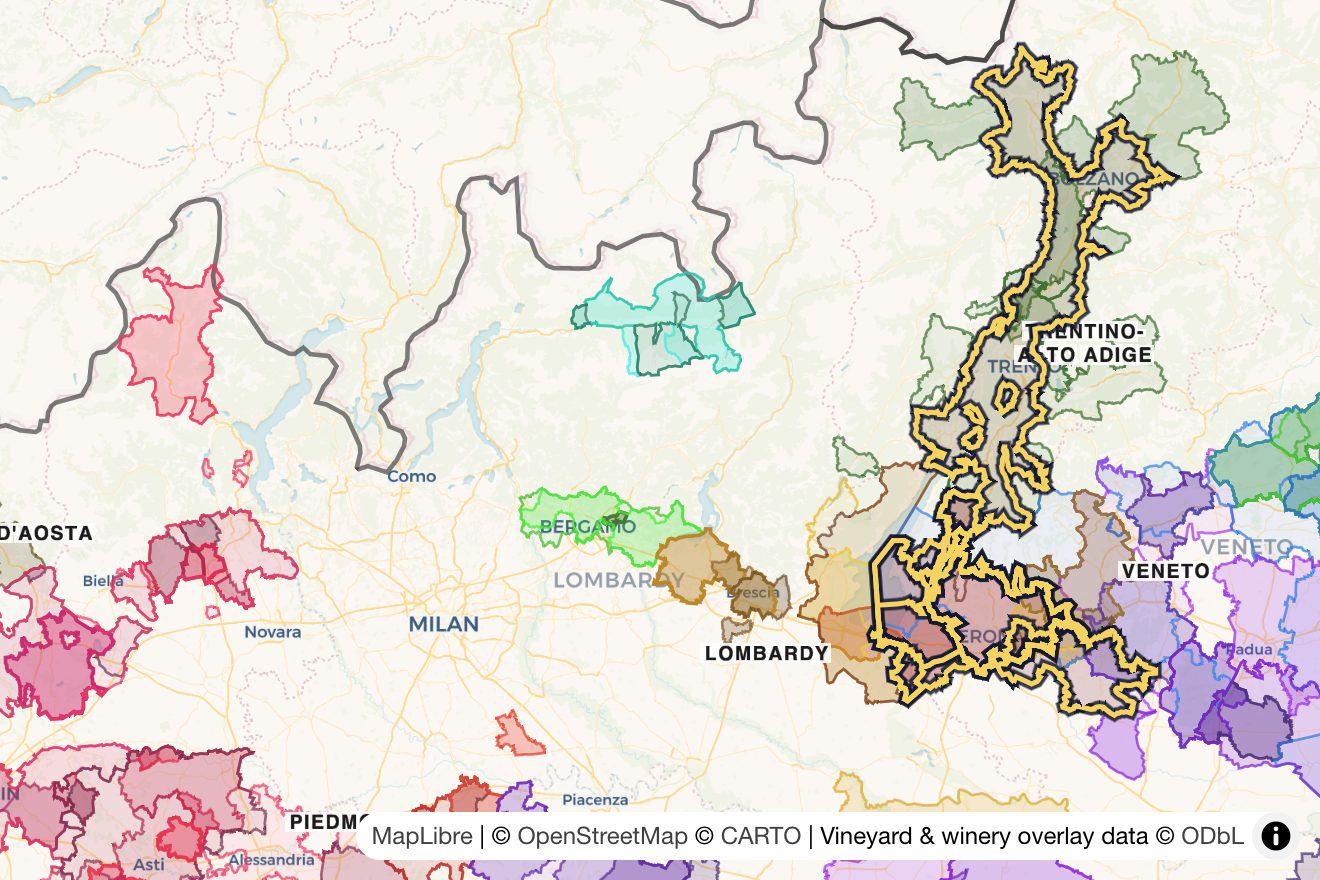
Overview
The historic heart of the zone, designated Classico, comprises the five communes of Fumane, Marano di Valpolicella, Negrar, San Pietro in Cariano and Sant'Ambrogio di Valpolicella. The Valpantena valley to the east carries its own named subzone, and the zone extends further east across the valleys of Mezzane, Illasi and Tramigna.
History
Viticulture in the Veronese hills long predates the modern denominations; dried-grape winemaking in the area is documented from antiquity, and the region's Rhaetic wine was praised in Roman sources. The modern framework dates from 1968, when Valpolicella received DOC status. Recioto and Amarone, originally treated as styles within the denomination, were separated and elevated to DOCG in 2010, and Ripasso received its own DOC the same year.
The zone's commercial history in the twentieth century was shaped by large negociant houses and the cooperative system, with estate bottling expanding strongly from the 1980s onward. The rise of Amarone over the same period changed the economics of the whole zone, as an increasing share of the harvest was set aside for drying.
Terroir & Climate
The zone consists of a series of parallel north-south valleys descending from the Lessini plateau toward the Adige plain. Soils are varied: the Classico valleys mix limestone, marl and morainic gravels, the Valpantena and the eastern valleys carry a larger share of volcanic basalt, and valley floors run to deeper alluvial material. Vineyards climb from about 100 to 500 metres, and the traditional pergola veronese training system remains widespread, particularly for fruit destined for drying, alongside newer guyot plantings.
The climate is sub-continental, moderated by Lake Garda to the west and the Lessini massif to the north, which shelters the valleys from cold northern air. Hillside sites benefit from good drainage and significant day-night temperature range in the ripening season.
Grape Varieties & Wine Styles
All the Valpolicella denominations share one ampelographic base. Corvina Veronese must make up 45 to 95 percent of the blend, and Corvinone may substitute for Corvina up to half of that share. Rondinella accounts for 5 to 30 percent. Smaller proportions of other authorized local varieties, among them Molinara, Oseleta and Croatina, may complete the blend; Molinara, once mandatory, has been optional since 2003.
Valpolicella DOC is a light- to medium-bodied dry red marked by sour cherry fruit, moderate tannin and fresh acidity, made for early drinking. Valpolicella Superiore requires a minimum of 12 percent alcohol and one year of aging and occupies a fuller, more structured register. Valpolicella Ripasso is made by passing finished Valpolicella over the unpressed pomace of Amarone or Recioto, restarting a brief second fermentation that adds color, alcohol, tannin and dried-fruit character; production volumes of Ripasso are capped in proportion to the Amarone and Recioto made.
The dried-grape wines complete the family: Amarone, fermented essentially dry from appassimento fruit, and Recioto, the historic sweet wine from the same process, are treated in the Amarone della Valpolicella entry.
Notable Producers
Giuseppe Quintarelli in Negrar and Romano Dal Forno in the Val d'Illasi are the zone's most influential estate names of the modern era. Established houses include Bertani, Masi, Allegrini, Tedeschi and Speri, alongside estates such as Brigaldara, Ca' La Bionda, Corte Sant'Alda, Monte dall'Ora, Roccolo Grassi and Zyme. The cooperative sector remains significant, and negociant bottlings account for a substantial share of total volume.
What to Know
Valpolicella, Ripasso, Amarone and Recioto come from the same vineyards and grapes; the differences are process and aging, not origin. Classico on a label refers to the five historic western communes, not to a quality level. Valpantena is the only other named subzone. The zone's stylistic spread is unusually wide for a single name, from bright, chillable young reds to some of Italy's most concentrated wines, and the drying tradition is the thread connecting its history to its present.