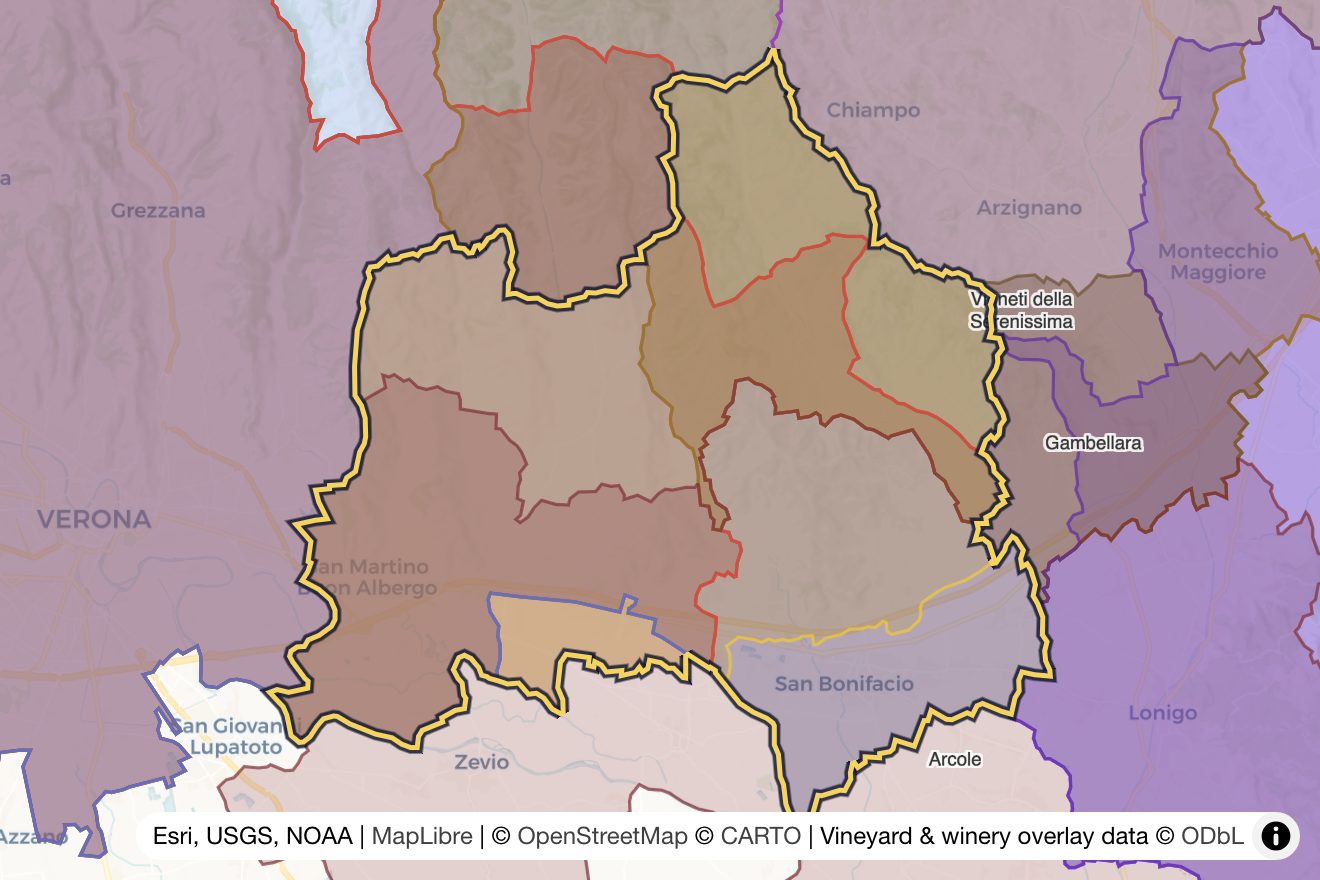
Overview
The zone also holds two DOCGs: Recioto di Soave, the sweet dried-grape wine that was the Veneto's first DOCG in 1998, and Soave Superiore, created in 2001 for lower-yield hillside wine.
History
Viticulture around the medieval walled town of Soave is documented from antiquity, and Garganega has been identified with the zone since at least the Middle Ages. The DOC dates from 1968, among the first wave of Italian denominations. Volume expansion onto the alluvial plain in the later twentieth century built Soave into an export staple while diluting its reputation; the last three decades have seen the hill producers reassert the wine's standing, with single-vineyard bottlings from sites such as La Rocca, Calvarino, Vigneto du Lot and Foscarino defining the upper tier. In 2016 the zone's traditional hillside sites were among the first Italian vineyard landscapes recognized by the FAO as a Globally Important Agricultural Heritage System.
Terroir & Climate
The defining division in Soave is geological. The eastern hills, including much of the Classico zone around Monteforte, are volcanic: black basalt soils that give smoky, mineral, slow-developing wines. The western hills toward Soave castle carry more limestone and marl, giving earlier-opening, floral expressions. The plain below is alluvial and fertile, suited to volume. Vineyards climb to around 400 metres, and the traditional pergola remains common on the hills, protecting Garganega's exposed bunches from sunburn.
The climate is warm and sub-continental, moderated by breezes from the Adriatic and the Alpine foothills; the hills' elevation and ventilation preserve the acidity on which the wine's style depends.
Grape Varieties & Wine Styles
Soave must contain at least 70 percent Garganega. The complement may include Trebbiano di Soave, the local name for Verdicchio, and Chardonnay, with small shares of other approved whites. The best estates work with Garganega alone or with a Trebbiano di Soave component.
Soave is a dry, medium-bodied white with flavors of pear, yellow apple, almond and white flowers over a saline, faintly bitter finish; volcanic-soil bottlings add smoke and flint. The wine's structure comes from extract and moderate acidity rather than overt fruit, and hillside examples age well over five to ten years, gaining honey and toasted-almond depth. Recioto di Soave, from dried Garganega, is a golden sweet wine with apricot and candied-citrus character.
Notable Producers
Pieropan and Inama are the zone's most internationally recognized estates, joined by Gini, Prà, Suavia, Ca' Rugate, Coffele and Tamellini among the leading hill producers. The cooperative Cantina di Soave handles a large share of total production, and negociant bottlings dominate the entry level.
What to Know
Classico refers to the original hill zone, not to a quality level, but in Soave the distinction is unusually meaningful: the hills, volcanic and limestone alike, produce the wines on which the denomination's reputation rests. Garganega rewards patience; top single-vineyard Soave develops for a decade. The zone's structure, a prestigious hill core surrounded by high-volume plain, explains most of the price and quality spread a buyer encounters.