Overview
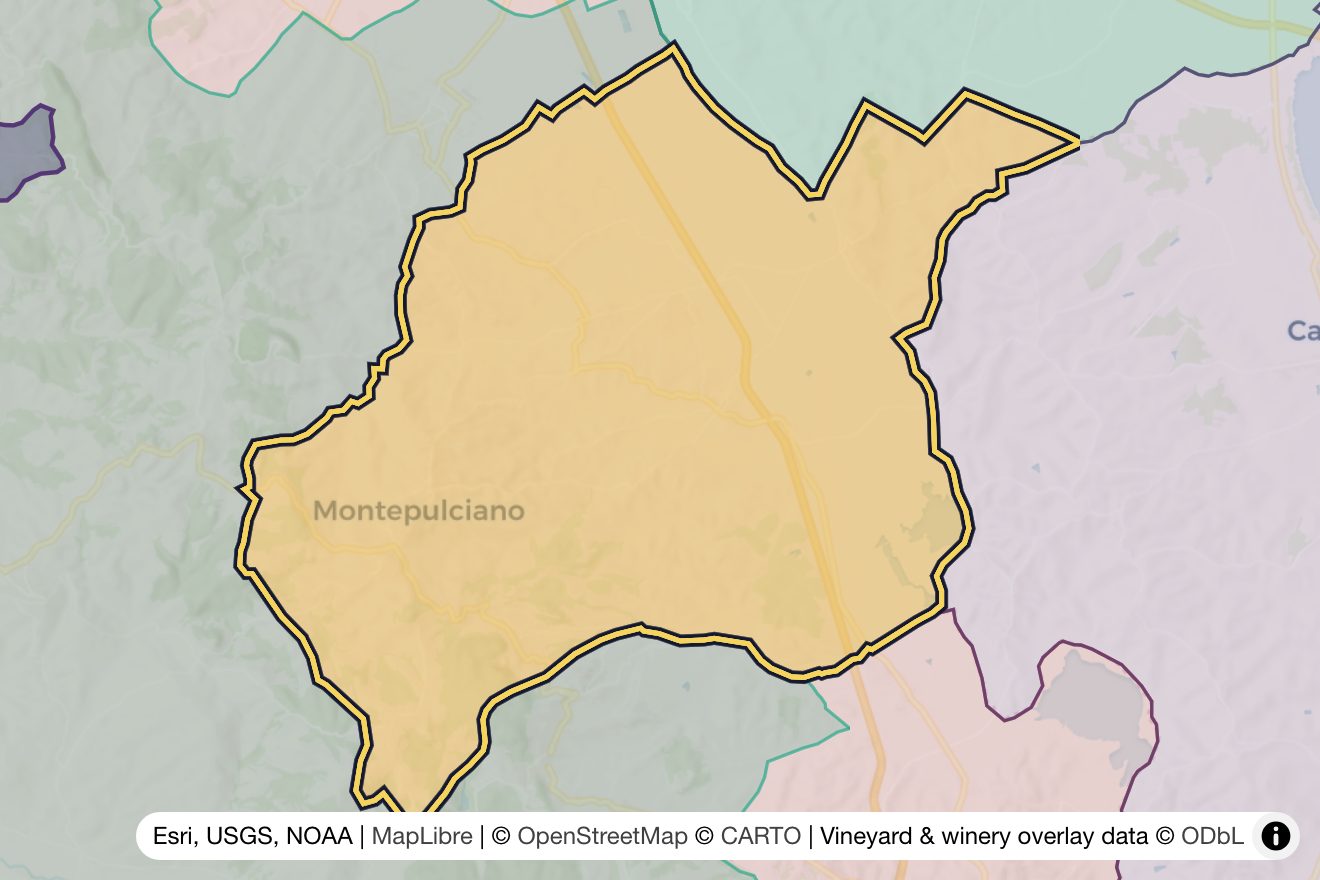
Vino Nobile di Montepulciano is a DOCG for Sangiovese-based red wine from the hills around the Renaissance town of Montepulciano in southeastern Tuscany, between the Val di Chiana and the Val d'Orcia. It stands with Brunello and Chianti Classico as the third of Tuscany's historic Sangiovese denominations, distinct from both, and entirely unrelated to Montepulciano d'Abruzzo, whose grape merely shares the town's name. Roughly 1,200 hectares are registered to the denomination.
History
The wine's aristocratic name reflects centuries of standing: Montepulciano's red was praised by visitors from the medieval period onward, and Francesco Redi's 1685 poem crowned it king of all wines. After a long twentieth-century eclipse, the denomination was among Italy's first DOCs in 1966 and, in 1980, among the first group elevated to DOCG. The modern era brought replanting, a serious Riserva culture and, most recently, the Pieve project: a set of twelve named territorial units, based on the parish geography of the medieval countryside, introduced from the 2020 vintage as a site-designation tier for the denomination's top wines.
Terroir & Climate
The vineyards occupy hill slopes between roughly 250 and 600 metres on Pliocene marine sediments: sand, clay and fossil-rich deposits, with tufo and gravel variations by sector. The climate is continental with Mediterranean influence, drier and breezier than Chianti thanks to the Val di Chiana's air flow, and warm enough for consistent Sangiovese ripeness while the altitude preserves acidity. Sectors around Argiano, Cervognano and Valiano frame the internal range from structured to supple.
Grape Varieties & Wine Styles
Vino Nobile requires a minimum of 70 percent Sangiovese, here traditionally called Prugnolo Gentile, with the remainder from approved varieties, native Canaiolo and Mammolo prominent among them; many leading estates now work with higher Sangiovese shares. Aging runs a minimum of two years, three for Riserva. The wine sits stylistically between its siblings: fuller and darker-toned than most Chianti Classico, earlier-developing and more supple than Brunello, with cherry, plum, violet and earth over firm mid-weight structure. Rosso di Montepulciano DOC provides the zone's earlier-release counterpart.
Notable Producers
Avignonesi, Boscarelli, Poliziano and Salcheto lead the denomination's modern reputation, with the historic cellars of Contucci in the town itself, Dei, La Braccesca of Antinori and Tenuta Valdipiatta among the established names. The Pieve tier's first releases have concentrated the top estates' single-territory ambitions.
What to Know
The essential disambiguation: Vino Nobile is Sangiovese from Montepulciano in Tuscany; Montepulciano d'Abruzzo is a different grape in a different region. Within Tuscany's big three, Vino Nobile is the value corner, priced under Brunello with comparable aging discipline. The new Pieve designations mark the denomination's site-specific turn and are worth watching on labels from 2020 forward.