Introduction
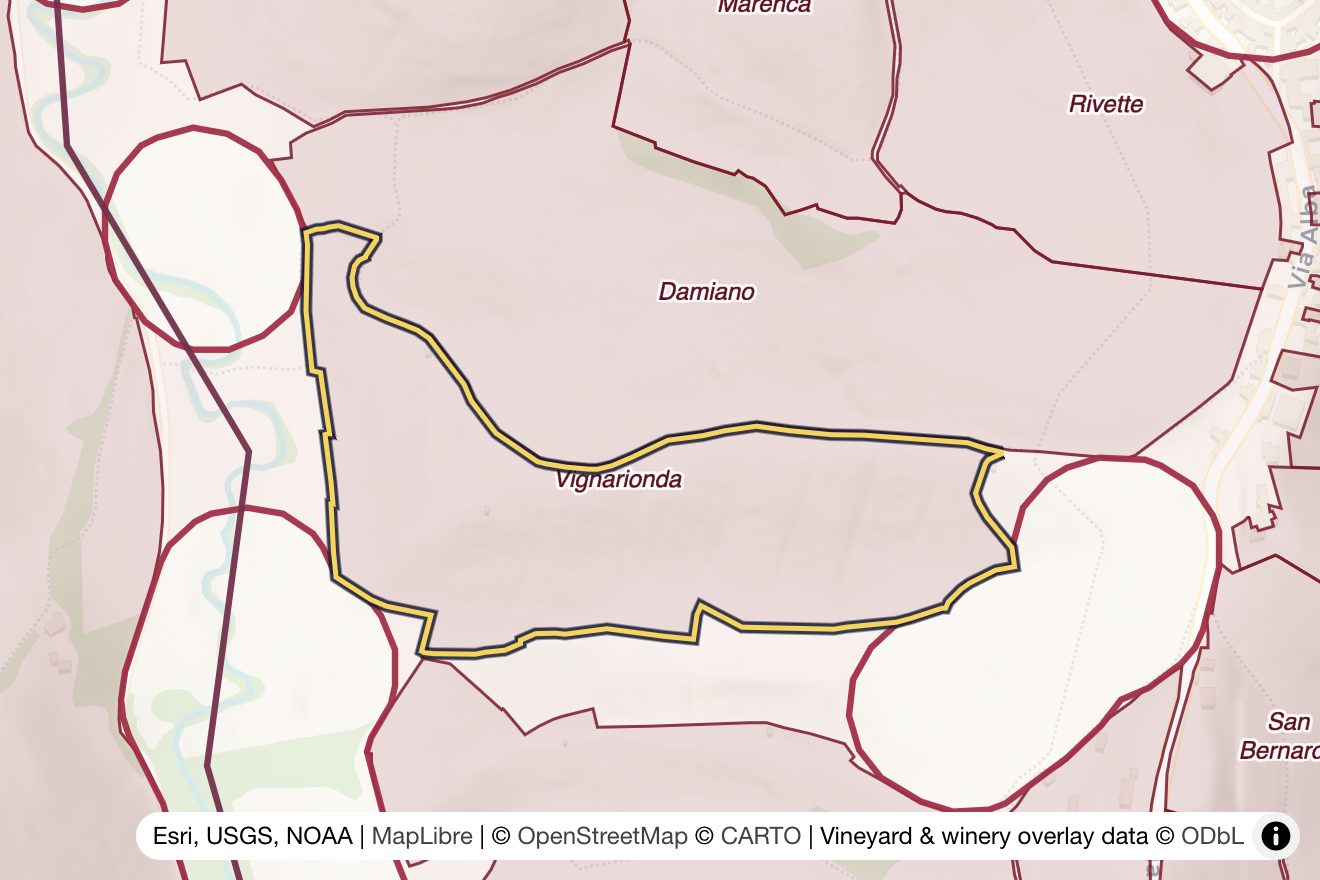
As an officially recognized Menzione Geografica Aggiuntiva (MGA), Vignarionda forms part of the formalized system of single vineyards throughout the Barolo zone. While these MGAs are not classified in a hierarchical sense, their identification as official crus represents a significant step toward codifying the region's long-standing tradition of single-vineyard bottlings that proliferated from the 1980s onward. This official recognition validates what discerning producers and collectors have long understood: that Vignarionda produces Barolo of exceptional character and quality.
Serralunga d'Alba: The Context
To understand Vignarionda is to first understand Serralunga d'Alba, one of the five core townships that form the historical heart of Barolo. These townships (Barolo, La Morra, Castiglione Falletto, Serralunga d'Alba, and Monforte d'Alba) have always constituted the appellation's nucleus, supplemented by outlying areas in various other communes. Serralunga d'Alba occupies the eastern portion of the Barolo zone, and its vineyards are renowned for producing wines of pronounced structure, considerable tannic power, and exceptional longevity.
The commune's reputation rests on a distinctive terroir that imparts recognizable characteristics to its wines. Serralunga's Barolos are traditionally understood as more muscular and architectonic than those from La Morra or Barolo proper, requiring extended aging to reveal their full complexity. This structural intensity, combined with the aristocratic perfumes characteristic of Nebbiolo (cherry, violets, tar, roses, and with age, the haunting notes of iron, orange peel, and forest floor) creates wines that demand patience but reward it handsomely.
Terroir and Vineyard Character
Vignarionda benefits from the geological and climatic conditions that make Serralunga d'Alba exceptional for Nebbiolo cultivation. The soils throughout Serralunga tend toward the Helvetian (Serravallian) sandstones, which are generally more compact and less fertile than the Tortonian marls that dominate in La Morra. These soils, combined with the commune's particular mesoclimate, contribute to the pronounced tannic structure and aging potential for which Serralunga Barolos are celebrated.
The interplay between soil, aspect, and microclimate in top Serralunga sites creates wines with what might be described as an iron fist in a velvet glove (formidable structure wrapped in aristocratic refinement. While the specific details of Vignarionda's exposition and elevation contribute to its individual character, the site shares the fundamental advantages of Serralunga's finest vineyards: well-regulated water availability, appropriate drainage, and exposure that allows for optimal ripening of Nebbiolo's notoriously demanding fruit.
Wine Characteristics
Barolo from Vignarionda exemplifies the Serralunga style while possessing its own distinctive personality. Like its neighboring crus Francia and Lazzarito, wines from this site typically display considerable tannic backbone, the kind that can seem almost austere in youth but evolves into something far more nuanced and compelling with time. The tannins, while substantial, should not be confused with harshness; rather, they provide the architectural framework upon which the wine's complexity can develop over decades.
The aromatic profile of Vignarionda Barolo tends toward the classic Nebbiolo spectrum: red and black cherry, dried roses, violets, and licorice in youth, evolving toward tar, tobacco, truffle, and the distinctive ferrous notes that mark mature Nebbiolo. The wines possess the acidity that is both a hallmark and a necessity of great Nebbiolo, providing the freshness and vitality that allows these wines to age gracefully for twenty, thirty, or even forty years.
What distinguishes top expressions of Vignarionda is the marriage of power with elegance, the sense that considerable strength is held in reserve rather than displayed ostentatiously. These are wines that reveal themselves slowly, often requiring substantial aeration even after years in bottle, and that continue to evolve and develop new dimensions long after many other wines would have faded.
Recognition and Significance
The inclusion of Vignarionda among Serralunga's elite sites reflects decades of consistent quality and the recognition of knowledgeable producers, critics, and collectors. In a region where reputation is built over generations rather than vintages, this recognition carries considerable weight. The establishment of the MGA system has formalized what the market had already largely determined: that certain sites consistently produce Barolo of superior quality.
The introduction of the Menzione Geografica Aggiuntiva system addressed, at least partially, the paradoxical situation that had developed through the 1980s and beyond. As single-vineyard bottlings proliferated without official classification, attention and confidence became increasingly focused on individual producers rather than sites. The MGA system, by officially identifying and registering single vineyards throughout the Barolo zone, has helped restore the balance between producer reputation and site recognition, though the system stops short of formal classification.
Conclusion
Vignarionda represents one of the finest expressions of Serralunga d'Alba's particular terroir) powerful, structured, age-worthy Barolo that requires patience but offers profound rewards. Its recognition among the commune's top crus, alongside Francia, Lazzarito, Cerretta, and Arione, places it firmly in the upper echelon of Barolo's vineyard hierarchy. For those seeking Barolo that embodies both the masculine structure for which Serralunga is renowned and the aromatic complexity that makes Nebbiolo one of the world's greatest varieties, Vignarionda offers compelling evidence of place, tradition, and excellence. These are wines for the cellar, for contemplation, and for those moments when only Barolo of the highest order will suffice.