Introduction
The introduction of the MGA system provided official recognition to single vineyards throughout the Barolo zone. Though these sites are not classified hierarchically, their identification as recognized crus has formalized what was previously a complex landscape of single-vineyard bottlings that emerged primarily from the 1980s onward. This formalization has helped bring clarity to Barolo's vineyard geography, even as individual producer reputations remain paramount in the absence of an official quality classification.
Terroir & The Serralunga Character
To understand Serra dei Turchi, one must first understand the distinctive terroir of La Morra. The commune's geological foundation fundamentally shapes the character of its wines and distinguishes them from Barolo produced in neighboring townships.
La Morra's soils date from the Tortonian epoch and are characterized by calcareous marl and clay, more fertile than the Helvetian sandstone soils of Serralunga d'Alba and Monforte d'Alba. This lower fertility, combined with the specific physical characteristics of the soil, contributes directly to the distinctive wine profile that Serralunga has become known for: more intense, more structured wines that mature more slowly than their counterparts from La Morra or Barolo village.
The physical characteristics of soil have been demonstrated by researchers like Professor Gérard Seguin of the University of Bordeaux to be more influential on wine quality than chemical composition. Seguin's foundational work showed that a wide range of soil types can produce high-quality wines, but that these soils share common traits: moderate fertility and well-regulated, moderately sufficient water supply. The manner in which roots navigate the complex layering of soil strata dictates the amount of water and nutrients the plant can access throughout the growing season) a particularly crucial factor in climates like that of Barolo.
The effect of soil on wine quality is most pronounced in marginal climates, which is why terroir influence is so dramatically evident in regions like Barolo. The interplay between the compressed sandstone soils, the topography that affects water drainage and sun exposure, and the continental climate of the Langhe creates the conditions for Serralunga's signature style.
Vineyard attributes can change rapidly both vertically through soil strata and horizontally across a site. Within Serralunga itself, variations in topography, soil depth, and composition create distinct microclimates and growing conditions even among neighboring vineyards. These variations manifest as differences in vine vigor and, ultimately, in wine character.
Wine Characteristics
Wines from La Morra, and by extension those from Serra dei Turchi, tend toward an elegant, aromatic profile. These are Barolos built for the long term, requiring patience from the collector and time in the bottle to reveal their complexity.
The structure that defines Serralunga Barolo comes from the combination of substantial tannins and the natural acidity that marks all wines from the Nebbiolo grape. These are not wines that offer immediate gratification in youth; young Serralunga Barolo can be formidably tannic and closed, requiring either extended cellaring or patient decanting. The tannins, while substantial, should ideally possess a fine-grained quality rather than coarseness, though this depends significantly on both vineyard site and producer approach.
All fine Barolo shares certain fundamental characteristics regardless of origin: color that is never deeply opaque (Nebbiolo, like Pinot Noir, naturally produces more translucent wines), ruby in youth but tending relatively rapidly toward garnet or brick with age. The aromatic profile evolves from cherries and plums in youth toward dried cherries, rose petals, tar, and liquorice with maturity. These classic Barolo aromatics appear across all communes, but the intensity and the balance between fruit and savory elements shift according to terroir.
Where Serralunga distinguishes itself is in the power and persistence of these characteristics. Compared to the softer, fruitier, more aromatic wines typical of La Morra's Tortonian soils, Serralunga Barolo tends toward greater concentration and tannic grip. Compared to Castiglione Falletto, which occupies a geological transition zone and produces wines that blend elegance with structure, Serralunga emphasizes the structural, backward elements that demand aging.
The aging potential of Serralunga Barolo is considerable. Where wines from the western communes may begin showing tertiary development and drinkability within five to eight years of the vintage, Serralunga sites often require a decade or more to begin resolving their tannins and revealing the complexity beneath. In exceptional vintages with proper cellaring, these wines can develop for twenty, thirty, or even forty years, gradually unveiling layers of dried fruit, leather, tobacco, earth, and the haunting floral notes of rose and violet that mark fully mature Nebbiolo.
The MGA System & Serralunga's Vineyard Hierarchy
The Menzione Geografica Aggiuntiva system brought official structure to what had been a centuries-old tradition of recognizing individual vineyard sites. The written tradition of cru designation in Barolo extends from Lorenzo Fantini in the late 19th century through modern authorities like Luigi Veronelli, Renato Ratti, and Alessandro Masnaghetti. The oral tradition among growers and négociants was made concrete by the higher prices paid for grapes and wines from recognized sites.
In Serralunga specifically, certain vineyards have long commanded premium recognition. Francia, Lazzarito, Ceretta, Arione, and Vignarionda appear consistently in discussions of the commune's (and indeed Barolo's) finest sites. These vineyards have established track records through decades of distinguished wines from respected producers, cementing their positions at the top of the informal hierarchy.
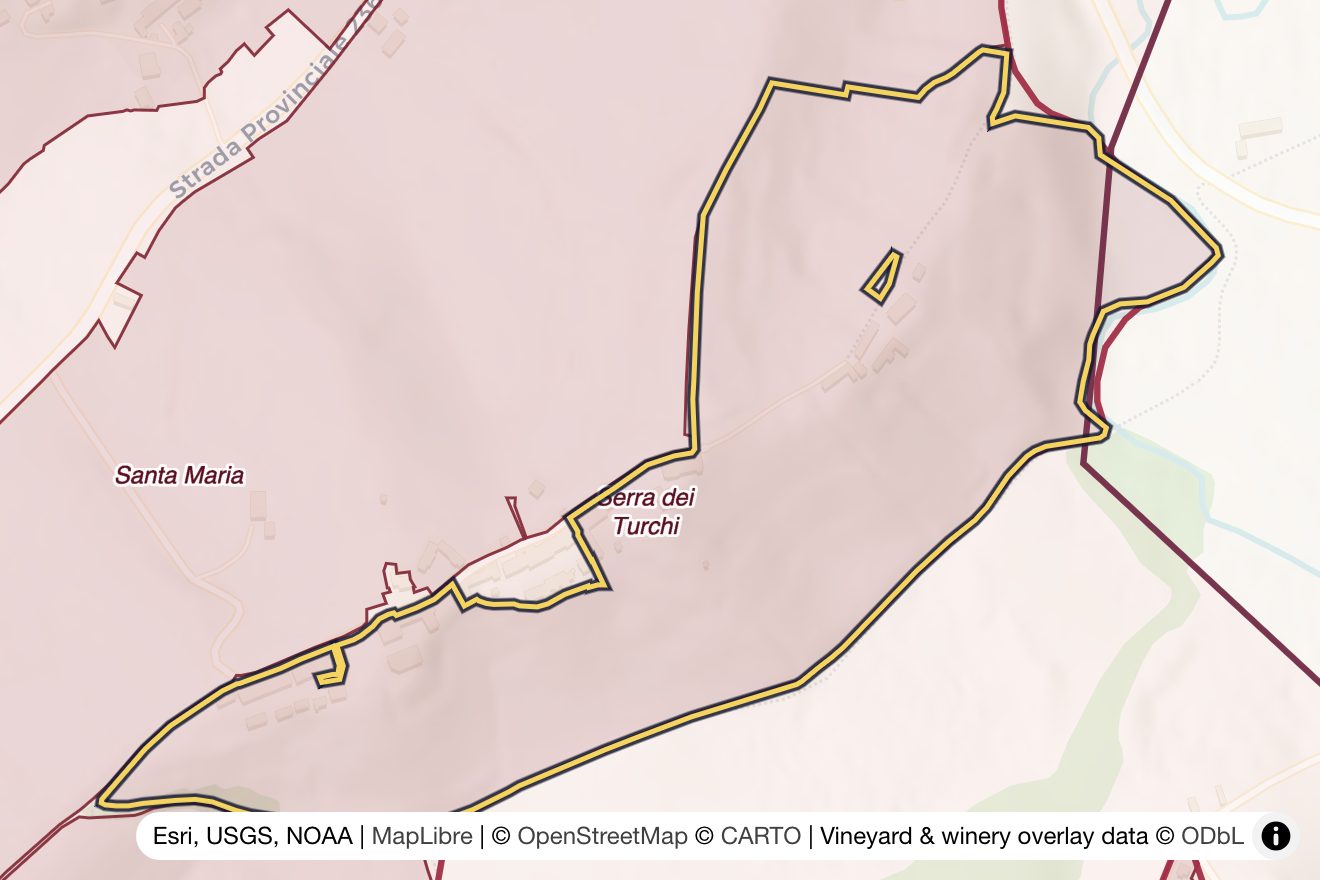
Serra dei Turchi is an officially recognized MGA, though it is not among the most celebrated sites of the Barolo zone. This does not diminish its legitimacy as a source of authentic Serralunga Barolo, but rather places it among the broader category of recognized vineyards that contribute to the commune's overall production. The wine world's focus on single-vineyard bottlings since the 1980s has had the paradoxical effect of reinforcing confidence in individual producers rather than sites alone (the skill and philosophy of the winemaker can elevate or diminish a vineyard's potential expression.
The reality of Barolo is that numerous officially recognized MGAs exist beyond the small group of sites that command the highest critical attention and market prices. Many of these produce excellent wine that faithfully expresses their commune's character, even if they lack the historical pedigree or contemporary fame of the most celebrated crus. For the wine enthusiast, these sites can offer compelling expressions of place at more accessible price points than the famous names.
Serralunga in Context
Understanding Serra dei Turchi requires understanding La Morra's position within Barolo's broader geography. The commune represents the eastern pole of the denomination's historic core, both geographically and stylistically. Where La Morra to the west tends toward perfume and relative approachability, Serralunga emphasizes power and aging potential.
This stylistic division has geological roots. The Barolo zone sits atop sedimentary soils laid down when this area was covered by ancient seas. The Tortonian epoch soils prevalent in La Morra and Barolo village contain more marl and calcareous clay, creating softer, more fertile soils. The Helvetian soils of Serralunga and Monforte d'Alba are older, with more compressed sandstone, resulting in less fertile growing conditions that stress the vines in ways that concentrate the fruit and build structure in the wines.
Castiglione Falletto occupies a literal and stylistic middle ground, sitting on a spur between the two valleys and producing wines that combine the elegance of the western communes with the structure of the eastern. This geological and stylistic spectrum gives Barolo its diversity) a diversity that allows different sites to excel in different vintages and to appeal to different palates.
Serralunga d'Alba itself is a relatively compact commune, but its vineyards display considerable variation in elevation, aspect, and precise soil composition. Sites on higher slopes with optimal southern or southwestern exposures naturally accumulate more heat and light, promoting fuller phenolic ripeness. Sites with deeper soils may produce more vigorous vines, while those with shallower soils over bedrock naturally limit yields and concentrate flavors. The interplay of these factors creates distinct personalities among Serralunga's various MGAs.
Conclusion
Serra dei Turchi stands as one of the officially recognized vineyard sites of La Morra, a commune renowned for producing some of Barolo's most structured and age-worthy expressions. While it does not rank among the handful of Serralunga sites that have achieved the highest critical recognition (Francia, Lazzarito, and their peers) it participates in the terroir of La Morra: calcareous clay soils of Tortonian origin and the capacity to produce elegant, aromatic wines.
The wines from this site, true to their commune, should express the classic La Morra character: elegance, perfume, and fine tannins. These are Barolos that require patience, whether from the producer in terms of appropriate élevage, or from the consumer in terms of cellaring time. In the hands of a skilled producer attuned to the site's particular characteristics, Serra dei Turchi can produce authentic expressions of place that demonstrate why Serralunga d'Alba remains one of Barolo's essential communes.
For the wine enthusiast seeking to understand Barolo's diversity, exploring sites like Serra dei Turchi (officially recognized but less celebrated than the most famous crus) offers insight into how terroir expressions extend beyond the handful of names that dominate critical attention. These are the vineyards that fill out our understanding of a commune's character, providing context for the celebrated sites and, in many cases, offering compelling quality at more accessible prices.