Introduction
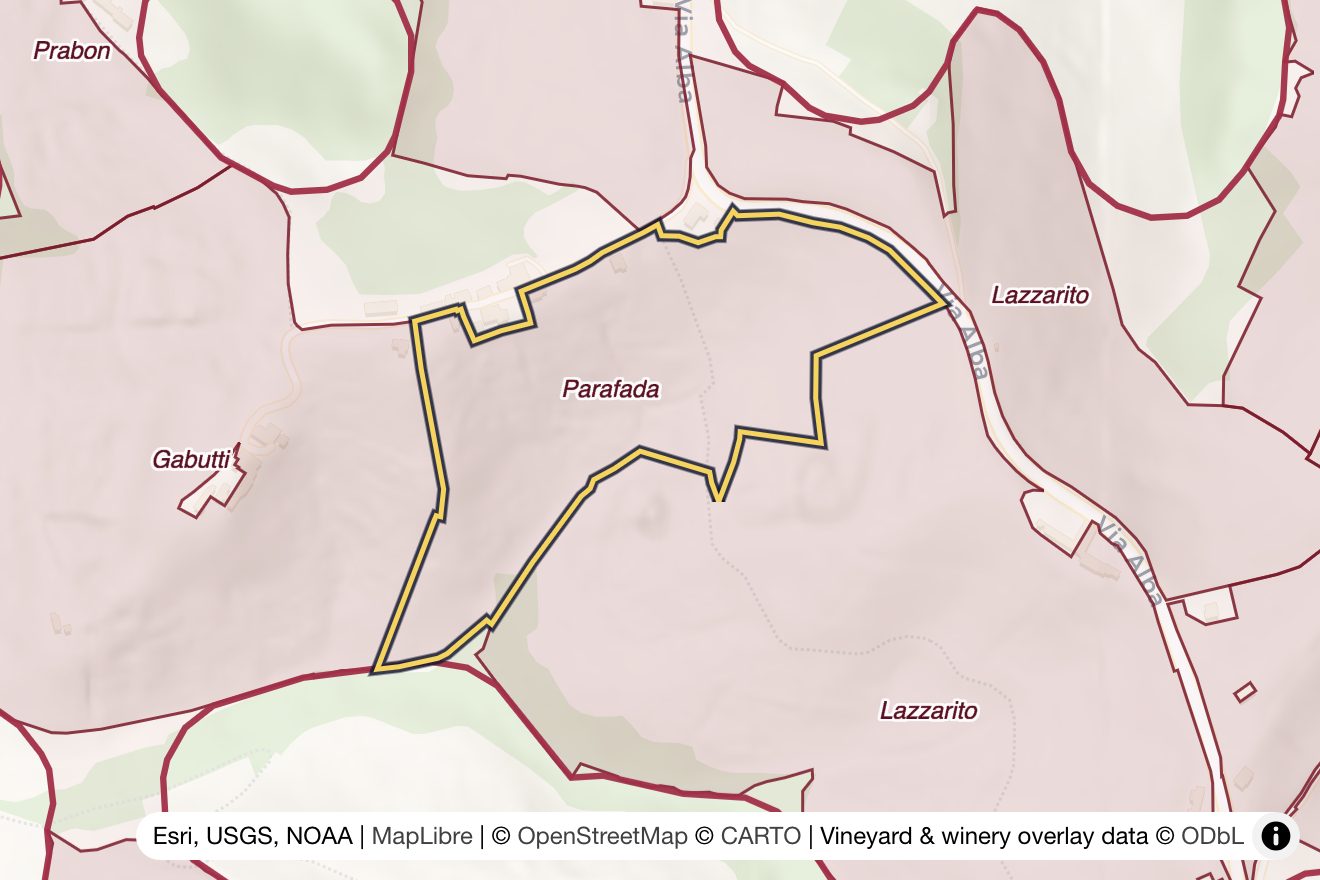
The introduction of the MGA system provided official recognition and delimitation to vineyard sites throughout the Barolo zone, addressing what had been a somewhat chaotic proliferation of single-vineyard bottlings since the 1980s. While these MGAs are not officially classified by quality, their codification has brought greater clarity to Barolo's complex viticultural landscape. Parafada, like all registered MGAs, represents a defined geographic area with presumably distinct characteristics, though detailed documentation of this particular site remains limited in the public domain.
Serralunga d'Alba: Communal Context
To understand Parafada, one must first understand Serralunga d'Alba's position within Barolo's hierarchy. Serralunga has historically been recognized for producing wines of extraordinary structure, power, and longevity. The commune's wines are often characterized by their pronounced tannic backbone, deeper color, and remarkable aging potential) qualities that distinguish them from the more perfumed and elegant expressions typical of La Morra or the balanced, structured wines of Castiglione Falletto.
This communal character stems from Serralunga's particular geological and climatic conditions. The commune's vineyards benefit from specific exposures and soil compositions that contribute to Nebbiolo's ability to achieve full phenolic ripeness while maintaining the variety's characteristic acidity and tannin structure. Serralunga's reputation for producing some of Barolo's most cellar-worthy wines has been established over centuries of viticulture, reinforced by both written tradition (from 19th-century authors like Lorenzo Fantini through modern experts such as Renato Ratti and Alessandro Masnaghetti) and the oral tradition of the zone, made concrete by the premium prices négociants have historically paid for wines and grapes from the commune's finest sites.
The MGA System and Parafada's Place
The MGA system emerged as a response to decades of unregulated single-vineyard bottlings. Since the 1980s, the multiplication of single-vineyard Barolos (produced in the absence of an official classification) had the paradoxical effect of focusing attention on individual producers rather than specific sites. The MGA designation aimed to bring order to this situation by officially identifying and delimiting recognized crus throughout the Barolo zone, even if it stopped short of ranking them hierarchically.
Parafada's inclusion in the official MGA register confirms its identity as a recognized vineyard site within Serralunga d'Alba, though it has not achieved the same level of fame or critical attention as the commune's most prestigious crus. This is not uncommon; the Barolo zone contains numerous MGAs, and only a small percentage have achieved universal recognition among critics, collectors, and the trade. Alessandro Masnaghetti, whose encyclopedic work on Barolo's MGAs represents the most comprehensive attempt at unofficial classification, has mapped and documented these sites in unprecedented detail, though information about lesser-known MGAs remains less accessible than data on celebrated vineyards.
Understanding Limited Documentation
The relative scarcity of specific published information about Parafada reflects several realities of the contemporary Barolo landscape. First, not all MGAs receive equal attention from wine writers and critics; coverage tends to concentrate on historically recognized sites and those bottled by prominent producers. Second, some MGAs may be primarily sold to négociants for blending rather than bottled as single-vineyard wines, which limits their visibility in the market. Third, smaller or newer producer holdings in lesser-known sites may not yet have generated the track record necessary for critical recognition.
This lack of extensive documentation does not necessarily indicate inferior quality (terroir factors interact in complex ways with viticultural practices and winemaking decisions, and capable producers can craft excellent wines from less-heralded sites. However, it does suggest that Parafada has not established itself among the shortlist of Serralunga's most distinctive or sought-after vineyards, at least in terms of public recognition and critical consensus.
Serralunga Character as Context
While specific details about Parafada's particular expression remain elusive, wines from Serralunga d'Alba generally exhibit certain recognizable characteristics. The commune's Barolos typically display pronounced structure, firm tannins, and considerable aging potential, often requiring extended cellaring to reach optimal drinking windows. Color tends toward the deeper end of Nebbiolo's spectrum, and the wines often show darker fruit notes alongside the variety's signature tar, rose, and dried herb aromatics.
These general traits would likely apply to well-made wine from Parafada, though the specific expression would depend on exact elevation, aspect, soil composition, rootstock selection, vine age, viticultural practices, and winemaking approach) variables that can produce significant differences even within a single commune or MGA.
Conclusion
Parafada represents one of the many officially recognized vineyard sites that comprise Barolo's complex mosaic of terroirs. While it has not achieved the fame of Serralunga's most celebrated crus, its MGA status confirms its identity as a distinct geographic entity within one of Barolo's most prestigious communes. For wine enthusiasts seeking to understand Barolo's full diversity, exploring lesser-known MGAs like Parafada can provide valuable perspective on the denomination's breadth, and Massolino bottles it as a single-vineyard Barolo. The relative lack of documentation ultimately reminds us that in Barolo, as in all great wine regions, reputation and recognition follow complex paths shaped by history, market forces, and the sustained efforts of quality-focused producers over time.