Introduction
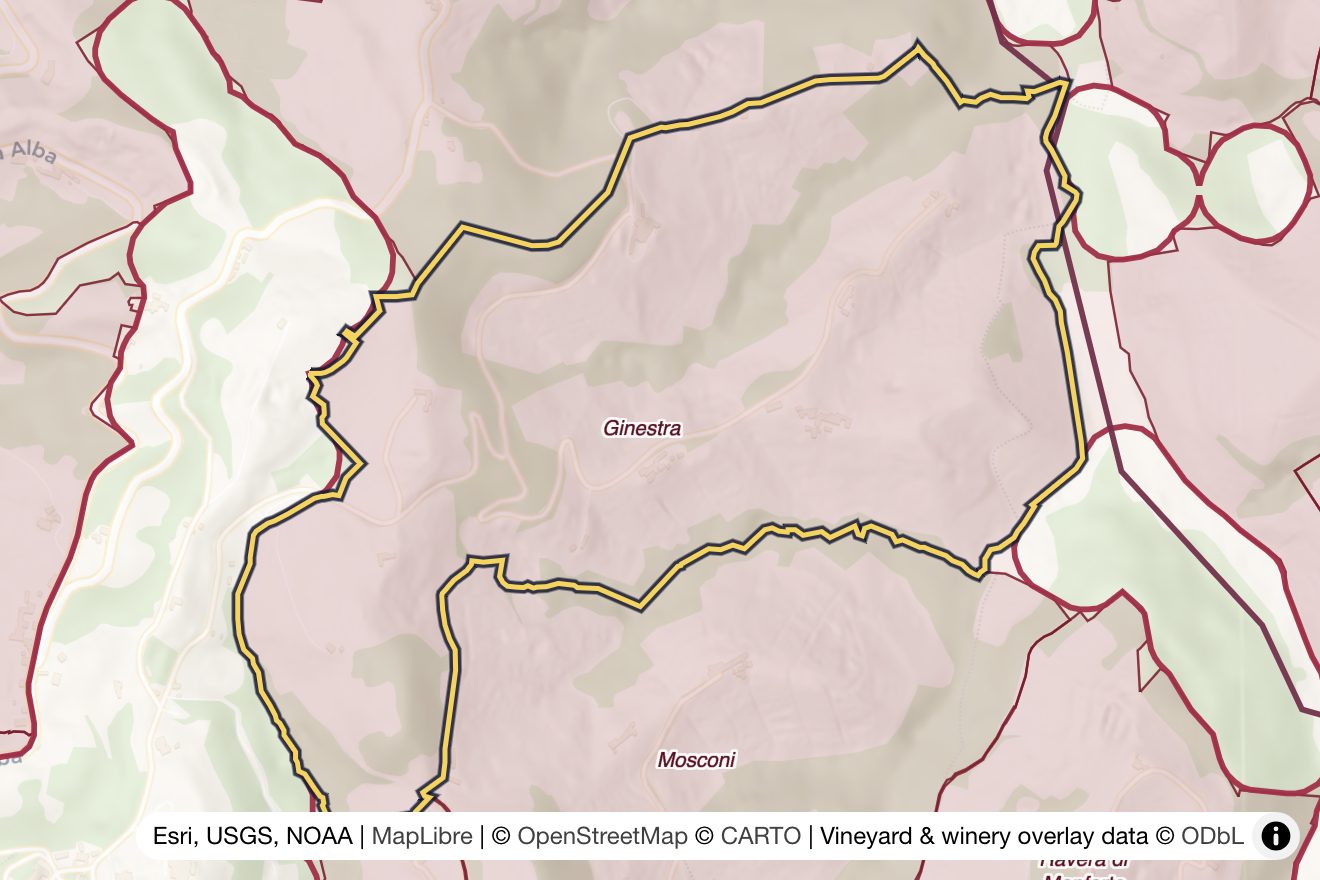
The introduction of the Menzione Geografica Aggiuntiva (MGA) system formalized Ginestra's status as an official cru within the Barolo denomination, providing legal recognition to what discerning producers and collectors had long understood: this hillside produces Nebbiolo of distinctive character and remarkable aging potential. While the MGA system does not classify sites hierarchically, Ginestra's enduring presence among elite Monforte crus speaks to its inherent quality and the consistent excellence of wines bearing its name.
Terroir: The Foundation of Character
Geographical Context and Soil Composition
Monforte d'Alba occupies the eastern sector of the Barolo production zone, positioned on the right bank of the symbolic divide created by the Alba-Barolo road that runs through the valley floor. This geographical distinction carries profound implications for wine style, as it places Ginestra squarely within the geological zone characterized by soils from the Helvetian epoch, which feature a higher proportion of compressed sandstone compared to the calcareous marls that dominate the western communes of La Morra and Barolo.
These Helvetian soils) more technically referred to as the Lequio Formation (impart a structural signature to Ginestra's wines that distinguishes them from their counterparts across the valley. The sandstone component, compacted over millions of years, provides excellent drainage while the marl fraction contributes essential minerals and moderate fertility. This combination creates what soil scientists term "well-regulated, moderately sufficient water supply") a physical soil characteristic now recognized as fundamental to quality wine production.
The modern understanding of terroir, as articulated in contemporary viticulture research, emphasizes that physical soil attributes predominate over chemical composition in determining wine quality. In this regard, Ginestra's soils demonstrate the ideal profile: they drain efficiently, preventing waterlogging during wet periods while maintaining sufficient moisture reserves during summer stress. This regulated water availability encourages moderate vine vigor and promotes optimal phenolic ripening (critical factors when working with Nebbiolo, a variety that demands extended hang time to achieve full maturity.
Microclimate and Exposition
The hillsides of Ginestra benefit from the specific mesoclimate conditions that characterize Monforte d'Alba's elevated terrain. Like other premium sites in this commune, Ginestra occupies slopes that provide favorable sun exposure while benefiting from the air circulation patterns created by the undulating Langhe topography. These factors contribute to the diurnal temperature variation that helps preserve acidity and aromatic complexity in Nebbiolo, even as the grapes achieve full phenolic maturity during the long growing season.
The influence of terroir on wine quality becomes more pronounced in marginal climates) those where viticulture approaches the edge of viability for particular varieties. While Barolo's climate has moderated somewhat in recent decades, Nebbiolo remains a variety that requires careful site selection and extended ripening periods. Ginestra's terroir provides the conditions necessary for this lengthy maturation: adequate warmth for sugar accumulation and tannin polymerization, sufficient water stress to concentrate flavors, and the mineral complexity derived from its ancient marine soils.
Wine Characteristics: Structure and Longevity
Ginestra produces Barolo of profound structure and notable aging potential, embodying the archetypal characteristics of Monforte's eastern terroir. Where the calcareous marls of La Morra and Barolo can yield wines with softer, more immediately appealing aromatics and fruit-forward profiles, Ginestra's sandstone-influenced soils generate wines of greater tannic density and architectural presence.
The aromatics of Ginestra Barolo typically display the classic Nebbiolo spectrum (rose petals, tar, dark cherry, licorice, and dried herbs) though often with a more restrained, brooding quality in youth compared to wines from Tortonian soils. With time, these primary aromas evolve into complex tertiary characteristics: leather, tobacco, forest floor, dried mushrooms, and that ethereal perfume that distinguishes aged Nebbiolo from all other wines.
On the palate, Ginestra's structural hallmark reveals itself through firm, fine-grained tannins that require years to fully integrate. The wines possess considerable concentration without heaviness, maintaining the elegance that defines great Barolo even in their most powerful expressions. Acidity (always prominent in Nebbiolo) provides the backbone for extended aging, while the complex mineral undertones derived from the site's marine sedimentary soils add layers of nuance that continue to unfold over decades.
The aging potential of Ginestra Barolo ranks among the appellation's longest. While Barolo DOCG regulations mandate a minimum of 38 months of aging before release (including at least 18 months in oak), wines from this site benefit from significantly longer cellaring. A minimum of 10 to 15 years allows the tannins to soften and the complex aromatic profile to develop, though the finest vintages can evolve gracefully for 30 years or more.
Ginestra Within the Monforte Context
Monforte d'Alba's reputation rests on several distinguished crus, with Bussia and Ginestra leading the hierarchy. While these sites share the commune's general soil type and mesoclimate, each possesses distinctive characteristics that manifest in the wines. Ginestra tends to produce Barolo with somewhat more refinement and aromatic complexity compared to some portions of the more expansive Bussia, though such generalizations must be tempered by recognition that producer style and specific parcel location significantly influence the final wine.
The controversial expansion of the Perno MGA (described in contemporary wine literature as "unreasonably enlarged") incorporated the historically significant Santo Stefano di Perno site, which previously stood alongside Bussia and Ginestra in discussions of Monforte's elite crus. This administrative decision has implications for how consumers evaluate wines from these sites, as the enlarged Perno now encompasses parcels of varying quality potential.
The Producer Factor
The absence of an official quality classification within the MGA system has paradoxically focused attention on individual producers rather than sites alone. This reality particularly applies to Ginestra, where producer philosophy regarding viticulture and winemaking can significantly influence the expression of terroir. Decisions regarding vine material selection, rootstock choice, training systems, canopy management, harvest timing, fermentation protocols, and barrel aging all represent points where the human element interprets and shapes the raw material provided by terroir.
What might be termed "managing terroir", the practice of adapting viticultural and enological choices to optimize quality in each particular environment (separates competent producers from exceptional ones. In Ginestra, this means respecting the disciplined yield limits (56 hectoliters per hectare maximum for Barolo DOCG, though serious producers typically achieve far less), allowing extended hang time for complete phenolic maturity, and employing aging regimens that support rather than mask the site's inherent characteristics.
Conclusion: Ginestra's Place in Barolo's Hierarchy
Despite the lack of official classification, certain truths about Barolo's geography have achieved consensus through decades of experience and the evidence presented vintage after vintage in the bottle. Ginestra's consistent inclusion among the appellation's finest sites reflects not marketing or historical accident, but the demonstrable quality of wines produced from its slopes. The terroir fundamentals) well-drained sandstone soils, favorable exposition, and the particular mesoclimate of eastern Monforte, provide the foundation, while committed producers have realized this potential through viticultural diligence and thoughtful winemaking.
For collectors and enthusiasts seeking Barolo that exemplifies the structured, age-worthy style of Monforte d'Alba, Ginestra represents one of the appellation's benchmark sites. These are wines that demand patience, rewarding those willing to cellar them with the profound complexity and ethereal grace that only Nebbiolo from exceptional terroir can achieve.