Introduction
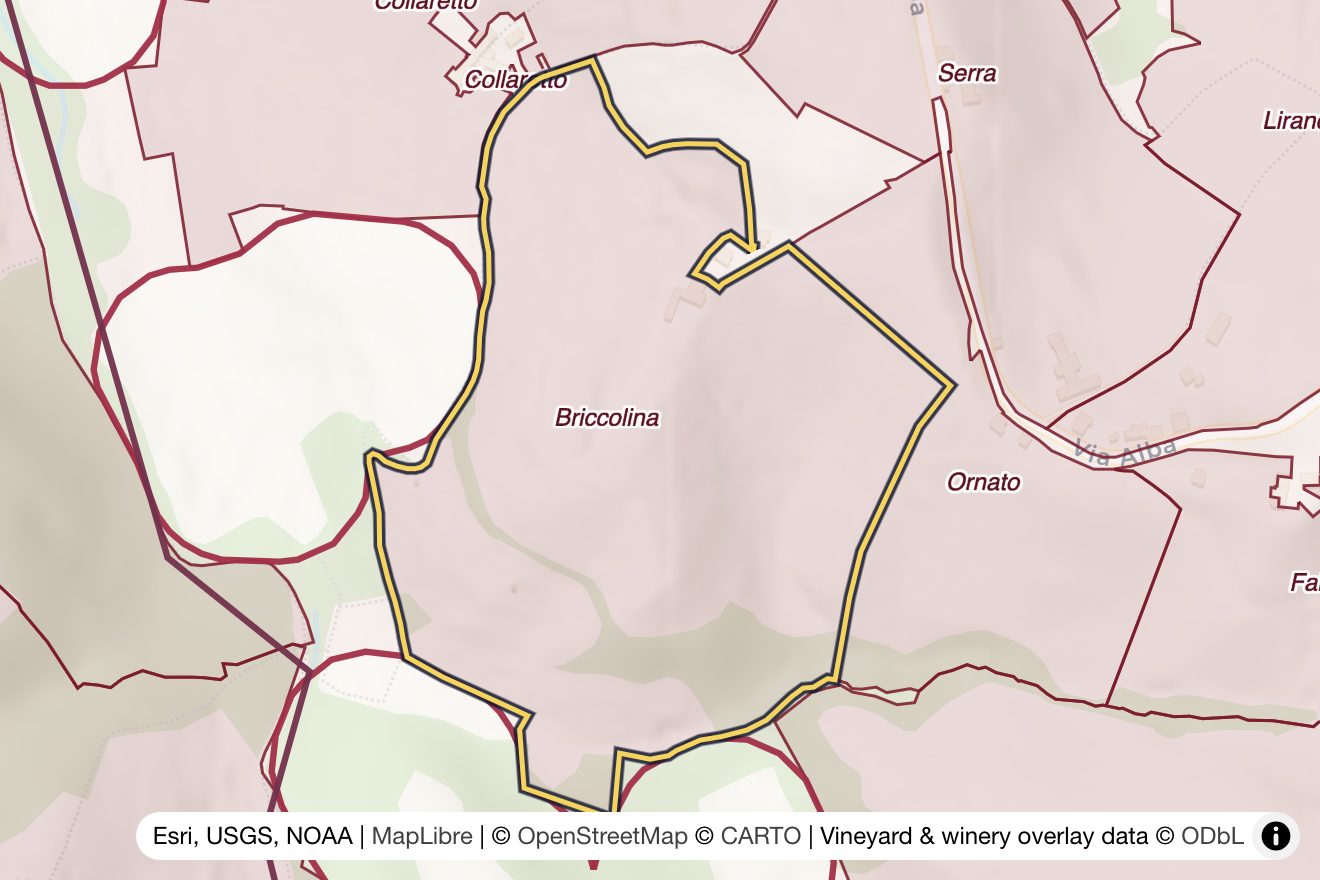
The MGA designation, while not constituting an official classification by quality, serves to identify and register specific vineyard sites as legitimate "crus" throughout the Barolo zone. This system emerged in response to the proliferation of single-vineyard bottlings beginning in the 1980s, which paradoxically had focused attention on individual producers rather than specific sites. Briccolina, as an officially recognized MGA, now occupies a defined place within Monforte d'Alba's viticultural geography, though it operates somewhat outside the spotlight that illuminates its more famous neighbors.
Terroir Context: Understanding Serralunga d'Alba
To appreciate Briccolina's character, one must understand the broader geological and climatic framework of Serralunga d'Alba itself. The township sits firmly in the eastern sector of the Barolo production zone, positioned alongside Castiglione Falletto and Serralunga d'Alba on the eastern side of the Alba-Barolo road that runs through the valley floor. This road serves as more than a geographical marker; it represents a fundamental geological dividing line that separates the Barolo zone into two distinct terroir families.
The vineyards of Serralunga d'Alba, including Briccolina, are characterized by soils from the Helvetian epoch, distinguished by a higher proportion of compressed sandstone and less clay than the Tortonian calcareous marls that dominate the western townships of La Morra and Barolo. These Helvetian soils are less compact, less fertile, and possess different water-retention characteristics than their western counterparts. The physical properties of these sandstone-rich soils (their structure, drainage, and the moderate water stress they can impart to vines) play a crucial role in shaping the personality of the wines produced from them.
The general terroir principles that govern quality wine production apply with particular relevance in Monforte d'Alba. Research has demonstrated that soil's physical characteristics predominate over chemical composition in influencing wine quality, particularly in marginal climates where terroir expression is most pronounced. The moderate fertility and well-regulated water availability found in Monforte's better sites create conditions for balanced vine growth and optimal grape ripening. These soils encourage vines to develop extensive root systems that explore deeper soil layers, accessing water and nutrients in a measured way that promotes concentration and complexity in the resulting wines.
Wine Character: The Eastern Barolo Style
Wines from the Helvetian soils of the eastern townships, which would include those from Briccolina, typically express a different personality than those from the Tortonian marls of La Morra and Barolo. Where the western townships can produce wines of notable softness, fruit-forward character, and aromatic generosity (depending on specific site characteristics) the eastern townships, including Monforte, tend toward wines of greater structure, pronounced tannins, and more muscular architecture.
The sandstone influence in Monforte generally contributes to wines that display firm tannic scaffolding, requiring substantial aging to integrate and soften. The Nebbiolo grown on these soils often develops darker fruit tonalities, with black cherry and plum notes complementing the variety's characteristic tar, rose, and dried herb aromatics. The wines typically show marked acidity (a hallmark of quality Nebbiolo) which provides the backbone necessary for extended cellaring.
These structural elements are balanced, in well-made examples, by sufficient fruit concentration and aromatic complexity. The extended aging requirements for Barolo DOCG (38 months total with at least 18 months in oak) exist partly because the tannins and acidity in wines from sites like those in Monforte demand time to polymerize and harmonize. The best wines from Monforte's varied MGAs demonstrate how this structure serves not as an obstacle but as a framework for decades-long evolution, developing tertiary complexity while maintaining freshness and vitality.
Briccolina in the Broader Landscape
It is worth noting that Briccolina does not appear in the traditional shortlists of Barolo's most prestigious crus as cited by historical and contemporary authorities (from Lorenzo Fantini in the late 19th century through Luigi Veronelli, Renato Ratti, and Alessandro Masnaghetti in more recent times.
This absence from the uppermost tier of recognized sites does not necessarily indicate inferior quality) the hierarchy of Barolo crus reflects centuries of market recognition, with négociants historically paying premium prices for grapes and wines from certain privileged positions. Many factors contribute to a vineyard's reputation beyond its inherent terroir: the skill and dedication of its cultivators, the marketing power of the estates that own parcels within it, critical attention, and the accumulated weight of tradition. Briccolina may well produce compelling wines that express Monforte's characteristic structure and complexity, but it has not secured the historical recognition or contemporary prominence of its more celebrated neighbors.
The MGA system itself represents an attempt to bring order and recognition to a broader range of sites than those occupying the traditional pinnacle. By officially registering vineyard names like Briccolina, the system acknowledges that quality Barolo emanates from many positions throughout the zone, even as an unofficial hierarchy (based on soil, exposure, microclimate, and historical performance) inevitably persists in both the market and in the minds of producers and consumers.
Conclusion
Briccolina stands as one of Serralunga d'Alba's officially recognized vineyard sites, participating in the geological and climatic characteristics that define this important Barolo township. While it may not command the attention or prices of the best-known Barolo crus, it contributes to the diversity and complexity of Serralunga's offerings, producing wines that likely reflect the structured, age-worthy style associated with the commune's Helvetian soils. For wine enthusiasts exploring Barolo's intricate geography, Briccolina represents an opportunity to discover expressions of Serralunga terroir that exist beyond the most celebrated names: a reminder that quality and distinction in Barolo extend across a complex landscape of sites, each with its own story to tell through the Nebbiolo wines it produces.