Introduction
The introduction of the MGA system created an official registry of recognized single vineyards throughout the Barolo zone. These designations, while not constituting a formal classification, represent identified crus that provide consumers and professionals with greater transparency regarding vineyard origin. Bricco San Pietro, as part of this system, reflects the ongoing effort since the 1980s to codify Barolo's diverse viticultural landscape, building upon the pioneering cartographic work of producers like Renato Ratti, who in 1979 drew up one of the first comprehensive maps of Barolo's vineyard sites.
Terroir and Viticultural Context
Monforte d'Alba occupies the eastern section of the Barolo production zone, positioned geographically alongside Castiglione Falletto and Serralunga d'Alba. This eastern grouping is distinguished from the western townships of La Morra and Barolo by a fundamental geological divide, conveniently demarcated by the Alba-Barolo road that runs through the valley floor. This geographical separation reflects profound differences in soil composition that significantly influence viticultural expression.
The soils of Monforte d'Alba predominantly derive from the Helvetian epoch, characterized by a higher proportion of compressed sandstone compared to the calcareous marls found in the western communes, although Bricco San Pietro, in the western part of the commune, lies largely on Tortonian sandy Sant'Agata Fossil Marl. These Helvetian soils) less fertile and more compact than their Tortonian counterparts (tend to produce wines with particular structural characteristics. The sandstone-influenced terroir typically yields Barolos with pronounced tannin architecture, muscular structure, and extended aging potential, though precise expression varies considerably based on specific site characteristics including elevation, aspect, and microclimate.
The physical attributes of soil play a determining role in vine behavior and wine quality. Research conducted by Professor Gérard Seguin and subsequent scholars has established that soil's physical characteristics) particularly its capacity to regulate water availability to the vine (predominate over chemical composition in influencing wine quality. The sandstone-rich soils of Monforte's eastern vineyards generally provide moderate fertility and well-regulated water supply, conditions that encourage optimal ripening while maintaining the natural vigor control essential for quality Nebbiolo production.
Wine Characteristics
Barolos from Monforte d'Alba, reflecting the commune's Helvetian geology, typically display a more austere, structured profile compared to wines from the western townships. These wines are characterized by pronounced tannic architecture, requiring extended aging to achieve harmony and approachability. The compressed sandstone influence contributes to wines of considerable power and longevity, with the tannins displaying a firm, sometimes iron-like quality in youth.
The aromatic profile of Monforte Barolos encompasses the classic Nebbiolo spectrum: rose petal, tar, and red cherry in youth, evolving toward more tertiary characteristics of leather, tobacco, dried flowers, and underbrush with bottle age. The wines maintain the high natural acidity characteristic of Nebbiolo, providing the structural backbone necessary for extended cellar evolution. While less immediately perfumed or openly fruity than some expressions from La Morra's softer marls, Monforte's wines offer compensation through depth, concentration, and remarkable aging capacity.
The Barolo DOCG regulations impose strict production parameters: maximum yields of 56 hectoliters per hectare and mandatory aging of 38 months total, with at least 18 months in oak. These requirements, among Italy's most rigorous, ensure wines of substance and longevity. For MGAs in Monforte's sandstone-dominated terroir, these extended aging requirements serve the wines well, allowing the initially formidable tannins to integrate and the complex aromatic compounds to develop.
Context Within Monforte d'Alba
Monforte d'Alba's viticultural reputation rests primarily on its most celebrated MGAs: Bussia, which produces wines of remarkable power and longevity; Ginestra, known for extraordinary elegance despite substantial structure; and formerly Santo Stefano di Perno, a historically recognized cru now incorporated into the enlarged Perno MGA) a consolidation that some commentators view as problematic, given the potential dilution of site-specific identity.
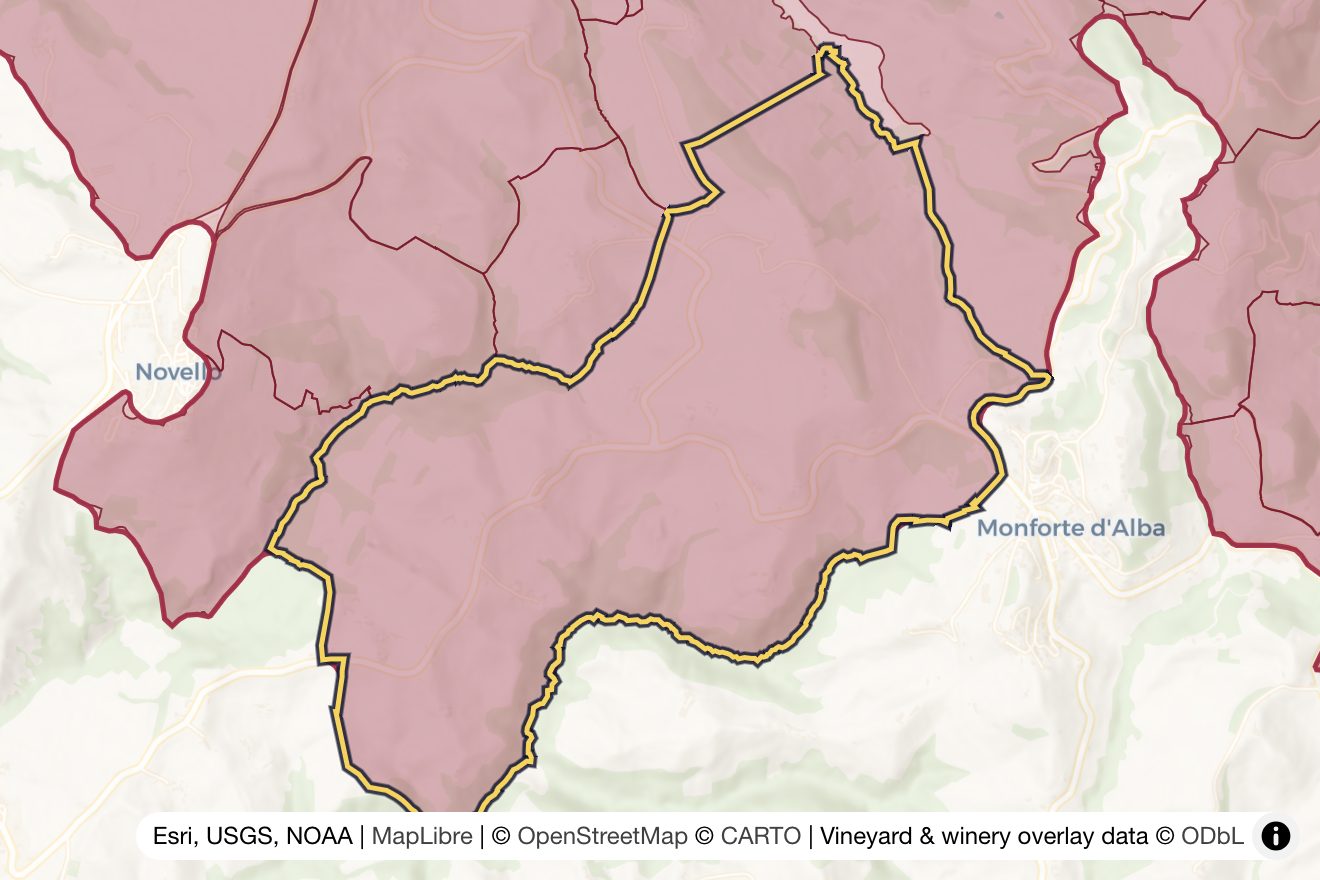
Bricco San Pietro exists within this broader context as one of Monforte's largest MGAs, in the western part of the commune. The commune contains numerous MGAs beyond its most famous designations, reflecting the complex mosaic of expositions, elevations, and mesoclimates that characterize this hillside-dominated landscape. Not all sites achieve equal recognition or command equivalent commercial prestige, yet the MGA system provides formal acknowledgment of their distinct identities within the broader appellation.
Conclusion
Bricco San Pietro represents one thread in Monforte d'Alba's complex viticultural tapestry. While lacking the extensive documentation and market recognition of Monforte's most celebrated crus, it participates in the commune's general terroir characteristics: sandy Tortonian Sant'Agata Fossil Marl soils, with Diano sandstone on the ridge summit, producing structured, age-worthy Barolos with pronounced tannins and the capacity for extended evolution. The MGA designation ensures its recognition as a distinct geographic entity within Barolo's ongoing effort to provide transparency regarding vineyard origin and terroir expression. For wine enthusiasts exploring Monforte d'Alba, Bricco San Pietro offers an opportunity to discover expressions beyond the commune's most famous names, though detailed site-specific information remains limited in published literature.