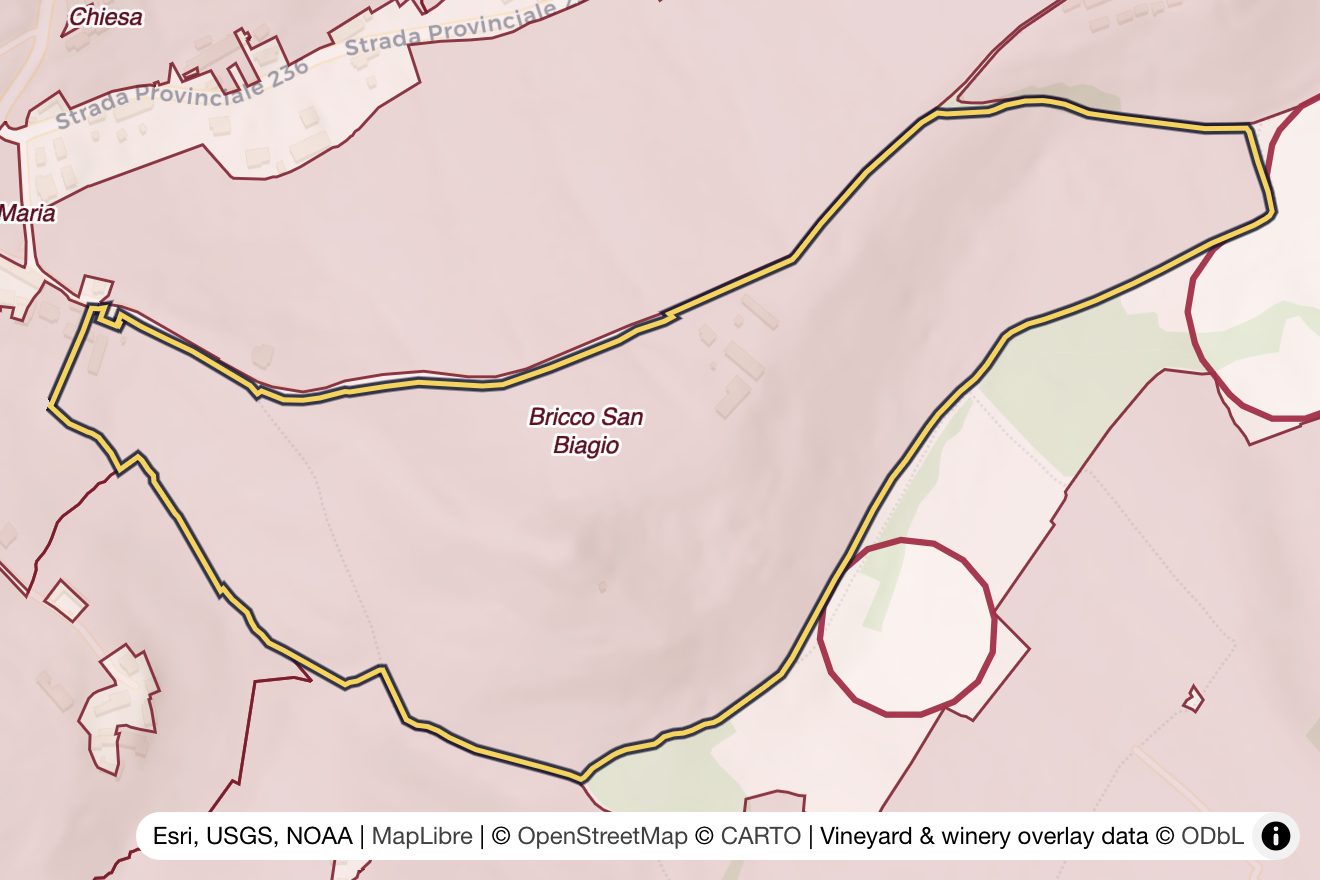
Introduction
The MGA system, introduced for Barolo in 2010, created an official registry of single vineyards throughout the denomination without establishing a formal classification. This approach has both clarified viticultural boundaries and, paradoxically, reinforced the importance of individual producer reputation, as the MGAs themselves carry no hierarchical designation. Bricco San Biagio thus exists within a system that identifies it as a recognized cru while leaving questions of quality and prestige to be determined by the wines themselves and the producers who work this land.
Terroir
La Morra lies west of the Alba-Barolo road that serves as a convenient, if somewhat simplified, dividing line between the denomination's two principal soil types. Bricco San Biagio sits on the Tortonian side, though its soils are mainly sandy (Arenarie di Diano) with some calcareous marl.
The layering of soil strata (how roots navigate the complex vertical and horizontal variations in soil composition) fundamentally dictates the vine's access to water and nutrients throughout the growing season.
The physical characteristics of soil predominate over chemical attributes in determining vine behavior and wine quality, a principle established by the foundational research of Professor Gérard Seguin at the University of Bordeaux. Well-regulated, moderately sufficient water supply (achieved through the interplay of soil structure, depth, and drainage) emerges as particularly critical. The specific exposition, elevation, and exact soil composition of individual sites like Bricco San Biagio create meaningful variations within the broader communal character.
Wine Characteristics
Wines from La Morra, shaped largely by the commune's Tortonian marls, typically express a softer, more immediately aromatic profile than the more structured, powerful wines of Monforte d'Alba and Serralunga d'Alba.
Within this communal framework, wines from Bricco San Biagio would be expected to reflect La Morra's characteristic elegance while potentially expressing site-specific nuances related to the vineyard's particular elevation, aspect, and microclimate. The "bricco" designation suggests an elevated position, which in Piedmont's marginal climate often provides advantages in terms of air circulation, sun exposure, and drainage (factors that can enhance phenolic ripeness while maintaining the acidity essential to Nebbiolo's balance and longevity.
Barolo generally demands the denomination's full aging regimen of 38 months (with at least 18 in oak) and often benefits from additional bottle age before release. Barolo can be austere in youth, but time can bring complexity beneath the classic Nebbiolo aromatics of tar, rose, dried herbs, and dark fruit.
Context and Recognition
The official recognition of Bricco San Biagio as an MGA in 2010 placed it within the formal structure of Barolo's viticultural geography, though the site lacks the extensive historical documentation and critical attention devoted to La Morra's most celebrated vineyards. This is not uncommon; the MGA system identified numerous sites throughout the Barolo zone, many of which remain relatively obscure in the international market despite their official status.
The absence of a formal classification system in Barolo) unlike Burgundy's hierarchical structure (means that an MGA's reputation develops organically through the quality of wines produced and the dedication of individual growers. In the contemporary Barolo landscape, where the proliferation of single-vineyard bottlings since the 1980s has both illuminated terroir differences and complicated consumer comprehension, lesser-known MGAs like Bricco San Biagio represent opportunities for discovery, particularly as talented producers continue to explore and express the nuances of specific sites.
The strict production standards governing all Barolo) disciplined yields capped at 56 hectoliters per hectare, extended aging requirements, and the exclusive use of Nebbiolo, ensure a baseline quality across the denomination, while the interplay of terroir and producer philosophy creates the variation that makes Barolo endlessly fascinating to serious students of wine.