Introduction
The establishment of the MGA classification addressed decades of confusion resulting from the proliferation of single-vineyard bottlings beginning in the 1980s. Prior to this official registry, the absence of formal classification had paradoxically reinforced the reputation of individual producers rather than specific sites. The MGA system identifies these crus officially without ranking them hierarchically, though various attempts at unofficial classification have been undertaken by scholars and cartographers of the region.
Terroir and Geological Context
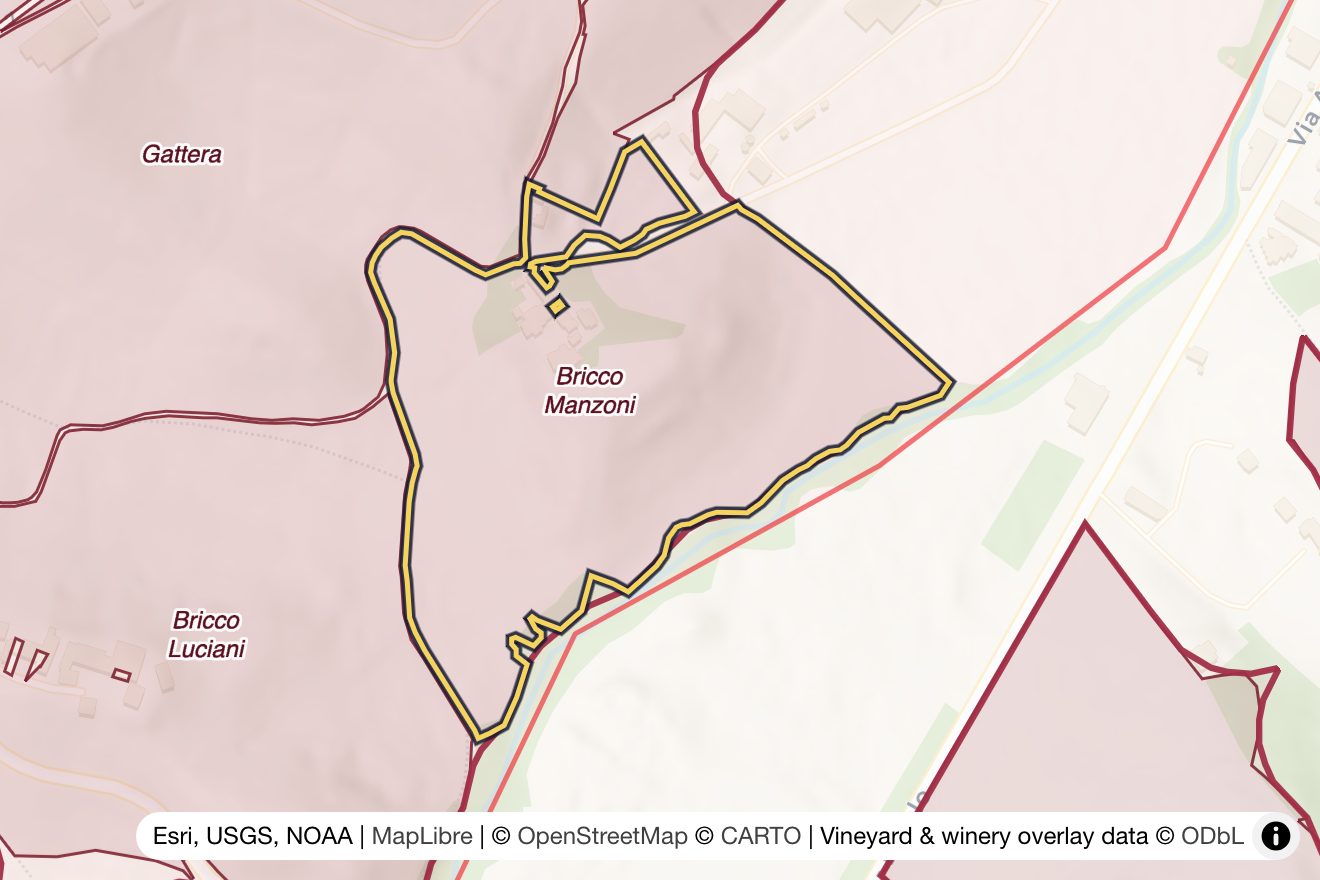
Bricco Manzoni lies in La Morra, in the western part of the Barolo zone, where the soils are predominantly Tortonian calcareous marls. Monforte d'Alba, along with Castiglione Falletto and Serralunga d'Alba, sits on the eastern side of the Alba-Barolo road that runs along the valley floor, effectively dividing the Barolo production zone into two broad geological categories. This eastern sector is characterized by soils from the Helvetian epoch, distinguished by a higher proportion of compressed sandstone compared to the western communes of La Morra and Barolo.
These Helvetian soils are notably less fertile than the Tortonian calcareous marls that predominate in the western townships. The sandstone-rich composition provides excellent drainage and forces vine roots to penetrate deeply in search of water and nutrients, a physical soil characteristic that researchers have identified as crucial to quality wine production. The late Professor Gérard Seguin of the University of Bordeaux demonstrated through his foundational terroir research that soils capable of producing exceptional wines share moderate fertility and well-regulated water availability (conditions that encourage measured vine vigor and optimal grape ripening.
The physical structure of Barolo's soils, combined with the marginal climate of the Langhe, creates the conditions under which terroir expression becomes most pronounced. In warmer climates, soil influence on wine quality diminishes, but in cooler, more marginal regions such as Barolo, the interaction between soil properties, microclimate, and vine physiology produces distinctly site-specific characteristics.
The elevation and hillside positioning implied by the "bricco" designation would logically place this vineyard on higher ground within La Morra's topography, potentially benefiting from enhanced drainage, greater diurnal temperature variation, and exposure to air circulation that reduces disease pressure and moderates ripening patterns. The manner in which vine roots navigate the complex layering of soil strata at any given site dictates the plant's access to water and nutrients throughout the growing season, and hilltop positions typically present distinct profiles compared to mid-slope or valley-floor sites.
Wine Characteristics and Stylistic Context
Wines from Monforte d'Alba's Helvetian sandstone soils generally display characteristics distinct from those produced on the Tortonian marls of the western communes. While La Morra and Barolo can produce softer, more immediately aromatic and fruity wines depending on specific vineyard location, the eastern communes including Monforte d'Alba tend toward wines with greater structure, firmer tannins, and enhanced aging potential. The compressed sandstone contributes to wines that demand patience, revealing their complexity over extended cellaring periods.
Barolo as a denomination adheres to some of Italy's most stringent production regulations. The DOCG requires a minimum of 38 months of total aging with at least 18 months in oak, and yields are capped at 56 hectoliters per hectare) disciplined parameters designed to ensure concentration and quality.
The Nebbiolo grape itself, Barolo's sole permitted variety, expresses terroir with remarkable fidelity. Its naturally high acidity and substantial tannin provide the framework upon which site-specific characteristics are displayed.
Contextualizing Bricco Manzoni within La Morra
When examining La Morra's hierarchy of recognized sites, certain names appear consistently on lists of the commune's finest crus, such as Brunate, Cerequio and Rocche dell'Annunziata. These benchmark sites have established their reputations through decades or centuries of documented quality and the dedication of prominent producers.
Bricco Manzoni occupies a different position within La Morra's viticultural landscape. As a site not routinely cited among the commune's most prestigious holdings, it likely represents solid, characteristic expression of La Morra terroir without the premium pricing or intense critical scrutiny directed toward the most celebrated MGAs. This is not to diminish its quality, but rather to situate it realistically within a hierarchy that has developed organically through market recognition and historical performance.
The MGA system's non-hierarchical approach means that Bricco Manzoni carries the same official status as more famous neighbors, though the market and critical establishment have drawn distinctions that official classification deliberately avoids. For consumers, this creates both opportunity and complexity, opportunity to discover well-made wines from less heralded sites at potentially more accessible prices, and complexity in navigating quality without official guidance beyond producer reputation.
Conclusion
Bricco Manzoni represents a piece of La Morra's viticultural mosaic. Its silty, clay-rich soils, hillside positioning, and adherence to Barolo DOCG regulations provide the foundation for structured, age-worthy Nebbiolo. While it does not claim the renown of La Morra's best-known crus, the MGA's official recognition confirms its legitimacy as a distinct geographical designation within one of Italy's most quality-focused wine regions. As with much of Barolo, the producer's skill and philosophy ultimately determine the wine's quality, making Bricco Manzoni a site whose reputation will continue to develop through the bottlings that bear its name.