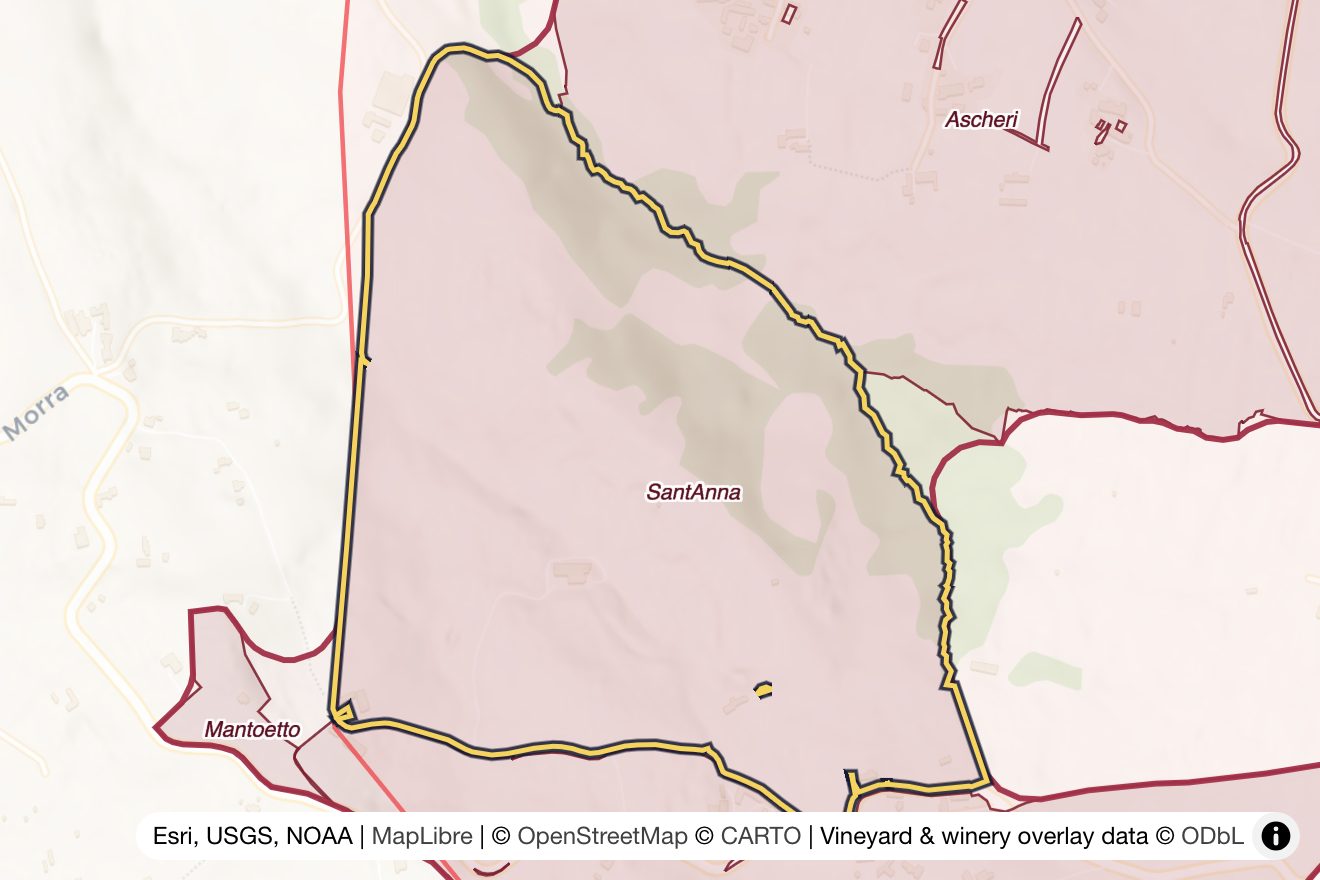
Introduction
La Morra's viticultural landscape encompasses steep, south-facing slopes rising to roughly 500 meters in elevation, part of the horseshoe-shaped valley that defines the Barolo production zone. The commune has historically been celebrated for wines that emphasize elegance and aromatic complexity over raw power, a stylistic tendency directly attributable to its particular geological composition.
Terroir
The defining characteristic of La Morra's terroir, which directly influences Sant'Anna and its neighboring MGAs, is the prevalence of calcareous clay soils from the Tortonian epoch. This geological formation is notably distinct from the Helvetian sandstone-rich soils found in the eastern Barolo communes of Monforte d'Alba and Serralunga d'Alba. The calcareous clay of La Morra (shared with the commune of Barolo itself) creates the foundation for what is recognized as a perfumed, fruit-driven style of wine.
This soil type, with its higher proportion of clay content, possesses particular water-retention characteristics that influence vine behavior throughout the growing season. Clay-loam soils can hold significant supplies of water readily available to the vine, a quality that affects both vine vigor and the resulting grape composition. The manner in which roots navigate the complex layering of soil strata dictates the amount of water and nutrients the plant can access throughout the year, ultimately influencing the aromatic and structural components of the wine.
The calcareous component of these soils contributes to the distinctive aromatic profile associated with La Morra wines. The interaction between Nebbiolo and limestone-rich soils tends to emphasize floral and red fruit characteristics while moderating tannin extraction, resulting in wines that are approachable earlier in their evolution compared to those from the sandstone-rich, less fertile soils of the eastern communes.
The specific elevation and aspect of vineyards within Sant'Anna, typical of La Morra's steep topography, play crucial roles in grape development. These south-facing exposures maximize sun exposure, critical for ripening Nebbiolo, a variety that ripens slowly and demands optimal conditions to achieve full phenolic maturity. The attributes of soil can change rapidly within a vineyard, both vertically and horizontally, meaning that even within a single MGA, variation in topography and soil depth can create notable differences in wine character.
Wine Characteristics
Barolo from La Morra, including wines from Sant'Anna, typically exhibits the aromatic hallmarks of Nebbiolo grown in calcareous clay: perfumed notes of red cherries, rose petals, and violet, often accompanied by herbal nuances and, with age, the development of more complex tertiary aromas including dried flowers, tar, and liquorice. The fruit-driven nature of these wines stems directly from the soil composition, which encourages aromatic expression while producing softer tannins compared to the more structured wines from Serralunga or Monforte.
The color of these wines follows the characteristic pattern of Nebbiolo throughout Barolo (never deeply opaque, tending toward ruby in youth and evolving relatively rapidly to garnet and brick tones with age. This lighter color should not be mistaken for lack of substance; rather, it reflects Nebbiolo's intrinsic nature, similar to Pinot Noir in its transparency.
The tannin structure in La Morra wines tends toward elegance rather than power. While all fine Barolo requires aging) with DOCG regulations mandating a minimum of 38 months before release, including 18 months in oak (wines from La Morra's calcareous soils often become accessible sooner than their counterparts from the eastern communes. This earlier approachability should not be confused with lesser aging potential; properly made wines from quality sites can evolve gracefully for 10 to 15 years or more, developing the complex tertiary characteristics that define mature Barolo.
The high acidity inherent to Nebbiolo remains a constant across all of Barolo, providing the structural backbone necessary for extended aging and food compatibility. In La Morra wines, this acidity combines with the perfumed fruit character and refined tannins to create wines of balance and harmony rather than sheer power.
Context Within La Morra
La Morra encompasses numerous MGAs, some with long-established reputations for exceptional quality. The commune's position on the western side of the Barolo zone, combined with its distinctive calcareous clay soils, creates a stylistic throughline across its various vineyard sites, though individual MGAs naturally express unique characteristics based on specific mesoclimates, exposures, and subtle soil variations.
The introduction of the MGA system in 2010 formalized a tradition that had existed informally for generations. Historically, certain single vineyards) such as Cannubi, had maintained very high reputations for quality, and significant producers including Angelo Gaja and Bruno Giacosa were early champions of single vineyard bottlings. However, the practice of blending wines from multiple vineyards in search of greater complexity has also remained important, exemplified by producers such as Bartolo Mascarello who continue this traditional approach.
Understanding Sant'Anna's character requires placing it within the broader context of La Morra's winemaking tradition: wines that prioritize aromatic complexity, elegance, and finesse, reflecting the calcareous clay terroir that distinguishes this commune from its neighbors. These are Barolos that reveal the variety's capacity for perfume and subtlety, offering a counterpoint to the more tannic, structured expressions from Barolo's eastern reaches.