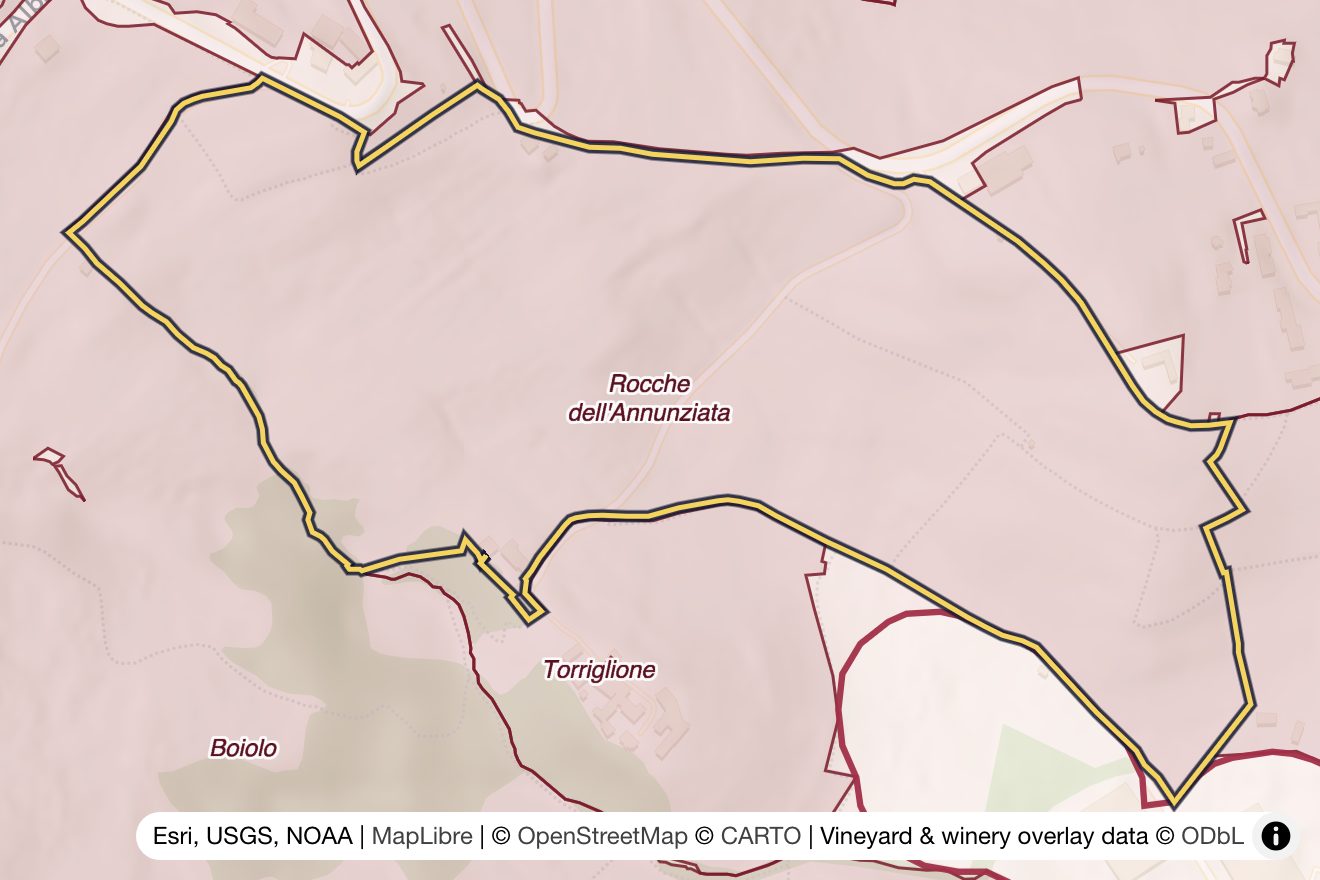
Introduction
The recognition of Rocche dell'Annunziata's exceptional quality predates modern wine writing. From Lorenzo Fantini's observations in the late 19th century through the influential work of Luigi Veronelli and Renato Ratti in the 20th century, to Alessandro Masnaghetti's contemporary cartographic studies, this vineyard has maintained its status as one of La Morra's crown jewels. This reputation was not merely academic; it was made concrete by the consistently higher prices that négociant houses historically paid for grapes and wines from Rocche dell'Annunziata, a market-driven validation of the site's superiority that continues today.
Historical Context and Recognition
The historical significance of Rocche dell'Annunziata reflects the broader evolution of how Barolo's greatest sites came to be recognized and valued. For much of Barolo's modern history, négociant houses dominated the trade, blending wines from different provenances to create balanced house-style Barolos that exemplified the general characteristics of the denomination (a practice not unlike that of their Burgundian counterparts. When executed with skill, this approach produced harmonious wines that showcased Barolo's essential character. However, certain privileged positions like Rocche dell'Annunziata consistently demonstrated the capacity to produce more distinctive wines, establishing hierarchies of quality that were recognized both in professional circles and among local growers.
The emergence of single-vineyard bottlings accelerated dramatically from the 1980s onward, driven by pioneering producers such as Angelo Gaja and Bruno Giacosa who championed the concept of cru-specific wines in Piedmont. This multiplication of vineyard-designated bottlings, occurring in the absence of any official classification system, had a paradoxical effect: rather than creating a clear hierarchy of sites, it reinforced the importance of individual producers and their interpretations of specific terroirs. This situation was partially addressed in 2010 with the introduction of the Menzione Geografica Aggiuntiva system within the Barolo DOCG regulations. While the MGA system officially identifies recognized crus throughout the Barolo zone) including Rocche dell'Annunziata (it does not classify them hierarchically. Nevertheless, Rocche dell'Annunziata's consistent inclusion among the top-tier sites in both historical references and contemporary assessments leaves little doubt about its status.
Terroir and Viticultural Character
Rocche dell'Annunziata benefits from the distinctive terroir characteristics that define La Morra's greatest vineyard sites. La Morra occupies the western portion of the Barolo production zone, and its soils generally tend toward greater fertility and finer, more clay- and silt-rich composition compared to the harder, sandier, sandstone-bearing soils found in communes like Serralunga d'Alba or parts of Monforte d'Alba. This fundamental geological difference profoundly influences both viticultural practice and wine style.
The name "Rocche" itself) meaning "rocks" or "rocky outcrops", suggests a site with particular geological drama, likely featuring more complex soil structures than La Morra's flatter areas. The physical characteristics of soil play a predominant role in determining vine performance and wine quality, particularly in marginal climates like those of Piedmont's Langhe hills. Well-drained positions with moderate fertility and the capacity to regulate water supply to the vine consistently produce the finest results, and Rocche dell'Annunziata clearly possesses these attributes.
The interplay between La Morra's generally earlier-ripening character (driven by its soil composition and exposition) and the specific conditions of Rocche dell'Annunziata creates an ideal environment for Nebbiolo. The variety demands a long growing season to achieve physiological ripeness while maintaining the elevated acidity and robust tannin structure essential to great Barolo. Sites that can balance these competing needs (providing sufficient warmth and light exposure for complete ripening while avoiding excessive vigor that would delay maturation) are rare and valuable. Rocche dell'Annunziata's enduring reputation suggests it achieves this balance with particular grace.
Wine Characteristics and Style
Wines from Rocche dell'Annunziata typically embody the most refined expression of La Morra's character while maintaining the structural integrity essential to great Barolo. La Morra generally produces Barolos that show slightly softer, more perfumed profiles compared to the more austere, mineral-driven wines of Serralunga or the muscular power of Monforte, yet the commune's top sites like Rocche dell'Annunziata transcend simple generalizations.
The finest Rocche dell'Annunziata bottlings display the aromatic complexity for which Nebbiolo is prized: classic notes of tar and roses, tart red fruit, and with age, evolved tertiary characteristics including leather, tobacco, dried flowers, and forest floor. The tannic structure, while present and firm as befits serious Barolo, often shows a degree of elegance and integration that makes these wines somewhat more approachable in relative youth compared to their counterparts from harder soils (though "approachable" remains a relative term for a wine that demands patience.
The acidity characteristic of Nebbiolo manifests vibrantly in Rocche dell'Annunziata, providing the structural backbone necessary for extended aging. Young Barolo from this site, like all serious expressions of the denomination, is by no means an inevitably pleasurable glass of wine in its first years. These are wines that require 10 to 15 years of cellaring at minimum to begin revealing their complexity, and the finest examples can evolve gracefully for decades. The combination of aromatic intensity, structural integrity, and distinctive site character makes Rocche dell'Annunziata one of the most compelling arguments for Barolo's status among the world's greatest wines.
When compared to its La Morra neighbors, Rocche dell'Annunziata often shows a particular intensity and depth that justifies its position at the pinnacle of the commune's hierarchy. While Brunate) which straddles the boundary between La Morra and Barolo (may offer greater power and minerality due to its specific exposition and soil, and Cerequio delivers its own distinctive profile, Rocche dell'Annunziata represents a kind of ideal synthesis: the perfume and elegance of La Morra married to structural depth and aging capacity.
The MGA System and Contemporary Context
The introduction of the MGA system in 2010 represented a significant evolution in how Barolo's vineyard sites are officially recognized and regulated. The system encompasses three types of geographical designations: entire villages (such as La Morra itself), specified single vineyards (including prestigious sites like Rocche dell'Annunziata, Bussia, and Cannubi), and groups of specified vineyards consolidated into single MGAs. While this system has brought greater clarity and protection to established cru names, it has also generated some controversy, particularly where boundaries have been drawn generously or historic vineyard names have been subsumed into larger designations.
For a site like Rocche dell'Annunziata, already possessing clear boundaries and unambiguous historical identity, the MGA system primarily serves to protect and formalize its status rather than to create it. The vineyard's reputation was built over more than a century of demonstrated quality, validated by market prices and critical recognition long before official regulations codified its existence.
Alessandro Masnaghetti, the foremost contemporary cartographer and analyst of Barolo's vineyard sites, has attempted his own unofficial classification to provide guidance in the absence of an official quality hierarchy. While such efforts remain informal, they reflect the wine community's persistent desire to understand and articulate the differences among Barolo's many designated vineyards. In any such classification based on historical reputation, vineyard potential, and consistent quality, Rocche dell'Annunziata invariably appears among the highest tier.
Producers and Quality Benchmarks
The producers who have contributed to Rocche dell'Annunziata's reputation represent some of the most respected names in Barolo. While some historically significant producers, notably Bartolo Mascarello, continued to champion the tradition of multi-vineyard blending) arguing that complexity derived from combining different terroirs (the prevailing trend toward single-vineyard bottlings has meant that Rocche dell'Annunziata increasingly appears as a distinct wine on labels.
The quality benchmarks from this site demonstrate what can be achieved when exceptional terroir meets rigorous viticulture and thoughtful winemaking. These are not wines that seek to please immediately or to court modern tastes through excessive extraction or new oak. Rather, they represent a classical approach to Barolo: extended maceration to extract the full complement of aromatics and structural elements from Nebbiolo's thick skins, aging in large Slavonian oak botti that allow the wine to develop without imposing extraneous flavors, and sufficient time in bottle before release to ensure the wine has begun its evolution.
The current landscape includes producers working both with traditional methods and those exploring organic and biodynamic viticulture, using these approaches to produce highly original, long-lived wines while respecting the fundamental character that makes Rocche dell'Annunziata distinctive. The common thread among quality-focused producers in this site is a recognition that the vineyard itself is the primary author of the wine's character; the winemaker's role is to translate that potential into the bottle as faithfully as possible.
Conclusion
Rocche dell'Annunziata occupies a secure position within the pantheon of Barolo's greatest vineyard sites. Its consistent recognition across historical periods, price points, critical assessments, and producer preferences marks it as one of those rare sites where geological fortune, climatic conditions, and viticultural tradition converge to produce wines of distinctive character and exceptional quality. Within La Morra, it represents the commune's capacity to produce not merely elegant, perfumed Barolos but wines of genuine depth and complexity that can stand alongside the most structured expressions from any of Barolo's villages.
For enthusiasts seeking to understand Barolo's diversity and potential, Rocche dell'Annunziata offers an essential reference point: a wine that balances power with finesse, immediate aromatic appeal with profound aging capacity, and site-specific character with the fundamental qualities that define great Barolo. As the denomination continues to evolve) with climate change, shifting viticulture practices, and generational changes among producers. Rocche dell'Annunziata's combination of established reputation and demonstrated quality suggests it will remain among Barolo's most sought-after and significant sites for generations to come.