Introduction
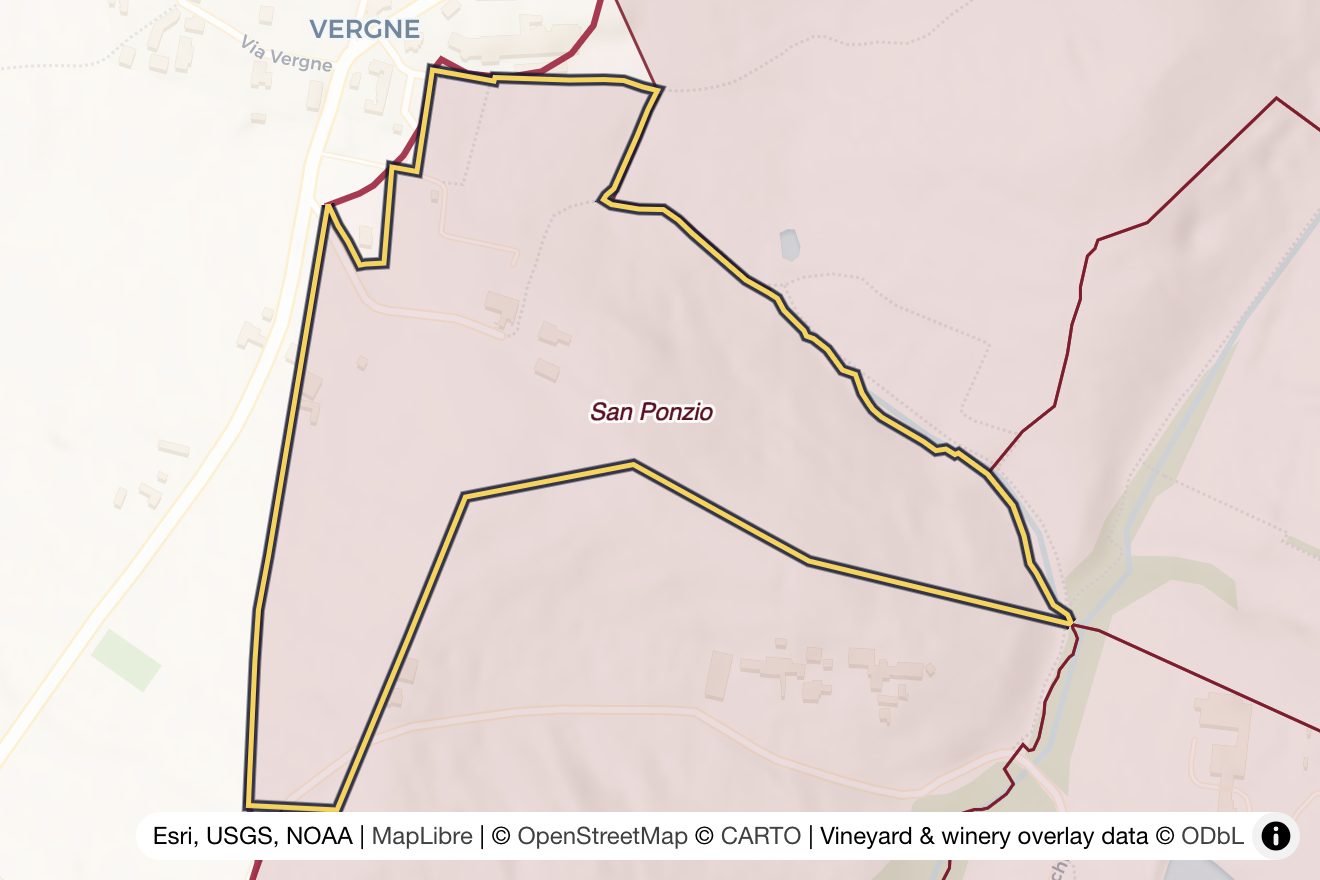
Located at elevations ranging from 390 to 410 meters (1,280 to 1,345 feet), San Ponzio occupies a relatively high position within the Barolo landscape, where vineyard altitudes typically span from 200 to 500 meters. This elevation places the site in a transitional zone where cooler temperatures and extended hang time can influence grape ripening patterns, potentially producing wines with heightened aromatic complexity and preserved acidity.
Terroir
The defining characteristic of San Ponzio's terroir is its clay-rich soil composition. This sets it apart from many of Barolo's most celebrated sites, which tend to feature either the calcareous marls of the Tortonian formation (characteristic of sites in La Morra and Barolo village) or the older, iron-rich Serravallian sandstones (found in Monforte d'Alba and Serralunga d'Alba). Clay soils possess distinct physical properties that profoundly influence vine behavior and, consequently, wine character.
From a viticultural perspective, clay-dominant soils have significant water-retention capacity. While contemporary understanding of terroir emphasizes that the finest wines emerge from soils providing steady but moderate water supply to vines (as articulated by Dr. Gérard Seguin's groundbreaking research in Bordeaux) clay's moisture retention must be balanced with adequate drainage to avoid excessive vigor. The physical characteristics of clay soils, including their density and structure, regulate water availability to the vine throughout the growing season, a factor that scientific consensus now identifies as paramount in determining wine quality beyond climate itself.
At San Ponzio's elevation, the clay composition likely moderates the site's thermal regime. Clay soils generally warm more slowly in spring and maintain more consistent temperatures during summer heat, potentially buffering against extreme temperature fluctuations. Combined with the cooling influence of altitude, this could theoretically contribute to a slower, more gradual ripening curve for Nebbiolo, Barolo's sole permitted variety (though such speculation requires validation through documented vineyard performance and wine analysis.
The interplay between elevation and soil composition at San Ponzio creates a distinct mesoclimate within the broader Barolo zone. The higher altitude suggests cooler overall temperatures and greater diurnal temperature variation compared to lower-lying sites, factors that typically preserve aromatic precursors and maintain natural acidity in grapes. However, the specific exposition and topographical features of San Ponzio) whether it enjoys southern exposure, the degree of slope, and protection from weather systems (remain undocumented in available literature.
Producers and Viticultural Practice
The most significant association with San Ponzio belongs to G.D. Vajra, an estate that achieved distinction as one of Piedmont's pioneering organic producers, adopting organic farming in 1971, decades before organic viticulture became fashionable in the region. The Vajra family's commitment to preserving Piedmont's viticultural heritage extends beyond organic certification to the cultivation and vinification of indigenous grape varieties at risk of extinction.
Notably, the documented production from San Ponzio by G.D. Vajra centers not on Nebbiolo for Barolo, but on Freisa, a traditional Piedmontese variety that had fallen from favor and faced potential disappearance from the regional ampelographic landscape. Aldo Vajra undertook the replanting of Freisa at San Ponzio through massal selection, using genetic material from vines originally planted by his grandfather. This demonstrates a multi-generational connection to the site and a philosophical commitment to biodiversity and viticultural heritage conservation.
The Vajra family's Langhe Freisa Kyè, produced from San Ponzio's clay-rich soils, offers the only detailed window into the site's characteristics currently available in wine literature. Described as displaying a wild, complex perfume of tobacco, roses, and wild herbs with a deep ruby color, this wine suggests that San Ponzio's terroir can produce grapes with pronounced aromatic intensity and distinctive character) though drawing direct parallels to hypothetical Nebbiolo performance requires caution, given the different varietal characteristics and ripening requirements of Freisa and Nebbiolo.
Context and Significance
San Ponzio's limited visibility in Barolo discourse reflects the broader reality that not all officially recognized MGAs enjoy equal historical pedigree or contemporary renown. The 2010 codification of Barolo's vineyard hierarchy included numerous sites with varying degrees of historical documentation and market recognition. Some MGAs represent historically celebrated single vineyards like Cannubi or Brunate; others consolidated multiple smaller vineyards under a single designation; still others, like San Ponzio, remain in the early stages of establishing their identity and reputation specifically for Nebbiolo production.
The site's primary association with Freisa rather than Nebbiolo cultivation, while exemplifying admirable dedication to viticultural diversity, means that San Ponzio has yet to develop a clear profile within the Barolo quality hierarchy. This is not necessarily a negative (emerging sites and less-documented terroirs represent opportunities for discovery and may offer compelling value as their characteristics become better understood.
The philosophical approach of producers like G.D. Vajra) emphasizing organic viticulture, preservation of traditional varieties, and multi-generational site knowledge, suggests that when and if San Ponzio Barolo wines enter broader circulation, they would likely reflect a terroir-focused, non-interventionist winemaking approach that allows site characteristics to express themselves clearly.
Conclusion
San Ponzio remains an enigmatic presence within Barolo's official vineyard landscape. Its clay-rich soils and relatively high elevation suggest a terroir with distinct personality, potentially capable of producing Nebbiolo with aromatic complexity and structured elegance. However, the absence of documented Barolo production and critical evaluation means that its ultimate place in the Barolo hierarchy remains to be established. The site serves as a reminder that official MGA status represents a starting point for recognition rather than a final judgment, and that some of Barolo's most interesting stories remain to be written by producers willing to explore lesser-known terroirs with dedication and patience.