Introduction
San Rocco Seno d'Elvio itself occupies a unique position within the Barbaresco appellation structure. Unlike the three principal communes of Barbaresco, Neive, and Treiso, which constitute the denomination's historic core, San Rocco Seno d'Elvio is a small frazione of Alba, rather than a separate commune, that contributes to Barbaresco production. This peripheral status has historically meant less commercial attention and scholarly documentation, though the fundamental quality standards of the Barbaresco DOCG naturally apply to wines from all its constituent communes.
The San Rocco Seno d'Elvio Context
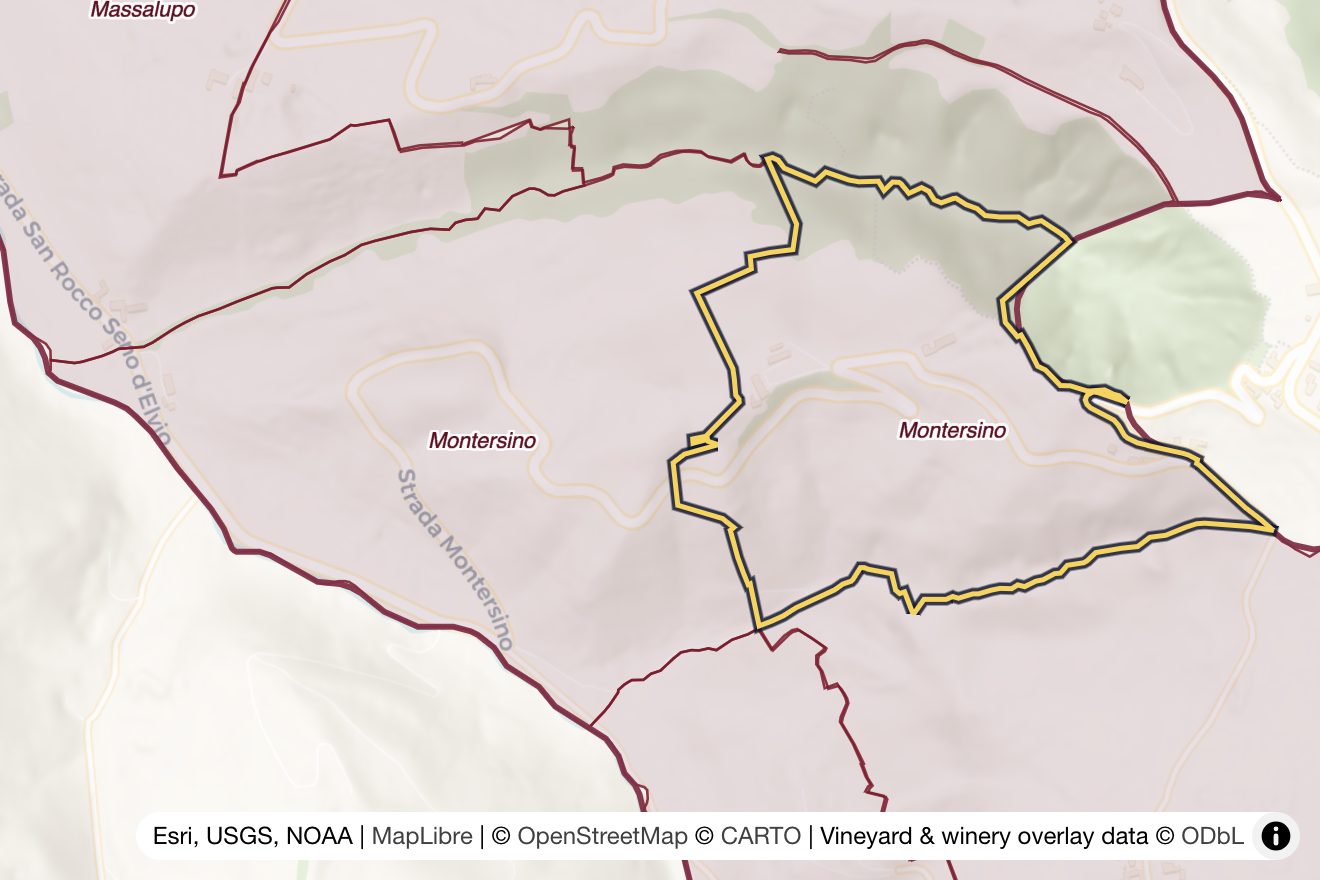
Understanding Montersino requires appreciating its position within San Rocco Seno d'Elvio, a frazione of Alba whose vineyards form part of the Barbaresco zone. The Barbaresco zone, though only one-third the size of its more famous neighbor Barolo, has experienced significant expansion from 484 hectares in the early 1990s to 733 hectares by 2019. This growth reflects both increased recognition of Barbaresco's quality and commercial success, though the expansion has been uneven across the denomination's four communes.
The broader Barbaresco landscape is characterized by Tortonian soils (a complex matrix of marl and sandstone with varying percentages of clay, sand, and calcium carbonate. These soils, younger and more calcareous than much of Barolo's Serravallian formations, contribute to Barbaresco's reputation for producing wines of particular aromatic intensity and relative elegance compared to Barolo's more muscular expressions. While specific soil analyses for Montersino are not extensively documented in the public record, the site would share these fundamental geological characteristics common to the denomination.
The MGA System and Historical Recognition
The introduction of the MGA system in 2007 represented a watershed moment for Barbaresco, establishing an official register of single vineyards that had previously existed primarily in oral tradition and through négociants' pricing structures. Barbaresco implemented this system three years before Barolo formalized its own MGA designations in 2010, demonstrating the denomination's commitment to terroir-based classification despite its smaller size and historically lesser commercial prominence.
The MGA list was deliberately conservative, retaining "almost all the historically known vineyards, rarely absorbing them in more famous vineyard names for commercial reasons," as noted in contemporary accounts of the system's implementation. Montersino's inclusion on this list indicates its recognition as a distinct geographic entity with established boundaries and historical usage, even if detailed written records from the 19th century) such as those found in Lorenzo Fantini's monograph on Piedmontese viticulture (did not extensively document sites in what would become San Rocco Seno d'Elvio.
Barbaresco Wine Character
Wines bearing the Montersino designation would be expected to express the fundamental characteristics of Barbaresco Nebbiolo: a wine of firm structure with pronounced tannins and acidity, requiring time to resolve its youthful austerity into the complex aromatics for which the denomination is prized. The traditional descriptors for Barbaresco) cherry, violets, and with age, iron, tar, and orange peel, establish a framework for understanding what might emerge from conscientiously farmed Nebbiolo in any of the denomination's recognized sites.
The minimum alcoholic strength requirement of 12.5% for Barbaresco, with wines commonly reaching 13.5%, applies equally to Montersino as to more celebrated MGAs. The mandated aging requirements (26 months for standard Barbaresco and 50 months for Riserva, with at least nine months in oak for the former and nine months in wood for the latter) ensure a baseline maturation period regardless of vineyard origin.
Contemporary winemaking in Barbaresco has seen a notable shift from the 1970s-80s trend toward shorter macerations and French barrique aging back toward traditional longer macerations (often up to 40 days) and aging in large oak casks. This philosophical evolution affects wines across the denomination, including those from lesser-known sites like Montersino, where producers committed to expressing specific vineyard character might favor approaches that allow site characteristics to speak more clearly.
Current Status and Future
The relative obscurity of Montersino within the Barbaresco hierarchy reflects broader patterns in wine region development, where commercial attention and critical focus inevitably concentrate on a handful of sites while others remain in the background. The dedicated work of the Produttori del Barbaresco cooperative and individual producers like Angelo Gaja and Bruno Giacosa helped establish Barbaresco's overall reputation in the 1960s and beyond, but this rising tide did not lift all vineyard sites equally in terms of recognition.
For the serious student of Barbaresco, sites like Montersino present opportunities to explore the denomination beyond its most famous names, potentially discovering distinctive expressions at more accessible price points. The official MGA designation ensures that wines labeled as Montersino must indeed originate from this specific site, providing geographic authenticity even in the absence of extensive critical literature or historical documentation.
As Barbaresco continues to evolve, with increasing numbers of producers adopting organic and biodynamic viticulture and exploring traditional winemaking techniques, the full potential of its complete vineyard mosaic (including sites like Montersino) may yet be more fully revealed and documented.