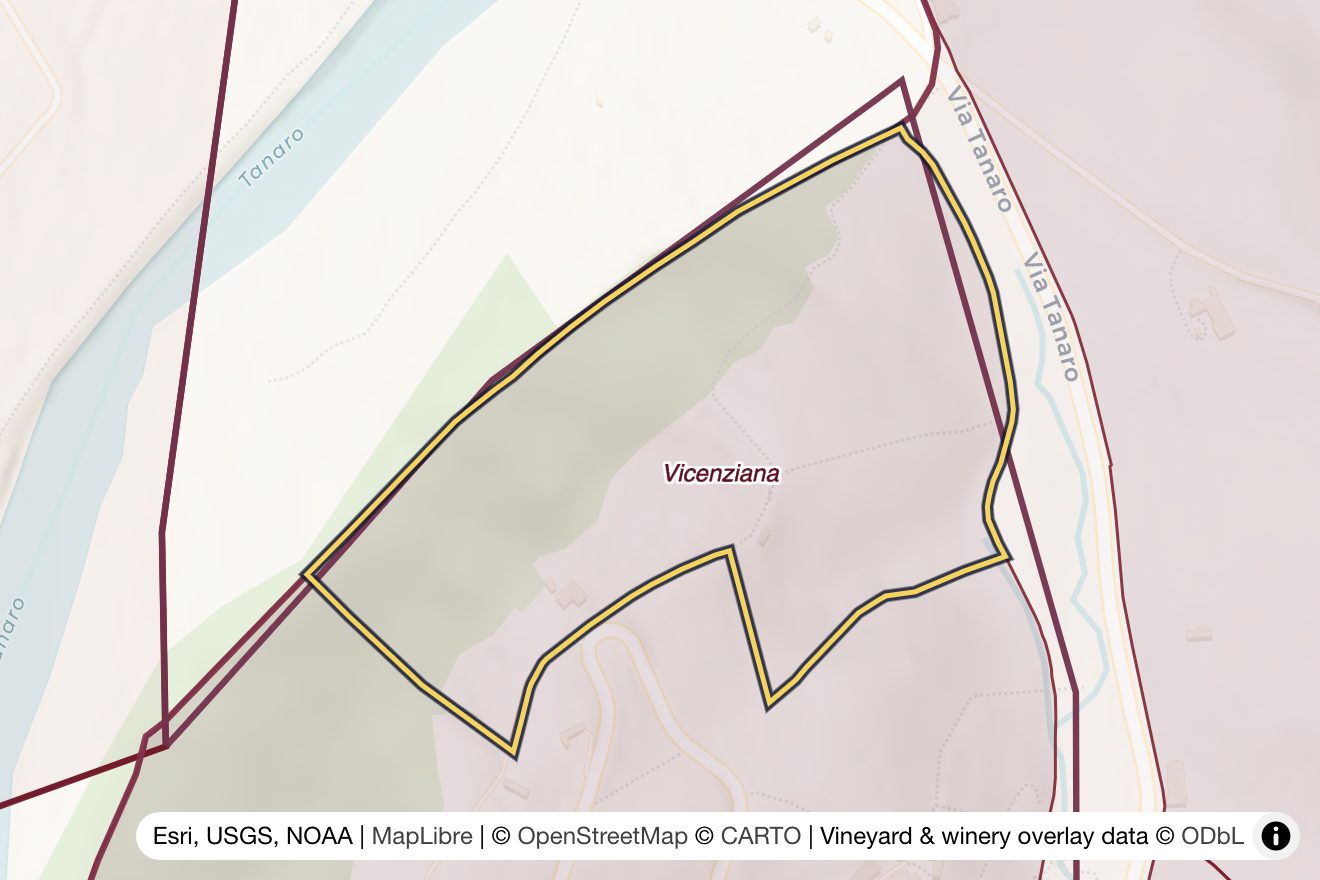
Introduction
The creation of the MGA system in Barbaresco preceded similar reforms in Barolo by three years, representing an important step in codifying the region's diverse terroirs and establishing a framework for communicating site-specific differences to consumers. The official list, as documented in Alessandro Masnaghetti's comprehensive cartographic work, "sensibly retained almost all the historically known vineyards," preserving local nomenclature rather than absorbing smaller sites into more famous vineyard names for commercial advantage. Vicenziana's inclusion in this official registry confirms its historical use as a recognized vineyard designation, even if it has not achieved the prestige or market recognition of Barbaresco's most celebrated sites.
Historical Context and Documentation
The relative obscurity of Vicenziana reflects a broader pattern in Barbaresco's viticultural history. As noted in historical sources, single-vineyard wines in Barbaresco are "a relatively recent phenomenon," with the first cru-designated bottling (Prunotto's Barbaresco Montestefano) appearing only in 1961. Furthermore, there is "a less firmly established written record of cru designation here than in Barolo." Lorenzo Fantini's influential late 19th-century monograph on Piedmontese viticulture indicated "very few 'choice positions' in Barbaresco (and none whatsoever in Neive)," suggesting that the systematic recognition of individual sites developed later here than in the more prestigious neighboring appellation.
The first systematic attempts to catalogue and rank Barbaresco's finest sites emerged in the 1960s through the work of Luigi Veronelli, followed by Renato Ratti's efforts in the 1970s. However, it was primarily the market mechanism (négociants' willingness to pay premium prices for grapes from specific vineyards) that established consensus about which sites merited recognition. The most famous vineyards often gained their current status "from the dedicated work and exacting standards of producers such as Gaja, Giacosa, and Alberto di Gresy," who through consistent quality and marketing efforts elevated specific sites to prominence.
Vicenziana has not benefited from this kind of producer-driven promotion, which may explain its limited presence in wine literature and the international market. This does not necessarily indicate inferior potential, but rather reflects the reality that in Barbaresco, as elsewhere, reputation often derives as much from producer investment and marketing as from inherent terroir quality.
Barbaresco Terroir and Regional Context
To understand Vicenziana's place within Barbaresco, it is essential to consider the broader characteristics of the denomination. The production zone lies northeast and east of Alba, encompassing the townships of Barbaresco, Treiso, and Neive, with minor production in a fraction of Alba itself. At approximately 733 hectares under vine as of 2019, Barbaresco is roughly one-third the size of Barolo, creating a more intimate scale where individual sites represent proportionally larger shares of total production.
Barbaresco's terroir is distinguished by south-facing slopes at elevations ranging from 200 to 400 meters, generally lower than Barolo's hillside vineyards. This lower altitude, combined with the moderating influence of the Tanaro River, means that Nebbiolo ripens earlier in Barbaresco than in Barolo. The resulting wines are characteristically "fruitier and less perfumed" than Barolo, though they possess "similar acidity and tannin levels, which gives the wines the ability to age in bottle."
The denomination's aging requirements (two years before release for standard Barbaresco and four years for Riserva, with nine months in wood) are less stringent than Barolo's regulations. This has unfortunately led to "the false assumption that Barbaresco is less ageworthy," when in fact the differences reflect stylistic character rather than quality or longevity potential. Contemporary Barbaresco, when well-made, exhibits "perfumes of cherry, violets, and, with age, iron, tar, and orange peel," developing considerable complexity over decades in the cellar.
Wine Characteristics and Style Evolution
Without specific documentation of Vicenziana's individual characteristics, any detailed description of its particular aromatic profile, tannic structure, or aging trajectory would be speculative. What can be stated with confidence is that wines from this MGA must conform to Barbaresco DOCG regulations and are produced from Nebbiolo grown within the denomination's boundaries, subject to the same climatic influences and general terroir characteristics that shape all Barbaresco wines.
The broader evolution of winemaking practices in Barbaresco provides context for understanding how Vicenziana wines might be vinified today. During the 1970s and 1980s, Barbaresco winemaking shifted dramatically "towards considerably shorter periods in French barriques in response to modern tastes for rounder, fruitier wines." This approach was controversial, with traditional winemakers arguing that "French oak suppressed Nebbiolo's gentle perfume."
More recently, "an increasing number of Barbaresco producers are returning to long maceration, often up to 40 days, and ageing in large oak casks rather than barrique." This represents a philosophical shift back toward techniques that emphasize terroir expression and varietal character over the international style that dominated in the late 20th century. A producer working with Vicenziana fruit today might employ either approach, depending on their stylistic philosophy and target market.
Current Status and Availability
The limited information available about Vicenziana in contemporary wine literature and databases suggests that few if any producers are currently bottling this MGA as a single-vineyard wine, or that those who do produce extremely limited quantities that receive minimal critical attention or market distribution. In Barbaresco's commercial landscape, where collector attention and premium pricing concentrate on a relatively small number of celebrated sites, secondary MGAs often see their fruit blended into commune-level Barbaresco bottlings rather than bottled separately.
This practice is economically rational for producers, as the investment required to market and establish a lesser-known MGA name often exceeds the price premium such wines can command. Without the historical reputation or critical scores that drive collector demand, sites like Vicenziana may produce excellent wine that nonetheless makes more commercial sense as part of a broader blend.
Conclusion
Vicenziana represents one of the many officially recognized but little-documented MGAs within Barbaresco, a reminder that the denomination's diversity extends well beyond its handful of celebrated crus. While the lack of specific information about this site prevents detailed analysis of its unique terroir characteristics or wine style, its inclusion in the official MGA registry confirms its historical legitimacy as a recognized vineyard designation.
For enthusiasts seeking to explore Barbaresco beyond its famous names, sites like Vicenziana represent potential opportunities to discover compelling wines at less inflated prices, assuming bottlings can be found. The challenge lies in locating producers who work with this fruit and bottle it separately, and in the absence of critical consensus or historical documentation to guide quality assessment. As Barbaresco continues to evolve and more producers focus on single-vineyard bottlings, it is possible that previously obscure sites may gain recognition through the dedicated work of quality-focused vintners, much as occurred with now-famous vineyards in previous generations. Whether Vicenziana will follow this trajectory remains to be seen.