Overview
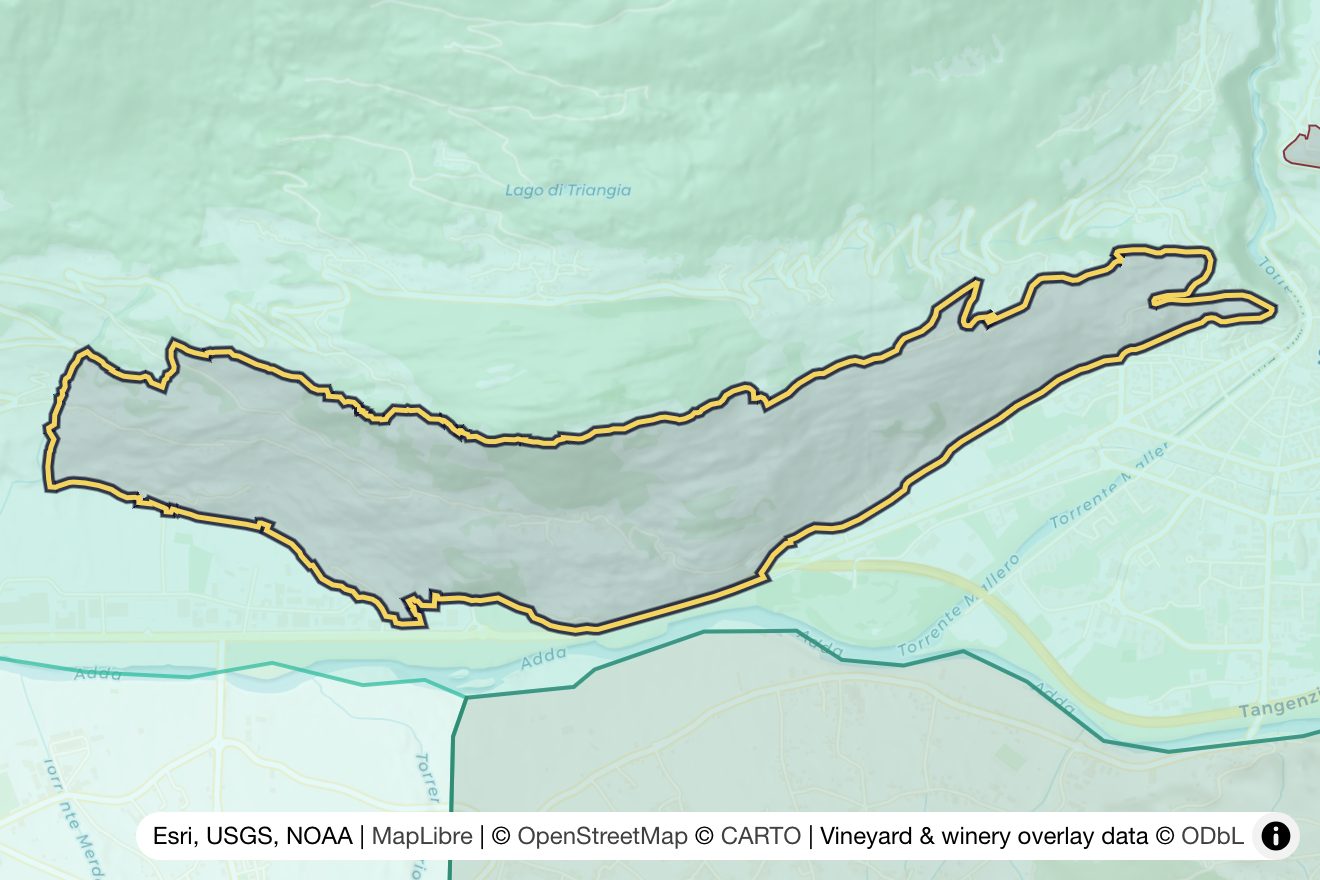
Sassella is the most renowned of the Valtellina Superiore DOCG subzones, a band of terraced vineyard on the rocky south-facing slope west of Sondrio in Lombardy's alpine Valtellina. Roughly 114 hectares of Nebbiolo, here called Chiavennasca, cling to dry-stone terraces beneath the sanctuary of the Madonna della Sassella, producing the valley's most structured and longest-lived wines.
History
The name derives from sasso, stone, and the site's reputation is old: Sassella was the valley's marker of quality in the export trade over the Alps to Swiss and Austrian markets that sustained Valtellina wine for centuries. The subzone was codified with Valtellina Superiore's DOC in 1968 and carried into the DOCG of 1998. Its terraces, part of the valley's monumental complex of dry-stone walls built over a millennium, remain worked entirely by hand.
Terroir & Climate
The slope is steep, stony and shallow-soiled: acidic sand over granite and schist, drying quickly and radiating heat. Exposure is full south, and the site is among the valley's warmest and driest, sheltered by the Rhaetian Alps and ventilated by the breva, the lake-driven valley wind. Vines root in pockets between rock outcrops; erosion and terrace maintenance are constant costs.
Grape Varieties & Wine Styles
Sassella is Nebbiolo at a minimum of 90 percent under Valtellina Superiore rules, with two years of aging, one in wood, and a Riserva at three. The wine is alpine Nebbiolo at its most serious: red fruit, dried rose, herbs and iron over firm, fine tannin and cutting acidity, leaner in body than Langhe renderings but comparably age-worthy, with top bottlings developing over two decades and more.
Notable Producers
Ar.Pe.Pe.'s Sassella bottlings, Stella Retica and the Riservas Rocce Rosse and Vigna Regina, are the subzone's modern references. Rainoldi, Nino Negri, Fay and Mamete Prevostini all produce significant Sassella, and small growers work parcels throughout the terraces.
What to Know
Within Valtellina's subzones, Sassella is the structural pole: the most tannic and slowest to open, the one to cellar. It is a delimited place, not a brand, and its name on a label requires the fruit to come from these terraces. The wines reward decanting young and patience always.