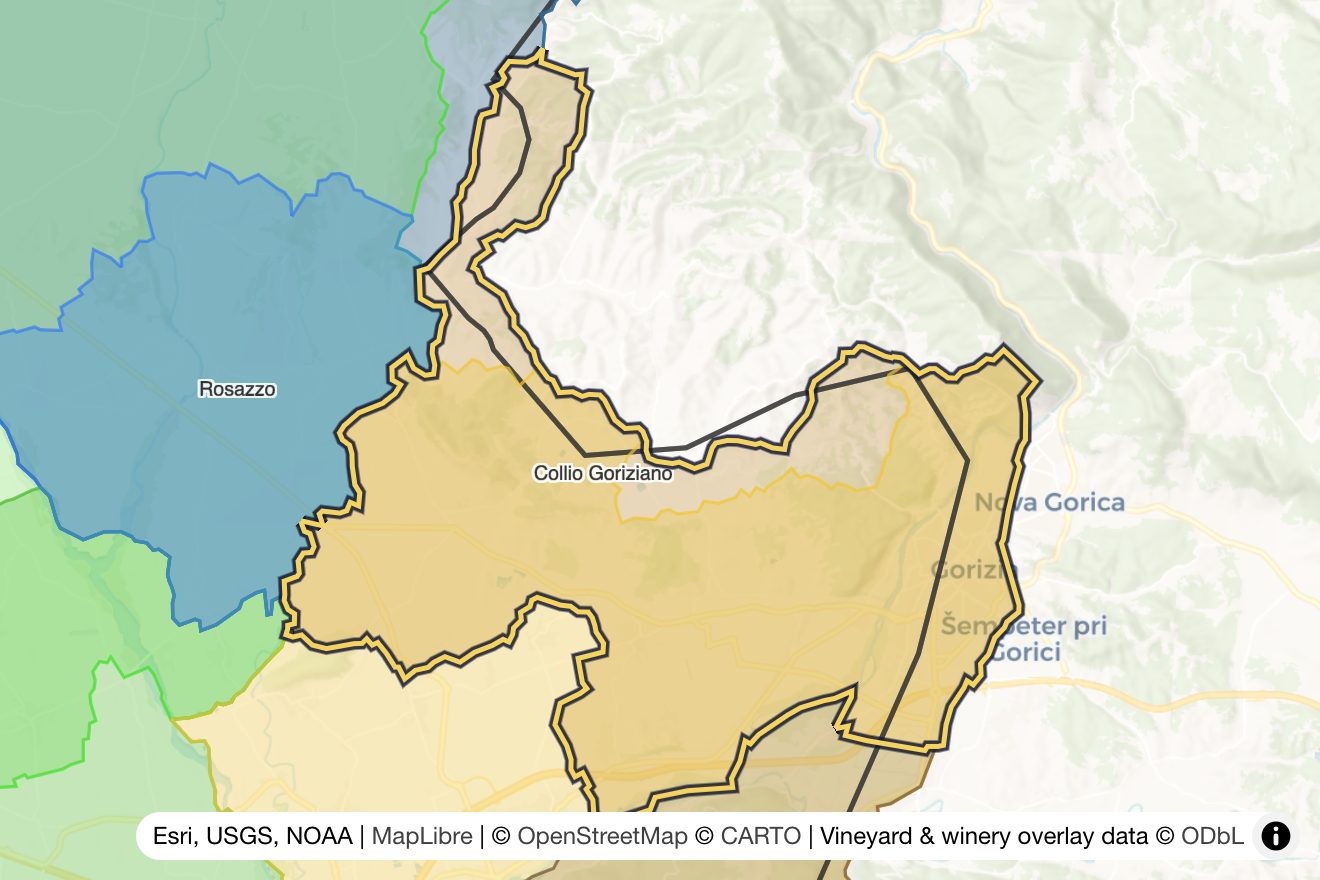
Overview
The zone continues across the border as Slovenia's Goriška Brda; the hills, soils and varieties are shared, and several estates farm on both sides.
History
The Collio's viticultural record runs from Roman times through Habsburg rule, under which the zone supplied the Austrian court and market. The DOC was established in 1968, among Italy's first. Its modern reputation was built in two waves. From the 1960s Mario Schiopetto and contemporaries introduced controlled, reductive white winemaking that made Friuli the reference for clean varietal Italian whites. From the late 1990s, producers in the Oslavia corner near Gorizia, led by Josko Gravner and Stanko Radikon, revived extended skin maceration and, in Gravner's case, Georgian amphora fermentation, making the Collio a point of origin for the contemporary orange wine movement.
Terroir & Climate
The zone's soil is ponca: alternating strata of marl and sandstone of Eocene flysch, friable, poor and fast-draining, considered the defining factor in Collio whites' combination of texture and salinity. Vineyards occupy terraced slopes generally between 80 and 300 metres. The climate joins Alpine and Adriatic influences: the Julian Alps shelter the hills from northern cold while the sea, some twenty kilometres south, moderates temperatures; rainfall is high for a fine wine zone and ventilation constant.
Grape Varieties & Wine Styles
Collio is predominantly a white wine appellation. Principal varieties are Friulano, Ribolla Gialla, Malvasia Istriana, Pinot Bianco, Pinot Grigio, Sauvignon and Chardonnay, bottled varietally or as Collio Bianco blends. Reds, a small minority, center on Merlot and Cabernet Franc.
Two styles now define the zone. The classical Collio white is unoaked or discreetly oaked, dry, medium- to full-bodied, with stone fruit, almond and herb flavors over the saline ponca signature; Friulano and Pinot Bianco are its most characteristic vehicles, and the wines age well over five to ten years. The Oslavia school produces macerated whites, chiefly from Ribolla Gialla: amber-colored, tannic, savory wines that behave more like reds and age longer. Both trade on the same soils and both are established parts of the denomination's identity.
Notable Producers
The classical line includes Schiopetto, Villa Russiz, Russiz Superiore and Marco Felluga, Venica & Venica, Toros, Doro Princic and Primosic. The Oslavia macerationists include Gravner and Radikon, with La Castellada and Primosic bridging the two approaches. Estates on the Slovenian side of the hills, in Goriška Brda, work the same terroir under a different flag.
What to Know
Collio and Friuli Colli Orientali are neighboring but separate DOCs; Collio is the Gorizia hill zone on the border. The appellation name guarantees hillside origin, which in Friuli is the fundamental quality divide: the valley-floor volume wines of the region carry other denominations. A Collio label spans two legitimate but very different styles, classical and macerated; the producer's name indicates which is in the bottle.