Overview
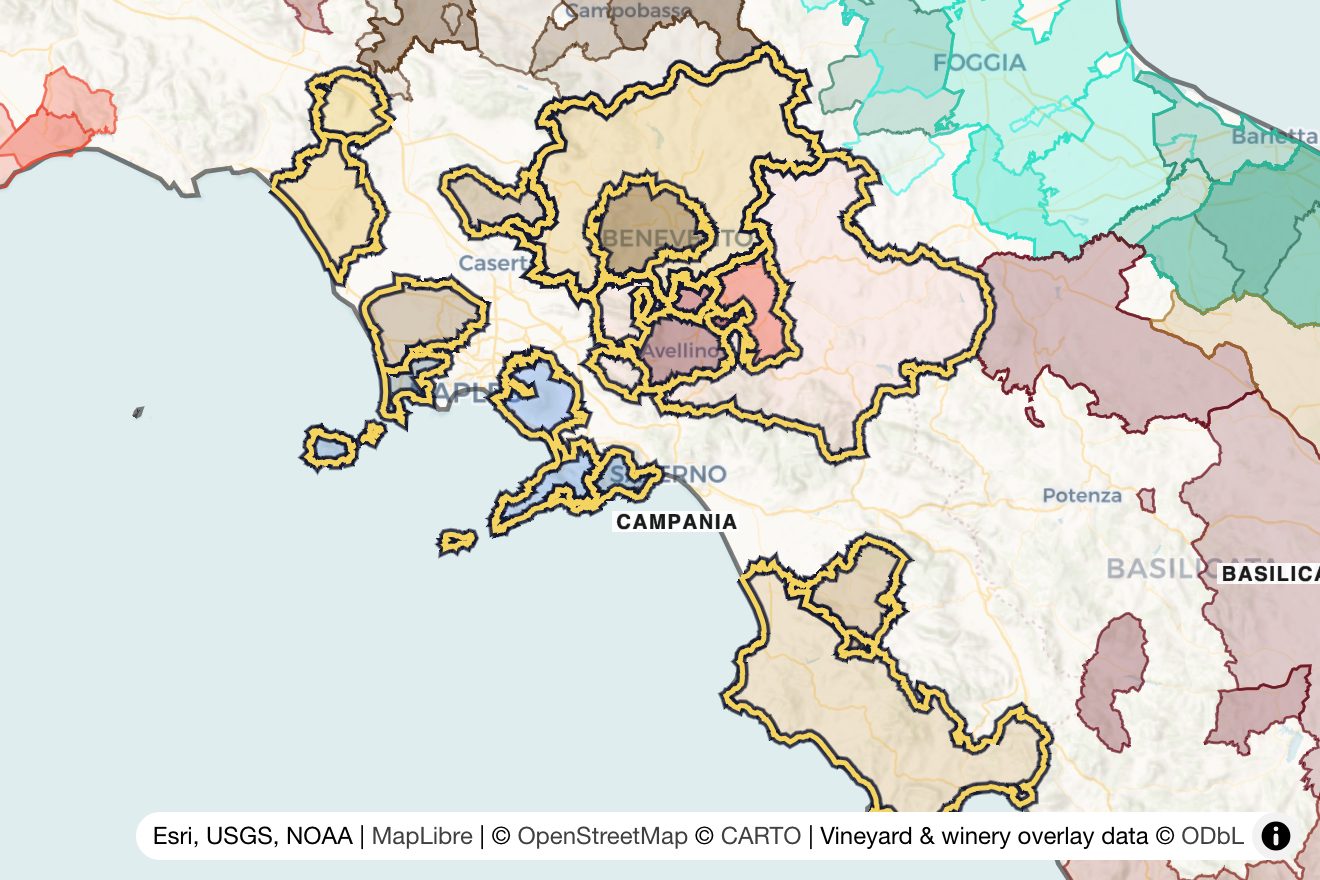
Campania, the region of Naples in southern Italy, holds one of the country's deepest reserves of native grape varieties and classical wine history. Its modern fine wine identity centers on the upland Irpinia district, home to the DOCGs Taurasi, Fiano di Avellino and Greco di Tufo, with a fourth DOCG, Aglianico del Taburno, in the neighboring Sannio. Around that core lie the volcanic coastal zones, Vesuvius, the Campi Flegrei, Ischia and the Amalfi Coast, the northern Falerno del Massico of Roman fame, and the broad Sannio and Cilento districts.
History
Campania was the cellar of antiquity: Falernian, the most celebrated wine of Rome, grew on the Massico slopes, and Greek settlers brought vines here, with tradition linking Aglianico and Greco to Hellenic origins. The region's modern revival was slow, sustained through the twentieth century largely by Mastroberardino's fidelity to native varieties, and accelerated from the 1980s and 1990s as new estates, Feudi di San Gregorio at their head, and the DOCG recognition of Taurasi in 1993 returned the region to the first rank. Rare pre-phylloxera plantings survive in the volcanic sands of the coast and the old vines of Tramonti and Taurasi.
Terroir & Climate
Volcanism defines the region: Vesuvius, the Campi Flegrei caldera and the ash-enriched Apennine foothills give Campania its characteristic soils, with limestone and clay through the interior. The coast is Mediterranean; the interior districts, Irpinia and Taburno, are genuinely continental uplands at 300 to 700 metres, with late harvests and high diurnal range. The best of the region depends on that altitude, which converts a southern latitude into structure and acidity.
Grape Varieties & Wine Styles
Aglianico is the great red, from Taurasi's tarry, tannic, long-aging benchmark to Taburno's and Cilento's sturdier renderings, with Piedirosso the coast's softer companion. The white triad leads Italy's south: Fiano's textured hazelnut depth, Greco's smoky mineral force, Falanghina's fresh citrus utility, joined by Coda di Volpe, Biancolella on Ischia and Pallagrello Bianco in Caserta's revival plantings, where the red Pallagrello Nero and Casavecchia also sit. Styles range from volcanic coastal whites and rosati through the age-worthy interior wines; sweet and passito traditions persist at the margins.
Notable Producers
Mastroberardino and Feudi di San Gregorio anchor Irpinia, with Quintodecimo, Pietracupa, Ciro Picariello and Colli di Lapio among its leading growers. Beyond the core: Terredora, Villa Raiano, Donnachiara in Irpinia; Mustilli and La Guardiense in Sannio; Villa Matilde at Falerno; Marisa Cuomo on the Amalfi Coast; and the garage-scale icons Montevetrano and Galardi's Terra di Lavoro.
What to Know
Campania's map divides into a structured interior and a volcanic coast, and its four DOCGs mark the summit of the first. The region's varietal patrimony is its argument: nothing here depends on international grapes. Child pages for Irpinia and Costa d'Amalfi carry district detail, and the DOCG wines, Taurasi above all, are among Italy's most age-worthy in both colors.