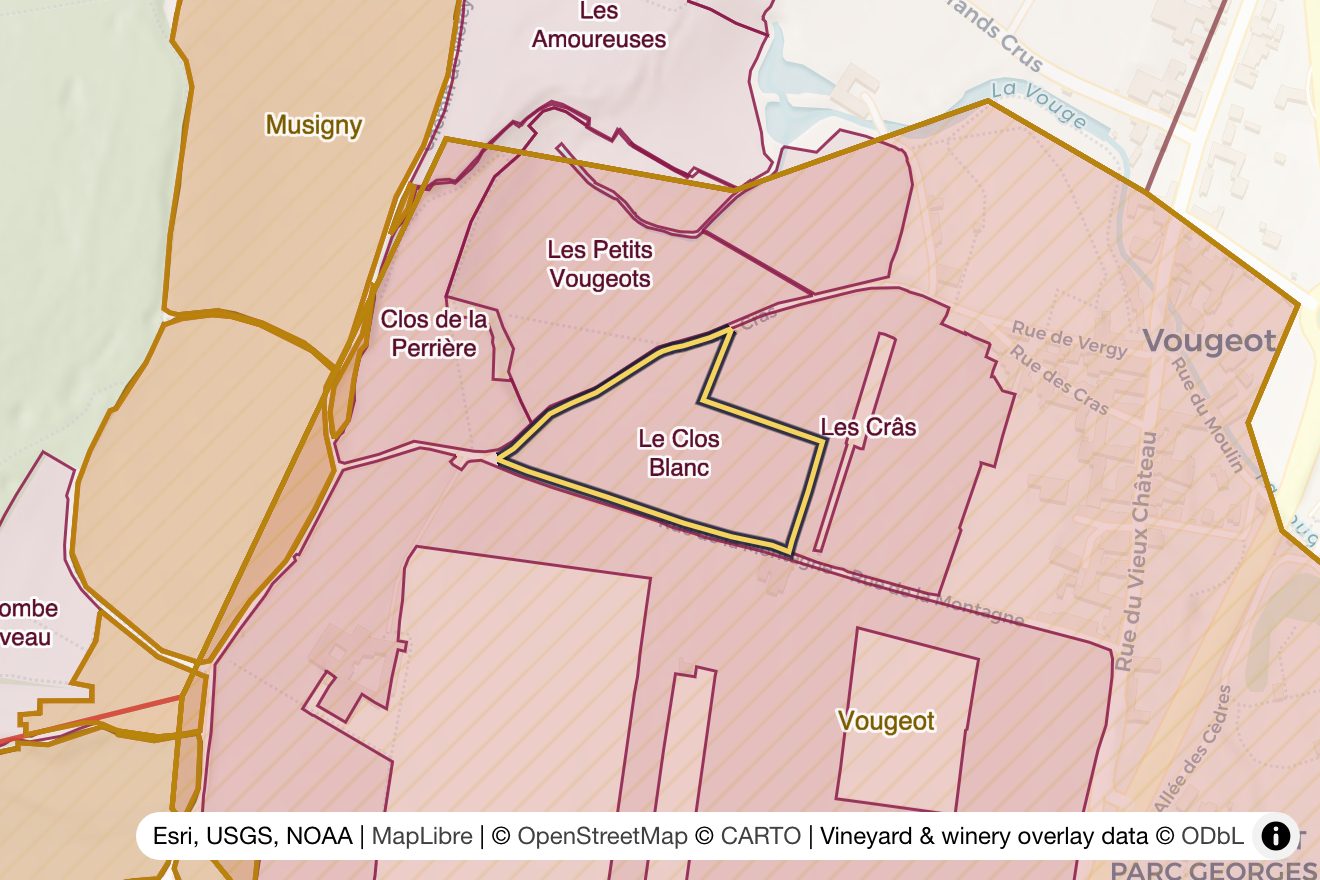
1. Overview & Location
Located in the heart of Burgundy's golden slope, Le Clos Blanc sits strategically positioned between some of the most revered Grand Cru vineyards in the world. The vineyard lies immediately adjacent to the legendary Clos de Vougeot Grand Cru to the north and shares borders with other prestigious appellations that form the backbone of Burgundy's reputation for excellence.
The vineyard's precise geographical coordinates place it at the optimal elevation and exposure for Chardonnay cultivation, benefiting from the perfect confluence of slope, orientation, and soil composition that defines great Burgundian terroir. This positioning allows Le Clos Blanc to capture the essence of Vougeot's terroir while expressing the unique characteristics that only white Burgundy can achieve at this level of classification.
The appellation operates under strict AOC regulations that govern everything from permitted grape varieties to maximum yields, ensuring that every bottle bearing the Le Clos Blanc Premier Cru designation meets the exacting standards that have made Burgundy the world's benchmark for terroir expression in wine.
2. Size
Le Clos Blanc encompasses approximately 2.29 hectares (5.7 acres), making it one of the smaller Premier Cru vineyards in the Côte de Nuits. This modest size reflects the highly selective nature of Burgundy's classification system, where only the most exceptional parcels of land achieve Premier Cru status.
The vineyard's compact dimensions contribute significantly to its exclusivity and the rarity of its wines in the global marketplace. With such limited acreage under vine, annual production remains extremely restricted, with every bottle made by a single producer.
Unusually for Burgundy, the vineyard is held whole by a single owner, Domaine de la Vougeraie.
The vineyard's boundaries are precisely delineated and officially registered, with each parcel mapped according to the cadastral system that governs French agricultural land. These exact demarcations ensure that only grapes grown within the designated Premier Cru boundaries can claim the Le Clos Blanc appellation, maintaining the integrity and authenticity of this prestigious classification.
3. Terroir & Geology
The geological foundation of Le Clos Blanc represents millions of years of sedimentary evolution, creating the complex soil structure that defines its exceptional terroir. The vineyard sits upon the Bathonian and Bajocian limestone formations that characterize the middle slopes of the Côte de Nuits, providing the mineral backbone essential for premium Chardonnay production.
The topsoil consists of a carefully balanced mixture of clay and limestone debris, with varying proportions across different sections of the vineyard. This heterogeneous composition creates distinct micro-terroirs within the appellation, each contributing unique characteristics to the wines produced from those specific parcels. The clay content provides water retention and nutrient availability, while the limestone ensures proper drainage and imparts the distinctive mineral qualities that mark great white Burgundy.
Beneath the surface layer lies a complex stratigraphy of Jurassic limestone beds interspersed with marl deposits. These underlying formations contribute to the vineyard's exceptional drainage characteristics while maintaining sufficient water reserves for vine nutrition during dry periods. The limestone's high calcium carbonate content creates the alkaline soil conditions that Chardonnay requires to achieve its fullest expression.
The soil depth varies across the vineyard, generally measuring between 40 to 80 centimeters before reaching the underlying limestone bedrock. This variation in soil depth creates additional complexity in wine character, with deeper soils producing wines of greater power and concentration, while shallower sections yield wines of exceptional finesse and mineral precision.
Fossil inclusions throughout the soil profile, including ancient marine organisms and coral formations, provide evidence of the area's prehistoric oceanic origins and contribute trace minerals that enhance the wines' complexity and longevity. The presence of iron oxide deposits creates subtle variations in soil color and composition, further adding to the terroir's intricate character.
4. Climate & Microclimate
Le Clos Blanc benefits from Burgundy's continental climate, characterized by cold winters, warm summers, and the crucial diurnal temperature variations that allow Chardonnay to achieve optimal ripeness while retaining essential acidity. The vineyard's specific microclimate represents a refined expression of these broader regional patterns, modified by local topographical features and elevation.
The vineyard's eastward-facing exposure captures the gentle morning sunlight while avoiding the potentially harsh afternoon sun that could lead to excessive ripening or loss of acidity. This orientation proves particularly beneficial for Chardonnay cultivation, allowing for gradual, even ripening that preserves the grape's natural balance and aromatic potential.
Elevation plays a crucial role in the vineyard's microclimate, positioned at approximately 240 to 260 meters above sea level. This altitude places Le Clos Blanc in the optimal zone for white wine production in the Côte de Nuits, high enough to benefit from cooling influences while remaining sufficiently low to ensure adequate ripeness in most vintages.
Cool air flowing down from the hills above provides natural temperature moderation during warm summer days, while the gentle slope promotes air circulation that reduces humidity and minimizes disease pressure.
Annual rainfall averages approximately 750 millimeters, with the crucial growing season typically receiving adequate precipitation for vine nutrition without excessive moisture that could compromise grape quality. The timing and distribution of rainfall vary significantly between vintages, creating the vintage variation that makes each year's wine a unique expression of that season's specific climatic conditions.
Spring frost risk remains a constant concern, as with all Burgundy vineyards. The vineyard's slope and air circulation patterns provide some natural protection, but producers must remain vigilant during critical budbreak periods when temperature inversions can create devastating frost damage.
5. Viticulture
Viticulture in Le Clos Blanc follows the time-honored traditions of Burgundian winemaking while incorporating modern understanding of sustainable farming practices and precision viticulture. The vineyard is planted mostly to Chardonnay (about 95%), with small plantings of Pinot Gris and Pinot Blanc, with vine density typically ranging from 10,000 to 12,000 plants per hectare.
Rootstock selection represents a critical decision for producers, with most favoring clones that provide good adaptation to the limestone-rich soils while controlling vigor to ensure concentrated fruit production. Common rootstock choices include SO4 and 41B, both well-suited to calcareous soils and providing the drought resistance necessary for climate adaptation.
Chardonnay clone selection varies among producers, with many utilizing a combination of heritage clones and more recent selections to achieve complexity and balance. Popular choices include the Dijon clones 95, 96, and 76, each contributing distinct characteristics to the final wine blend.
Training systems predominantly follow the Guyot simple method, with single canes trained along wire supports to optimize sun exposure and air circulation. This traditional approach allows for precise canopy management while respecting the vine's natural growth patterns and the constraints of the steep terrain.
Pruning occurs during winter dormancy, with careful attention to bud selection and cane positioning to ensure optimal fruit production for the following season. Yields are naturally regulated through pruning decisions, with most producers targeting 45-50 hectoliters per hectare to maintain concentration and quality.
Soil management practices emphasize sustainability and soil health, with many producers adopting organic or biodynamic principles. Cover crops may be planted between rows to prevent erosion, improve soil structure, and enhance biodiversity within the vineyard ecosystem.
Harvest timing represents perhaps the most critical viticultural decision, requiring careful monitoring of sugar levels, acidity, and phenolic maturity. Hand harvesting remains the standard practice, allowing for selective picking and immediate sorting to ensure only the highest quality grapes reach the winery.
6. Wine Character & Style
Le Clos Blanc Premier Cru produces wines of exceptional elegance and complexity, representing the pinnacle of Chardonnay expression within the Côte de Nuits. These wines typically display a distinctive mineral-driven character that immediately identifies their limestone terroir origins while showcasing the variety's capacity for both power and finesse.
The aromatic profile commonly features primary notes of citrus fruits, particularly lemon and lime, complemented by white flower elements including acacia and hawthorn. As the wines develop complexity through fermentation and aging, secondary aromas emerge, including subtle honey, brioche, and hazelnut characteristics derived from lees contact and oak influence.
The mineral signature of Le Clos Blanc wines manifests as a distinctive chalky, limestone-derived quality that provides structural backbone and contributes to the wine's exceptional aging potential. This minerality integrates seamlessly with the fruit characteristics, creating a harmonious balance that defines great white Burgundy.
Texture represents another hallmark of Le Clos Blanc wines, typically displaying remarkable concentration and density while maintaining the elegance and finesse expected from Premier Cru Burgundy. The wines possess sufficient body and weight to complement the mineral intensity without becoming heavy or overpowering.
Acidity levels remain naturally high due to the cool climate and limestone soils, providing the structural framework necessary for long-term aging while contributing to the wines' characteristic freshness and vibrancy. This natural acidity allows the wines to pair beautifully with food while ensuring they develop complexity over many years in the cellar.
Oak integration varies among producers but generally emphasizes subtlety and balance, with most utilizing a combination of new and used French oak barrels to provide texture and complexity without overwhelming the delicate terroir expression. The finest examples achieve seamless integration between oak, fruit, and mineral elements.
7. Comparison to Surrounding Crus
Le Clos Blanc occupies a unique position within the Vougeot appellation landscape, as the only Premier Cru vineyard in the commune dedicated to white wine production. This distinction immediately sets it apart from the surrounding red wine appellations while providing interesting points of comparison with other white Burgundy Premier Crus in neighboring communes.
Compared to the adjacent Clos de Vougeot Grand Cru, Le Clos Blanc shares similar geological foundations and climate influences but expresses these through Chardonnay rather than Pinot Noir. While Clos de Vougeot produces wines of power and longevity from red grapes, Le Clos Blanc achieves comparable complexity and aging potential through white wine production.
When compared to white wine Premier Crus in Meursault or Puligny-Montrachet, Le Clos Blanc wines typically display greater mineral intensity and austerity, reflecting their Côte de Nuits origins. The limestone influence appears more pronounced, and the wines generally require additional time to develop their full complexity compared to their Côte de Beaune counterparts.
The vineyard's position within the Côte de Nuits creates interesting stylistic differences from other prestigious white Burgundy appellations. While Montrachet Grand Cru represents the ultimate expression of power and complexity in white Burgundy, Le Clos Blanc offers a more restrained, mineral-focused interpretation that emphasizes elegance over sheer intensity.
Compared to Chablis Premier Crus, Le Clos Blanc wines display greater richness and body while maintaining similar mineral precision. The warmer climate and different soil composition in Vougeot create wines with more generous fruit expression while retaining the limestone-derived character that defines great Burgundian Chardonnay.
8. Notable Producers
Domaine de la Vougeraie is the only producer of Le Clos Blanc, which it owns as a monopole.
Domaine de la Vougeraie is the sole owner of Le Clos Blanc de Vougeot, a monopole, and farms it biodynamically. Their approach emphasizes minimal intervention winemaking while allowing the terroir to express itself fully, resulting in wines of exceptional purity and mineral precision.
9. Historical Background & Classification
The history of Le Clos Blanc traces back to the medieval period when Burgundian vineyards were first systematically planted and cultivated by monastic orders. The Cistercian monks of Citeaux, who also created the neighboring Clos de Vougeot, are credited with first planting the vineyard.
Historical records from the 14th and 15th centuries reference white wine production in Vougeot, though the specific delineation of Le Clos Blanc as a distinct vineyard occurred later as Burgundy's classification system evolved. The vineyard's name reflects both its historical association with white wine production and its enclosed character, typical of many premium Burgundian vineyards.
The French Revolution dramatically altered vineyard ownership patterns throughout Burgundy, breaking up large ecclesiastical holdings and distributing them among private citizens. Unlike most Burgundy vineyards, Le Clos Blanc remained undivided and is today a monopole of Domaine de la Vougeraie.
The formal classification of Le Clos Blanc as Premier Cru occurred in 1936 with the establishment of France's AOC system. This recognition confirmed centuries of quality reputation and established the legal framework that governs production standards within the appellation.
The vineyard survived the challenges of both World Wars, though production was significantly impacted during the occupation period. Post-war reconstruction efforts focused on replanting and modernizing viticultural practices while maintaining the traditional methods that had established the vineyard's reputation.
Modern classification reviews have consistently confirmed Le Clos Blanc's Premier Cru status, with recent evaluations recognizing the vineyard's exceptional terroir and its unique position as the Vougeot Premier Cru dedicated solely to white wine.
10. Aging Potential & Quality Level
Le Clos Blanc Premier Cru wines demonstrate exceptional aging potential, typically reaching peak maturity between 8 to 15 years after vintage while maintaining quality for 20 years or more under proper storage conditions. This longevity reflects the wine's natural acidity, mineral structure, and concentration derived from the limestone terroir and low yields.
During the first 2-3 years after vintage, Le Clos Blanc wines often display primary fruit characteristics with pronounced minerality and crisp acidity. The oak influence, when present, may initially dominate but integrates beautifully as the wine develops complexity through bottle aging.
The 5-10 year period typically represents the emergence of the wine's full complexity, as primary fruits evolve into more nuanced flavors while secondary characteristics from lees aging and oak influence achieve perfect integration. The mineral backbone becomes more pronounced during this phase, creating the distinctive character that defines mature white Burgundy.
Peak maturity generally occurs between years 8-15, when the wine achieves optimal balance between fruit, mineral, and developed flavors. During this period, Le Clos Blanc wines display their full complexity while retaining freshness and vibrancy that mark truly exceptional white Burgundy.
Quality levels within Le Clos Blanc consistently rank among the finest Premier Cru white wines in Burgundy, with the best examples rivaling Grand Cru appellations in complexity and aging potential. The vineyard's unique position and exceptional terroir ensure that even challenging vintages produce wines of notable distinction.
Vintage variation plays a significant role in determining specific aging curves, with warmer years producing wines that mature more quickly while cooler vintages may require additional time to reach peak development. However, the consistent quality level across diverse vintage conditions demonstrates the vineyard's exceptional terroir and the skill of its dedicated producers.
The rarity and quality of Le Clos Blanc wines ensure their position among Burgundy's most collectible white wines, representing both immediate drinking pleasure and long-term investment potential for serious wine enthusiasts and collectors worldwide.